
Increasing visibility to protect vulnerable road users
 Vernon Bonser, sales director of VisionTrack, explores how vehicle fleets can deploy safety technology to help reduce risk to cyclists and pedestrians
One of the biggest challenges confronting transport fleets is how best to prevent their drivers being involved in collisions with vulnerable road users in the communities they operate.
Cyclists, motorcyclists and pedestrians face some of the greatest risks on the road network, so ever more protection is needed and increasingly being demanded.
Vehicle camera and sensor technologies have been around for some time, but with more recent advances in video telematics, transport operators have the opportunity raise road safety standards and achieve legislative compliance across their fleets.
Transport for London (TfL) and various other authorities have recognised that vehicle camera and safety solutions offer a clear way of protecting vulnerable road users. Off the back of this has come TfL’s Direct Vision Standard (DVS), a permit system for any HGV over 12 tonnes that will rate driver visibility from the cab – without the support of technological visual aids – of other road users.
If a vehicle falls below a certain threshold then mandatory technology – cameras and sensors – must be fitted to mitigate the lack of direct vision.
The enforcement of DVS has been temporarily postponed due to the coronavirus pandemic, but from… 2021 an estimated 250,000 vehicles will be affected and many will need to have additional cameras, sensors and alarms fitted to gain permission to operate.
While these stricter rules will only impact on HGVs operating in London, many towns and cities around the UK will be watching with great interest to determine what is the best way of reducing incidents with vulnerable road users by increasing visibility.
A combination of vehicle cameras and sensors can give the driver a 360-view around the vehicle via an in-cab monitor, providing visibility of any vulnerable road user that they might not be able to see normally.
Front, side and rear cameras ensure a vehicle is covered from all angles, while corner, side and rear sensors warn of nearby cyclists, pedestrians and other road users, especially in vehicle blind spots.
 The system can also be linked to a specific driving manoeuvres, so a driver can view the appropriate camera when the left-hand indicator or reverse gear is engaged.
However, the technology is no longer simply a driving aid, because increasingly forward-facing cameras and mobile digital video recorders (MDVRs) are connected to a cloud-based platform.
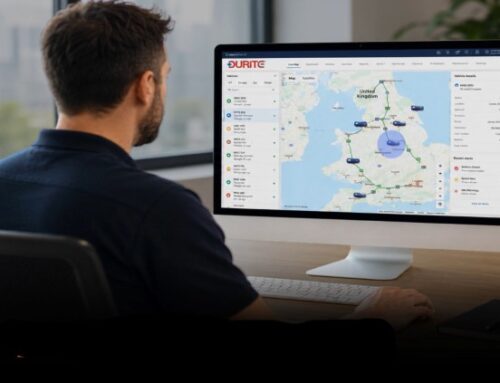
Recorded footage and supporting data of any collision, near miss or harsh driving event is therefore uploaded and can be viewed almost instantly, meaning a transport manager has complete visibility and control of vehicles out on the road.
This also allows driving style to be measured and analysed, so meaningful steps can be taken as part of wider road safety strategy and driver training initiative.
There is currently rapid development in terms of the video telematics technology available, making it possible to optimise the safety of drivers, other road users and members of the public.
For example, traditional proximity sensors warn of a nearby road user, but often an alert can be triggered by street furniture such as lampposts, bollards, road signs and bins. The risk here is that a driver becomes complacent and takes less notice of an alarm because it is going off all the time.
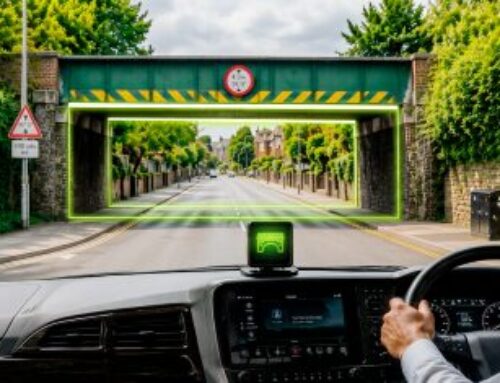
 In contrast, the latest blind spot detection (BSD) side cameras, using Advanced Driver Assistance Systems (ADAS) technology, are designed to specifically detect vulnerable road users using AI technology where it is able to distinguish humans from false positives.
These are highly effective at identifying cyclists, motorcyclists and pedestrians and pinpointing exactly where they are in relation to the vehicle. By linking the alert to the camera system, the driver can receive live footage via an in-cab monitor, so they can quickly take preventative measures.
Advances in ADAS is also enabling video telematics solutions to recognise if a driver is displaying signs of tiredness or is distracted by actions such as mobile phone use, smoking and eating to ensure their attention is focused on the road.
As a result, they can be immediately alerted with a visual and audible warning, while an office-based manager can monitor areas of concern both in real-time and historically to help ensure drivers are acting responsibly.
While how best to protect vulnerable road users has been discussed, it is also important not to overlook the driver who, through no fault of their own, could be involved in a serious incident based on the inadequate visibility provided by a vehicle. There is one tragic example we have seen, which clearly underlines this point.
When a customer’s HGV driver was involved in a fatal collision with a jogger, it was possible to view video evidence and quickly determine that the driver was not at fault. Footage was sent to the police at the scene, via the driver’s mobile phone, so he was treated with compassion as a significant witness rather than being a suspect.
 Without the connected cameras, the driver could have lost his job and suffered added psychological trauma, while the jogger’s family may never have had closure by not knowing what had happened and who was to blame.
Transport operators need to ensure drivers are given the tools need to operate responsibly, while adopting systems to better understand fleet risk and take steps that prevent collisions.
Visibility is key to optimising the safety of both drivers and vulnerable road users, so video telematics offers an effective means of reducing collisions and ultimately saving lives.