
The key to safeguarding your O-licence
 Mark Lewin, director of Novadata Transport Training, says acting quickly to re-establish compliance is the best way to survive a public inquiry
While many operators are extremely diligent in managing their compliance, there is a tendency among some to forget that O-licences, as well as vehicles, need to be managed and maintained. In order to fulfil the undertakings that come with being an O-licence holder, you must have robust systems and processes in place to ensure that you – and those who work for you – comply with current transport legislation and best practice.
This, of course, involves conducting daily walkaround vehicle checks with robust reporting of any defects, digital tachograph analysis, and adherence to drivers’ hours and Working Time Directive rules. It also includes driving licence checks, and, of course, rigorous vehicle maintenance.
Crucially, compliance requires keeping robust records which provide evidence to demonstrate that you have done all that could be reasonably expected to achieve and maintain compliance. You may be doing everything required of you to comply in practical terms, but if you cannot demonstrate your compliance, you will be in a very weak position legally.
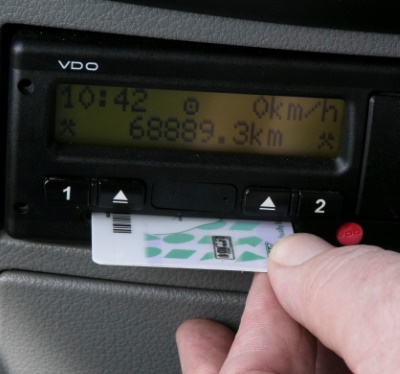
Record keeping is just as frequent a cause of operators coming to the attention of the authorities as vehicle maintenance faults. It is all too common, for example, for it to be discovered following a road accident, that a vehicle unit or driver’s card has not been downloaded before its deadline. This can be enough to bring your entire operation under scrutiny; and can easily lead to a public inquiry.
 If you have any doubts about whether your processes could stand up to close scrutiny, you would probably find a transport systems audit beneficial. An audit will highlight and pinpoint any weaknesses in your systems, whether in practical procedures or record keeping. You should not wait until you come to the attention of the authorities to make sure that you are fully compliant.
The attention of the authorities is usually drawn following some kind of incident, either an accident or some form of roadside infringement. There is often a lapse of several weeks or months between the incident itself and the arrival of a letter from the traffic commissioner requesting your attendance at a public inquiry.
This time period can be critical – mind the gap. As soon as you are aware of an incident having occurred, you should take action immediately to put your house in order and rectify your mistake. If you are not clear about what your mistake was, again, a systems audit will tell you this and the auditor can show you what to do to rectify it. Do not wait for the traffic commissioner’s letter to arrive.
You should also seek advice from a legal expert. There are solicitors who specialise on transport law. Having legal representation at a hearing may be an added expense, but it will be worth it. You may be fighting for the survival of your business.
When you appear at a public inquiry or a preliminary hearing, the traffic commissioner will be assessing your actions. If you have taken steps to correct your mistakes and strengthen your processes immediately following the incident, they will form a far more favourable opinion of you than if you do nothing until their letter arrives, or worse, until the actual hearing.
Doing nothing will make you look irresponsible and apathetic; an ideal candidate for losing both your good repute and your O-licence. The only thing that looks worse is failing to appear or disregarding the instructions which the traffic commissioner gives at the hearing.
 Taking prompt, positive action may be sufficient to convince the TC that this was an honest mistake which you will not make again. The TC will probably order you to undertake Transport Manager CPC Refresher training or an Operator Licence Awareness Training (OLAT) course. If you have already managed to fit this in before a hearing, this will also count in your favour.
Make sure you attend a two-day course, which covers each topic in greater depth, and is typically the preferred choice of the traffic commissioners.
Regular training is essential for transport managers and O-licence holders. The UK traffic commissioners are very clear that they expect those responsible for the management of the O-licence to attend training every few years to keep abreast of evolving transport legislation and best practice.
The application for an O-licence is made, then signed, usually, by the director of the company. The legality of much of the organisation’s daily business then rests on its continued existence. You might expect, therefore, that the maintenance of the O-licence becomes of vital importance. In many organisations it does; but, in far too many others, it is neglected. This is a serious mistake. Once their signature is on the O-licence application, the director becomes personally liable for compliance.
Judging by the conversations that we regularly have with attendees at our OLAT courses, for some restricted O-licence holders in particular, the reality of their legal responsibilities comes as something of a shock. Many of those on our OLAT courses have already come to the attention of the traffic commissioner; but they could have avoided this if they had attended OLAT training voluntarily every few years, and applied the best practice that they would have learned.
 In the past, traffic commissioners have also required operators to include O-licence and transport issues as an item on the agenda of board of directors’ meetings, and can request operators to provide the minutes of such meetings to establish if there is a proactive strategy for O-licence management and for compliance with the undertakings.
After all, compliance is not a luxury; neither is your O-licence. If you need an O-licence to operate your business, there probably is no feasible alternative; and your business could collapse without it.
At the end of the day, your business probably depends on managing your compliance.