
Mandata: maintaining success with telematics
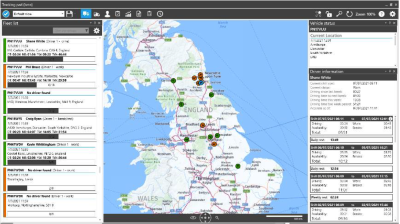 Software provider Mandata has outlined its perspective on how telematics technology can help ensure hauliers can continue to operate successfully within an increasingly competitive industry.
“Combining a tracking and telematics solution with a transport management system (TMS) gives hauliers more than just a dot on a map,” said the company.
“Mandata’s TMS and telematics solutions, for example, allow operators to compare vehicles to see which ones are performing the best; provide in-cab coaching to drivers to improve their driving style; and monitor drivers’ hours and allocate extra work where possible.”
It highlights several key ways in which transport managers can benefit from using vehicle telematics in their operations. Telematics systems provide tools that allow them to assess drivers and vehicles against key performance indicators (KPIs), identify patterns of behaviour, and quickly spot problem areas that need attention. By sharing this information with their teams, they can improve vehicle efficiency and promote positive driving to optimise fleet performance.
Having accurate, up-to-date information about drivers’ working hours available is another invaluable operational tool, the firm adds.
“It helps operators simplify planning and maximise the productivity and profitability of their workforce.
“Integration between a fleet tracking system and a transport management system (TMS) allows planners to see a breakdown of a driver’s hours in the TMS. This aids in the allocation of work, giving a real-time view of individual drivers’ driving times, working times, periods of availability, and breaks.
“It also lets operators view detailed weekly shift information, rest days, and where each activity occurred, using a series of on-screen tools and reports. Possible regulatory and compliance breaches are highlighted for further investigation in their dedicated tachograph compliance system.”
Mandata also highlights the advantages of automating tacho downloads.
“Digital tachograph downloads improve the systemised capture of driver and vehicle tacho data for hauliers – making time-consuming manual tacho downloads a thing of the past,” it said.
“Driver data is automatically collected from tachographs. This reduces the burden of having to gather data from vehicles and drivers off the road as well as the associated admin time and costs. It also eliminates the risk of information being lost or incomplete.
“Such a service can pull data from digital tachographs and driver cards even when vehicles are out on the road. It can also request the data from each driver’s card and each vehicle at specified intervals and upload it for storage on servers.
“This allows operators to monitor the success of uploads. They can then either download the data to add to their dedicated compliance system or automatically send it to a third-party analysis service.”
Employee motivation was another key benefit of telematics.
“Where performance metrics are clear, employees can be recognised for their performance or receive support and additional training where necessary. When employees are supported to perform at their best, it creates an organisational culture where they become invested in their performance and the success of the business. Plus, the costs of incentivising drivers to perform well on their scorecard will be paid for by maximising the fuel savings the open information brings.”
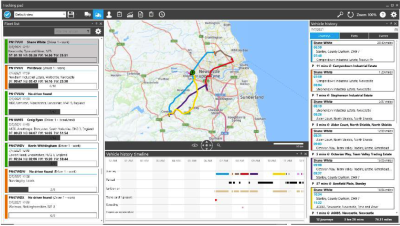 Mandata emphasises the potential for reduced operating costs offered by telematics solutions; for example, having accurate, data-derived insights makes it possible to improve fuel management and driver behaviour. But decreasing liability risks and improving safety were also key factors to consider, and another consequence of driver behaviour monitoring, which could help protect a haulier’s reputation.
“Fleet tracking systems help to reduce traffic accidents and avoid problems such as heavy traffic and construction along the way,” added the company.
“When liability is properly managed, insurance costs may even come down.”
In the future, staying up to date with new trends will be critical for operators to improve efficiencies and keep customers happy with real-time information about their deliveries, Mandata contends.
“Telematics has provided a massive boost, and application programming interfaces (APIs) have increased its use through integration with other systems such as transport management, maintenance, and compliance. Integration capabilities with other services or software systems will continue to improve as the demand to connect to other systems increases.”
Telematics systems can even alert operators when maintenance is needed on a vehicle.
“This ensures that servicing is always up to date and unexpected repair costs are minimised.
“To remain successful, transport operators will have to be able to gather large quantities of accurate, meaningful information from drivers and vehicles. But, as the amount of sensitive data from external and internal sources grows, so do the challenges around privacy, safety, and security. To address these serious challenges, telematics service providers will inevitably have to develop stricter new architectures to meet the changing standards.”