
2 Start’s tips on load handling safety
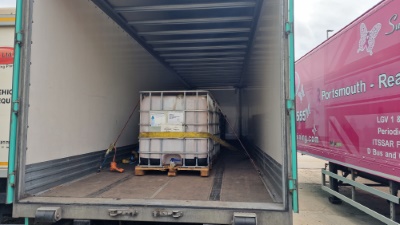 Training provider 2 Start Ltd has issued advice for fleet operators and employees around the handling and securing of loads, including dangerous goods.
“All loads which are carried on any category type vehicle must be secured and checked by the relevant people… regardless of the vehicle type, size, load contents and weight, as well as the duration/distance of the journey,” said the company.
“Confirming your load is secured and fastened down, by using the appropriate load securing technique, and [ensuring] the proper steps have been applied when checking the load for safety… protects everyone who is involved in the loading, unloading and driving of the vehicle. This subsequently also protects other road users and pedestrians.”
The lack of safe handling and transportation of loads can result in an array of incidents, 2 Start warns, which may include injury to individuals such as crushing accidents, or even an overturned vehicle.
2 Start emphasises the importance when loading and unloading of ensuring that the areas are clear of any other traffic, pedestrians and individuals not involved with the loading or unloading process, as well as being clear of any overhead electrical cables. The area must also be level to ensure stability.
“Other factors include reaffirming the brakes are applied to the vehicle, plus that the loads are suitably distributed and packaged,” the company continued.
“There are several securing solutions that are available, depending on the load type. It is vital that you as a loader, driver, or consignor are aware of what fasteners must be used in order to alleviate the risk of an incident occurring, and for the load weight and its movement during its journey.”
The company went on to discuss a range of fastening types for loads, including buckle straps and internal nets for loads weighing less than 400kg; and bungee securing systems, held in the roof and brought down over the load.
Chains can offer a strong fastening solution for securing machinery, says 2 Start, and are less vulnerable to becoming damaged. It warned of potential dangers to look out for regarding certain fastening systems: such as ropes deteriorating over time, or webbing ratchet straps sustaining damage, for example as a result of weather, oil contamination or sharp edges.
“In some instances, the load could become unstable and shift during a journey. There is key significance when it comes to safely deciding when you must act,” said 2 Start.
“In the instance that a load shifts mid journey, the driver should slow down and look for a place to stop, so that the cargo can be resecured.”
2 Start emphasised the importance of ensuring that any procedures followed do not hinder the safety of those involved in load handling during the transportation of dangerous goods.
“Of course, not only would this depend on the dangerous goods being handled, but also the quantities, and the way in which they are loaded for transportation,” said the company.
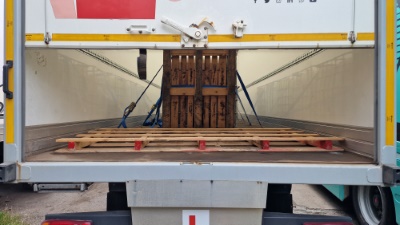 “Another consideration is that dangerous goods aren’t necessarily in [their] raw form all the time during transportation. It could be in the form of a cosmetic, or a pharmaceutical.
“A health and safety risk assessment must consider all these factors… This would also include what to do if the driver [was unable] to resecure a load safely in the instance of this being a dangerous good.”
2 Start offers ADR Awareness training for those required to handle, load, pick and package (for example, a pallet) of items that are deemed dangerous goods – such as moving them within a warehouse facility, or onto a vehicle which will be transporting them, but not the actual transportation by road.
“Our one-day training course will cover the topic of safe load handling and thresholds, and why they are important,” said the firm.
Topics covered include the risks that arise if the thresholds are exceeded.
“At 2 Start, we believe that those who would be involved in the transportation [of dangerous goods] should understand the importance of load handling and security through… ADR awareness courses,” it said.
“However, when it comes to the carriage of dangerous goods by road, the full vocational ADR certificate is needed.”
Storage and segregation rules are also covered. This will include different pallet sizes, as well as the importance of labelling and packing dangerous goods safely.
“Ensure you and your team are competently trained in the safe loading and handling of goods being transported by you or your business and be proactive in educating yourself and your team with an accredited training provider like 2 Start Ltd,” the firm advised.