
Emissions compliance in focus with Eminox
 Diesel particulate filter (DPF) manufacturer Eminox has emphasised the importance of good maintenance in ensuring Euro VI emissions compliance, and offered its take on why partnering with trusted suppliers can bring tangible benefits.
“With a Euro VI compliant DPF removing as much as 98-99 per cent of tailpipe particles, it is clear to see the positive impacts that correctly working DPFs can have on emissions compliance, air quality and public health,” said Dr Dave Phillips, engineering director at Eminox.
“However, even with regular maintenance and servicing schedules, DPF warning lights can still appear on dashboards. One of the most common reasons for this is when the DPF is blocked.
“This means the filter is no longer working efficiently at removing the particulate matter (PM) or soot, from the exhaust system. Identifying factors could include loss of engine power, the emission of black exhaust smoke, or unusual engine smells, all of which negatively affect emissions compliance.
“Driving a commercial vehicle without the required emissions control could compromise the legal compliance of the vehicle if stopped or tested. This is particularly important when driving in the ever-increasing amount of UK based ultra-low emission or clean air zones (ULEZ or CAZ) and hefty fines can be applied for non-compliance.”
For those who operate vehicles on the continent, says Dave, even higher standards of DPF testing have been introduced in Belgium, Netherlands, Switzerland and Germany, and it is expected that future adherence is likely in more countries.
“Periodic Testing Instrument – Particle Number, referred to as PTI-PN, essentially replaces smoke testing and gives a particle number measurement, rather than an opacity measurement. It is carried out whilst the vehicle is idle and stationary using a portable PN tester,” he continued.
“By setting a new testing standard for in service DPF monitoring, it is important to appreciate that whilst it is possible to get DPFs cleaned, low quality cleaning processes are not as effective as a replacement DPF and may therefore not meet the new required standards of PTI-PN testing.”
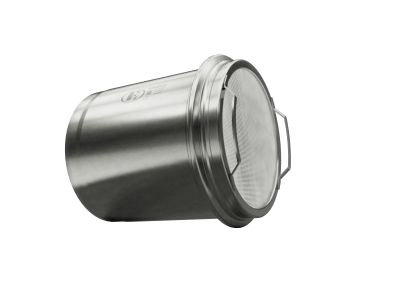 Replacing a DPF is not as challenging as perhaps perceived, he adds.
“Indeed, it is a simple process which brings reassurance surrounding vehicle compliance, continued performance, and minimal downtime for fleet operators and drivers.
“By choosing high quality replacements, operators benefit from greater flexibility surrounding vehicle deployment, safe in the knowledge that vehicles, whether in the UK or on the continent, will meet the latest standards of DPF testing.
“To benefit from this flexibility, forming a partnership with an expert engineering and manufacturing company with a detailed understanding of vehicle emissions legislation and compliance can be advantageous.
“As designers and developers of emissions reduction technologies, Eminox has a range of real world tested, market leading products which meet the latest standards of DPF testing.
“These have brought, and will continue to bring, reliability and cost efficiencies for operators striving to ensure their vehicles are environmentally sustainable and achieve emissions compliance, whilst prolonging the life of fleets.
“By choosing approved, proven technologies from pioneering designers and manufacturers such as Eminox, compliance and cost can be managed whilst the transition from diesel powered fleets to electric and other alternative fuel sources takes place.”
More about Eminox and its established range of Euro VI replacement DPFs can be found at the website.