
MAHA UK: the changing landscape of brake testing compliance
 After adapting to changes to the brake testing regime in 2025, workshops and operators are now moving into a new phase, according to workshop equipment manufacturer MAHA UK – optimising for long-term compliance, efficiency and data quality.
While it may seem like business-as-usual, the company says the real beneficiaries will be those that future-proof their workshop capabilities.
Among key changes last year was the Driver & Vehicle Standards Agency’s (DVSA) approval of the use of load simulation brake rollers for annual testing.
MAHA UK highlights a DVSA bulletin from August announcing the change, which acknowledged that laden brake testing can “take a long time” and can be “costly” for operators. The bulletin also cited the potential for time and money savings through the use of load simulation brake rollers, as well as reduced environmental impact as the need to drive heavily laden vehicles to authorised testing facilities (ATFs) is avoided.
“This change provides flexibility for test-lane design,” said the equipment provider.
“MAHA UK has received many enquiries and undertaken projects where its rising roller systems have been preferred.”
In collaboration with Premier Pits, the company installed a new ATF lane at Manchetts Group’s Sleaford depot last year. This installation was in response to demand for brake testing and vehicle inspections, and MAHA was chosen for its reliability, longevity and aftersales support.
The firm also highlighted the 31 December 2025 deadline to update roller brake testing software, which required all ATFs and workshops conducting tests to update their systems.
 According to a DVSA bulletin, the upgrades were designed to facilitate a number of improvements – such as updates to service brake efficiencies, including draw bar trailers; changes in how secondary brake performance is measured; key programme changes to prevent tyre damage; improved workflows to aid consistency of brake testing at test and preventative inspection; and the inclusion of advisory items, to better support wider preventative maintenance of vehicles and trailers and road safety.
“Most roller brake testers will have been upgraded during calibration,” said the company.
“MAHA UK encourages any workshops that have not yet completed the update to schedule it immediately.”
Lastly the firm emphasises updates to the Guide to Maintaining Roadworthiness last year, underscoring the importance of laden brake tests during routine inspections.
“The tightening of the rules means brake performance – and, ultimately, safety – is under greater scrutiny than ever,” said MAHA UK.
“The guide aims to ensure that brakes are assessed under realistic load conditions, reflecting actual on-road performance. Approved methods include EBPMS, a laden roller brake tester and a decelerometer with temperature readings.
“These changes place strong emphasis on the operator. Anyone conducting and interpreting brake test data needs to be competent, sign and date the evaluation, and ensure results are stored with the vehicle’s safety records.”
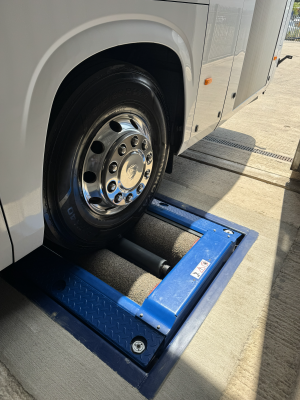
MAHA UK says rising roller brake testers can improve the accuracy of measurements on lightly loaded vehicles by simulating some of the vertical load experienced when laden. This helps workshops generate results that more closely reflect real-world performance and reduces the risk of false lockups during testing.
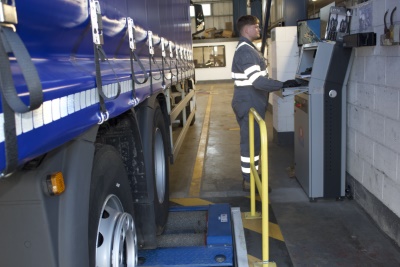
WG Tanker Group, a supplier and installer of pressure-discharge and vacuum equipment, recently completed a new service lane – the second in 18 months – to support increased demand for inspection, servicing and MOT preparation. With the new rising roller brake tester, the team can carry out faster, accurate and compliant brake tests, says MAHA, supporting fleet safety and operational performance.
The company supplies DVSA-approved workshop equipment and offers solutions to help workshops meet updated requirements.
These include the MBT 7250 brake tester, which features a large roller sensor (100mm diameter) and an axle load capacity of up to 20 tonnes, providing consistent coverage across each tyre. Its robust electronic, temperature-compensated strain gauge system is designed to ensure accurate measurements regardless of external conditions.
The MBT 7250 also offers a rising roller bed option. The rollers can be lifted up to 250mm to simulate an axle load of up to 13 tonnes. The system is said to provide a reliable alternative to traditional laden testing methods.
While this method is useful in many cases, says MAHA, additional equipment – such as hydraulic rams or fixed anchor points – may still be required to ensure the necessary load is applied.
 MAHA UK managing director Neil Ebbs said: “Last year saw the enforcement of guidelines and legislation affecting both suppliers of brake testing equipment and those conducting inspections and repairs.
“This year, we expect demand to continue, and, if anything, increase. Workshops and operators are seeking equipment and solutions that not only meet compliance requirements but also deliver efficiency, reliability and accurate data to support fleet safety and operational decision-making.”