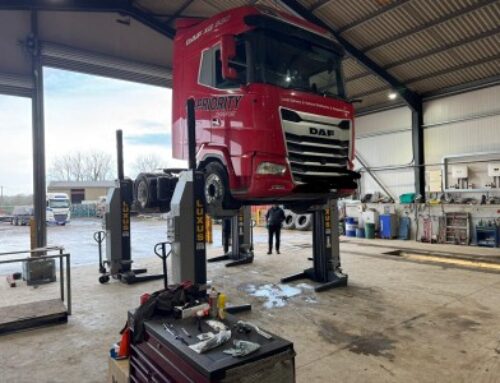

TyreSafe: a proactive approach to tyre safety
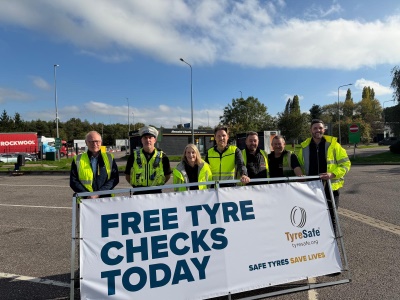
TyreSafe and partners conducted truck tyre checks at motorway service areas during Tyre Safety Month in October
Tyre safety charity TyreSafe has emphasised the advantages for fleet operators of adopting a robust, proactive approach to tyre management in terms of safety, compliance and efficiency.
TyreSafe is dedicated to raising awareness of the importance of correct tyre maintenance and the dangers of illegal and poorly maintained tyres, working with government bodies, police, and industry partners to help reduce the number of tyre-related incidents on the roads.
The organisation says its work with transport managers, including recent targeted guidance with PSV operators like Lancashire County Council, consistently highlights a critical dichotomy in the industry: proactive compliance versus reactive crisis management.
“It is an industry truism, reinforced by intelligence from major roadside stops, that the biggest compliance gap is often found not within the large national fleets traversing the Strategic Road Network (SRN), but among smaller operators on local and regional roads,” said TyreSafe.
“These fleets, often involved in industry sectors like waste management, construction, parcel delivery and inner-city urban bus services, operate under conditions that create a ‘perfect storm’ for premature tyre failure.”
The conditions it identifies include hazardous environments: local urban roads, building sites, and waste depots are notoriously littered with debris, glass, and sharp objects, leading to frequent and hidden tyre damage.
Such fleets can be prone to overloading, says TyreSafe: vehicles are often run at or near their maximum authorised mass (MAM), and light commercial vehicles (LCVs/vans) are particularly susceptible to overloading. They may also be prone to constant stop-start, the charity adds: frequent braking and acceleration, characteristic of local delivery and urban PSV routes, generate high heat and put immense cyclical stress on the tyre casing and structure.
“For smaller fleets, the necessary systematic management framework to mitigate these risks is often absent,” said the organisation.
“They are less likely to be part of an accreditation scheme like FORS or DVSA Earned Recognition (ER), or to utilise the robust safety standards of CLOCS or ISO 39001. Investment in telematics, dedicated maintenance staff, and formal tyre contracts is often deferred, driven by the immediate pressure of reducing costs. Compliance, as a result, becomes reactive rather than proactive.
“For transport managers, ensuring tyre safety starts with the management system framework, not just the rubber itself. The goal is to move beyond mere driver diligence and enforce an auditable process.
“This process must cover mandatory daily checks: for smaller fleets especially, the reliance on a driver’s ad-hoc diligence is a risk. Checks must be systematic, mandatory, and properly recorded. This is where the legal and financial responsibility of the transport manager and operator begins.”
The process must also involve proactive maintenance, says TyreSafe.
“Tyre maintenance should be treated as preventative financial planning. Deferring non-critical maintenance to save a few pounds today inevitably leads to unplanned downtime, costly emergency call-outs, and component damage tomorrow.
“Our work with Lancashire County Council demonstrated that even in budget-constrained public sectors, a rigorous, process-driven approach to maintenance reduces overall operating costs and ensures the fleet remains safe, on the road, and fully efficient.
“The risks of poorly maintained tyres are far-reaching and impact every aspect of an operator’s licence. Complacency is not only a moral failure but a financially devastating one.”
The most immediate danger is the risk to life, says TyreSafe. Poorly maintained tyres are a direct contributor to serious incidents, which may include catastrophic blowouts: under-inflated tyres generate excessive heat, leading to sudden, violent failure, particularly at speed or under heavy load.
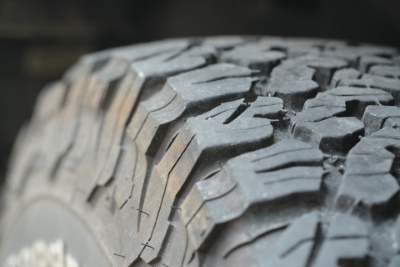 Increased stopping distances also pose a problem, the charity points out: worn tread significantly reduces grip and increases the risk of aquaplaning in wet weather, directly jeopardising the safety of the driver and other road users. An explosive tyre failure can also scatter large chunks of debris, causing subsequent incidents for following traffic.
“The traffic commissioner views repeated roadworthiness defects, especially on tyres, as a serious breach of the operator’s licence conditions…
“The DVSA will issue an immediate prohibition notice for illegal tyres (exposed cord, major damage, or below the 1mm tread limit for HGVs), causing unscheduled downtime.”
Both the driver and the operator may face substantial fines and penalty points, adds TyreSafe, and a poor compliance history jeopardises the licence itself.
“In the tragic event of a fatal incident, evidence of neglected tyre maintenance can lead to charges of negligence under the Corporate Manslaughter and Corporate Homicide Act 2007, exposing directors to severe legal liability.”
While many smaller operators cut maintenance to survive, the charity contends that this approach is fundamentally counterproductive to good financial health.
“Under-inflated tyres increase rolling resistance, directly hiking fuel consumption by a measurable percentage,” it observed.
“Neglected alignment and pressure issues accelerate uneven wear, shortening the tyre’s lifespan and forcing costly early replacement purchases.
“A roadside call-out for a puncture or blowout costs significantly more than a scheduled maintenance check, causing missed delivery windows, disruption to service, and lost customers.
“A highly visible vehicle detention or a serious incident severely damages brand reputation, which can lead to increased insurance premiums and loss of future contracts.”
TyreSafe concluded: “Daily checks and timely action are not an unnecessary burden; they are good financial planning.
“A robust tyre management system is the cheapest insurance policy you can buy. Whether you pursue a formal accreditation path like FORS or ER, or simply adopt the systems they mandate, ensuring your tyres are legally and safely maintained is the most effective way to keep your fleet safe, compliant, and profitable in 2026.”