
Compliance: hitting the moving target
 Derek Broomfield, chairman of Novadata, explains why Transport Manager CPC Refresher and Operator Licence Awareness Training courses should be seen as an essential part of managing an organisation
Transport legislation never stands still, and keeping pace with compliance can feel like aiming at a moving target. Over the past few years, the pace of legislative changes and adaptations to transport best-practice has been marked, placing increasing pressure on operators and transport managers to keep their knowledge up to date.
Yet many transport managers find themselves juggling day-to-day operational demands, leaving little time to review legislative developments or refresh their qualifications.
Company directors whose organisations require an O-licence in order to operate also frequently find it difficult to set aside time to attend a training course – but it is essential that they do so.
For one thing, all the statutory directors or business partners or business owners are ultimately responsible for fulfilling the O-licence undertakings and can face regulatory action should they fail to do so. For another, losing their O-licence would be one of the most difficult and costly challenges to overcome.
In order to comply, you have to understand what is required. That is precisely why Transport Manager CPC Refresher and Operator Licence Awareness Training (OLAT) is so important.
For those who have not attended one of these courses for five years or more, the risk of falling behind is very real – and both DVSA examiners and traffic commissioners will quickly identify gaps in knowledge. With compliance forming the backbone of every successful O-licence, being out of date is simply not an option.
The transport industry has undergone considerable regulatory evolution in the last half-decade. Some of the most impactful developments include:
Drivers’ hours rules
The rules governing drivers’ hours have seen several changes, reshaping how drivers record activity and how operators must demonstrate compliance. Crucially, the number of accepted options for recording drivers’ hours has reduced, narrowing the margin for error.
Operators can no longer rely on long-established methods that may have been permissible in the past. DVSA enforcement officers now expect transport managers, directors and owners to be fully conversant with the updated requirements, including digital recording standards, supporting documents, and the tightening around what constitutes acceptable manual entries.
DVSA’s Guide to Maintaining Roadworthiness
Once perceived as a relatively static document, the Guide to Maintaining Roadworthiness has been revised not once but four times since 2020. Each revision has included technical updates, clarifications, and procedural expectations that directly affect how operators manage inspections, defect reporting, safety inspections intervals, and vehicle maintenance planning.
The guide details best practice and industry standards. Traffic commissioners expect operators to follow the guidance carefully and failure to follow its principles often features prominently in public inquiry findings. Operators who have not kept pace with these revisions risk unknowingly drifting out of compliance.
 Driver CPC pathways
Another important change is the introduction of two clear Driver CPC pathways: the national and the international routes. We say clear, but we find that many operators don’t really understand what this means or entails.
A choice of pathways provides drivers with greater flexibility but also puts responsibility on operators and transport managers to ensure the correct pathway is chosen for the type of work being undertaken. For fleets operating both domestic and cross-border activity, the distinction is particularly significant. Managers must understand, communicate, and oversee the correct periodic Driver CPC training route to avoid unintentional non-compliance.
While the regulatory environment may have evolved, several core responsibilities remain firmly in place. These constants serve as the foundation on which compliance is built:
O-licence undertakings must always be met
Whatever changes occur in legislation, operators are bound by the undertakings set out in their O-licence. These include ensuring vehicles are kept fit and roadworthy, ensuring drivers comply with rules on drivers’ hours and tachographs, and maintaining proper monitoring and recording systems. Traffic commissioners expect transport managers to demonstrate active, continuous control – and that expectation is not diminishing.
Transport managers are expected to stay current
The requirement for transport managers – and indeed company directors and owners – to keep themselves up to date with legislation and best practice is not optional; it is a professional obligation and a condition of repute. Traffic commissioners frequently challenge transport managers whose knowledge appears out-of-date, and failure to remain current is a recurring theme in enforcement cases. Simply put, outdated knowledge can jeopardise both professional repute and the operator’s licence.
Monitoring OCRS
A favourable operator compliance risk score (OCRS), often referred to as the ‘traffic light’ score, remains a central indicator of an operator’s compliance culture. Falling behind on legislative changes – especially those relating to roadworthiness and drivers’ hours – can quickly translate into roadside encounters, prohibition notices, and a rising OCRS. Consistently poor scores attract attention from DVSA and may trigger more serious regulatory action.
 Correct use of digital tachographs matters
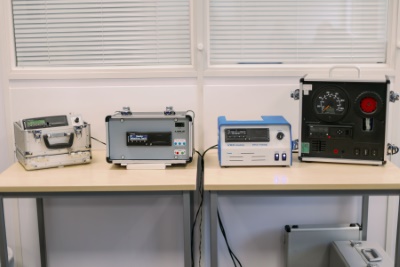
One area in which we frequently see infringements is the incorrect use of digital tachographs – particularly when making manual entries. It is vital that managers and supervisors are themselves up to date in best practice in the use of tachographs, so they can spot any problems with a driver’s use of the tachograph and instruct them in the correct procedures.
We provide a specific Digital Tachograph Course for Managers & Supervisors for this very reason. When planning Driver CPC training for drivers, it is always worth including a course on drivers’ hours and tachographs, to ensure that every member of the team knows how to use their digital tachograph correctly.
The O-licence is always at risk if compliance slips
Ultimately, any lapse in legislative knowledge can lead to practical compliance failures. Whether through outdated maintenance systems, incorrect drivers’ hours processes, or inappropriate Driver CPC training routes, the consequences can escalate rapidly. Public inquiries frequently feature cases where the root cause was a lack of current knowledge among key personnel. The O-licence, the lifeblood of a transport operation, is jeopardised when managers are not fully informed.
The case for refresher training
Simply doing things the way you have always done them is often a recipe for disaster. Given the pace and volume of change, Transport Manager CPC Refresher and OLAT training have shifted from being a periodic check-in to a vital protective measure for any operator.
A high-quality course offers more than updates: it strengthens a transport manager’s confidence, ensures that the director or owner understands their responsibilities, reinforces compliance structures, and demonstrates a proactive approach to meeting O-licence undertakings.
In a sector where compliance failures can be costly, training is not a luxury. It is an essential tool for safe, efficient, legally sound and compliant transport operations.