
UTAC: the evolution of heavy-duty emissions testing
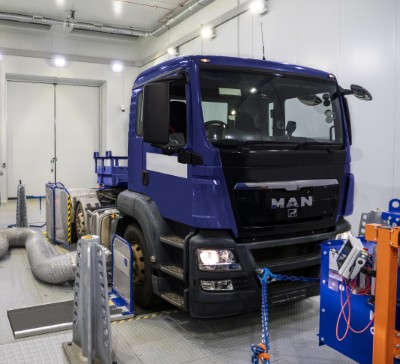 Vehicle test facility UTAC Millbrook has offered an insight into the evolution of heavy-duty emissions testing over the last five years.
When UTAC commissioned its second Variable Temperature Emissions Chamber (VTEC 2) at UTAC Millbrook in 2021, the commercial vehicle sector was already in transition, but few would have predicted how quickly the testing landscape would diversify.
“At that point, diesel still dominated heavy-duty operations, while battery-electric vehicles were beginning to gain traction in urban fleets, particularly in last-mile delivery,” said Tony Perkins, chief engineer and propulsion and technical programme manager, hydrogen, at UTAC.
“Hydrogen was attracting growing interest but remained largely at the development stage. Regulation was tightening, yet many practical questions around real-world performance were still unanswered.
“Five years on, the mix of vehicles and programmes passing through the UTAC VTEC 2 facility paints a clearer picture of where the industry now stands. The focus of emissions testing has moved beyond compliance alone, toward answering practical, application-specific questions about how different technologies perform in real operating conditions.”
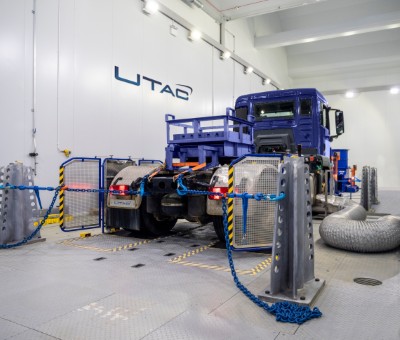
VTEC 2 was designed to support emissions and energy testing across diesel, petrol, liquefied petroleum gas (LPG), compressed natural gas (CNG), battery-electric and hydrogen vehicles, including for trucks and buses.
The climatic chamber allows controlled testing from -20°C to +50°C, with humidity control, and is paired with full legislative emissions measurement equipment, advanced particulate analysis, and fuel and energy consumption measurement.
“Crucially for the commercial vehicle sector, the facility supports VECTO cycle evaluation and simulated real driving emissions (RDE) testing, driveline resistance testing, multi-axle and four-wheel-drive configurations, extended-duration test cycles, EV range and auxiliary load assessments, as well as fuel, lubricant and aftertreatment evaluation,” said Tony Perkins.
“This level of adaptability has proven essential as propulsion strategies across the industry have diversified rather than converged.”
One of the more notable changes in recent years, he says, has been the increasing demand for bespoke duty-cycle testing, driven by a need to better reflect vehicles’ actual use in service.
“UTAC has worked closely with operators for decades to replicate real-world operation. As far back as the late 1990s, engineers at Millbrook developed the New London Transport Bus Cycle using data gathered from a central London route, capturing the stop-start nature of traffic, dwell times and typical urban operating conditions.
“That approach remains relevant today. Operators are increasingly focused on understanding how vehicles perform on their own routes – whether in urban delivery, supermarket distribution, airport operations or regional haulage – rather than relying solely on standardised test cycles.”
The mix and volume of work carried out in VTEC 2 over the past five years points to a number of clear shifts in focus across the commercial vehicle sector, Tony explains.
 “There has been a noticeable increase in battery-electric vehicle climatic testing, particularly around range sensitivity. Rather than relying on nominal figures, operators are increasingly interested in how heating, air-conditioning and auxiliary loads affect usable range in both hot and cold conditions.
“Hydrogen programmes have also become more common, covering both fuel-cell vehicles and hydrogen internal combustion engines. Much of this work is linked to regional and long-haul applications, where payload capability, refuelling time and daily utilisation remain key considerations.
“Alongside these trends, there has been continued demand for fuel, lubricant and additive evaluation, especially in low-temperature conditions. For diesel vehicles that remain in service at scale, cold-weather performance, aftertreatment behaviour and overall energy efficiency continue to have a direct impact on operating costs and reliability.”
From an emissions standpoint, he says, progress over recent years has been incremental rather than transformative, shaped primarily by regulatory requirements rather than sudden technological shifts.
“Manufacturers continue to invest heavily in meeting evolving emissions standards, while testing activity has increasingly focused on the relationship between laboratory results and real-world operation.
“As a result, simulated RDE and extended-duration testing have become a more routine part of development and validation programmes.
“There is also growing attention on non-combustion particulates, including tyre wear and brake dust. As tailpipe emissions reduce, these sources are receiving greater scrutiny as part of a broader assessment of vehicle environmental impact.”
One of the clearer conclusions from five years of operation at VTEC 2 is that no single propulsion technology is suited to every commercial vehicle application.
“Battery-electric vehicles are generally well matched to urban and short-range duties where routes are predictable and charging access can be planned. Hydrogen continues to attract interest for longer-distance and higher-utilisation operations…
“In practice, factors such as infrastructure availability, vehicle utilisation, payload variability and ambient temperature all play a decisive role, and those factors can differ significantly from one fleet to another.
“VTEC 2 already supports hydrogen vehicle testing, with further hydrogen capability upgrades across UTAC’s facilities developed and ready to deploy as demand increases. At the same time, the facility continues to evolve in response to customer requirements, rather than committing prematurely to any single technological pathway.”