
ZF Aftermarket: a new mindset for modern CV braking
 ZF Aftermarket, which provides an extensive range of braking components for trucks, trailers and buses under its TRW brand, has highlighted the increased pressure commercial vehicle braking systems face in modern times.
“Heavier loads, mixed-duty cycles, denser traffic, longer operating hours and the early effects of electrification have reshaped how brakes wear, behave and interact with the vehicle’s wider safety systems,” said ZF Aftermarket.
“Once viewed as a mature, predictable category, CV braking has evolved into a precision engineering discipline where thermal behaviour, machining accuracy, material science and electronic system compatibility all determine how safely and efficiently a fleet can operate.”
ZF Aftermarket, drawing on the strength of TRW’s century-long braking expertise, emphasises the challenges that modern fleets and workshops face, and says the aftermarket must now treat braking with the same rigour once reserved only for engines or driveline components.
“Thermal load has become one of the defining stresses for heavy-duty braking systems,” the company continued.
“A fully laden 44-tonne vehicle travelling at motorway speed generates enormous kinetic energy; the moment the driver brakes, this energy is converted into heat.
“Temperatures can exceed 500°C, and repeated cycles of intense heating and cooling cause microstructural fatigue, glazing, fade and eventually distortion. In drum systems, heat is trapped for longer, further accelerating wear.
“ZF’s response to these realities is grounded in materials engineering. TRW High Carbon brake discs, for example, are designed to offer higher thermal conductivity and greater stability under extreme temperature changes.
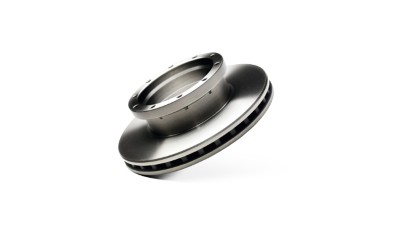 “They cool faster, resist cracking more effectively and maintain consistent friction characteristics during sustained braking, making them particularly valuable for long-haul fleets and vehicles operating on demanding, hilly routes.
“Increasingly, vehicle manufacturers specify High Carbon discs for these very reasons, and TRW ensures the aftermarket has equivalent technology with the same performance expectations.”
But heat alone doesn’t tell the whole story, says ZF Aftermarket.
“Modern braking systems rely on extraordinary precision. Even small deviations in disc parallelism, pad shape, piston travel or lining curvature can alter braking torque and disrupt the finely balanced interaction between the mechanical components and the vehicle’s ABS, EBS or stability control systems.
“Issues that workshops describe as judder, drag, imbalance or weak pedal feel often originate in subtle but crucial tolerance variations.
“TRW brake discs address this with CNC-controlled machining, guaranteeing uniformity and surface accuracy. Disc positioning holes are milled with tight repeatability, and every casting undergoes strict metallurgical checks before machining.
“This ensures low Disc Thickness Variation and maintains braking comfort while supporting the vehicle’s electronic systems, which are calibrated to very specific torque responses.”
Friction materials are equally important, the company contends.
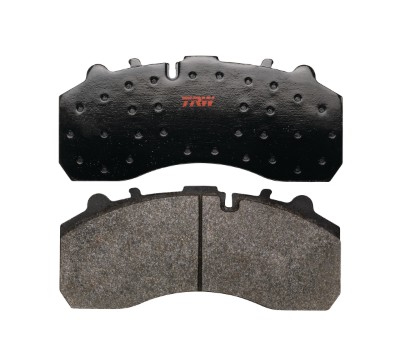
“TRW CV brake pads use advanced formulations designed to outperform OE Service parts in independent tests. Their friction stability across heat cycles, fade resistance under extreme braking and fast recovery in wet conditions contribute to predictable braking torque – especially important for vehicles equipped with sophisticated control systems.
“TRW’s patented backing plate design further enhances heat dissipation and bonding strength, reducing the risk of shear, cracking or delamination during high-stress braking.
“These materials and manufacturing principles are validated through rigorous testing programmes. TRW components undergo high-performance dynamometer tests, Alpine descent simulations and independent evaluations from leading institutes such as Fraunhofer.
“These assessments push components far beyond typical real-world braking demands to ensure they not only meet international standards like ECE R90 but exceed them. Results consistently show TRW brake pads and discs delivering longer life, greater stability and reduced wear compared with rival products, including several OE alternatives.”
ZF Aftermarket also highlights the new braking challenges introduced by the advent of electric and hybrid commercial vehicles.
“Regenerative braking transfers much of the deceleration load to electric motors, meaning friction brakes often operate cold for long periods. This can lead to increased corrosion, uneven wear or glazing – and when friction braking is finally needed, typically in higher-load scenarios, the system must respond instantly.
“ZF engineers are developing friction materials and disc formulations that maintain torque predictability even when braking events are infrequent or irregular, ensuring the aftermarket keeps pace with the shift to electrified platforms.”
Trailers present another persistent challenge, it says.
 “With variable loading, extended periods of inactivity and exposure to harsher environments, trailer brake systems frequently become imbalanced. MOT data continues to highlight trailer brake performance as a key concern, underscoring the importance of quality replacement components.
“TRW’s drum and lining sets are engineered with the same OE-derived methodology that governs its disc systems, ensuring stable performance even under inconsistent operating conditions.
“Beyond engineering, ZF Aftermarket understands that workshops need support that ensures correct fitment and fast turnaround. TRW brake pads, discs and calipers are supplied with all essential accessories and fitting kits, helping technicians avoid delays and minimising the risk of comebacks. With wide coverage across Europe’s commercial vehicle parc, the TRW range enables workshops to find the correct component quickly and carry out repairs with confidence.”
ZF says its caliper programme reinforces its commitment to quality and sustainability.
“TRW remanufactured calipers are restored to OE specifications through a controlled, fully audited process. Each caliper is disassembled, cleaned, re-machined, rebuilt and 100 per cent end-of-line tested to ensure it performs exactly as the manufacturer intended.
“By controlling the entire remanufacturing chain, ZF delivers calipers that combine performance, reliability and environmental responsibility.
“In a sector where vehicle uptime, safety and operating cost are critical, braking systems can no longer be viewed as commodity components. They form part of an advanced safety architecture that relies on material quality, thermal stability, machining precision and electronic compatibility.
“ZF Aftermarket and TRW bring together OE-level engineering, rigorous validation and a full-service aftermarket support network to help workshops meet these increasing demands.”
As braking technology continues to evolve – driven by higher payloads, stricter regulations, electrification and more complex vehicle control systems – the industry will depend on suppliers capable of matching the engineering sophistication of the vehicles themselves, says the company.
“ZF stands firmly in that space, ensuring fleets and workshops have the braking solutions required to keep Britain’s commercial vehicles safe, compliant and consistently on the move.”