
Netradyne: driving up safety with near-miss data
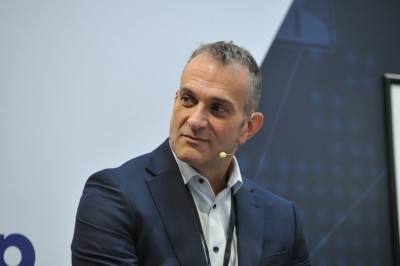
Sergio Barata of Netradyne
Safety solutions provider Netradyne has outlined the role that near-miss data can play in reducing risk for commercial vehicle fleets.
“Accidents per million miles remain an essential benchmark for HGV, PSV and LCV operators, where vehicle mass, stopping distances and operating environments mean that every incident carries significant human and financial risk,” said Sergio Barata, VP for EMEA at Netradyne.
“But accidents only tell us what has already gone wrong. The real opportunity to improve safety lies earlier in the risk curve: in the near misses, close calls and unsafe behaviours that rarely make it into formal reporting, but almost always precede a serious collision.
“According to Heinrich’s Law, for every one serious accident, there are 29 minor injuries, 300 near misses, and 3,000 unsafe acts or conditions. If fleets want to prevent the one serious accident, they must start by understanding and addressing the hundreds of warning signals that come before it.”
As AI becomes more deeply embedded in commercial fleets, the role of telematics itself is changing, says Sergio.
“Beyond location and utilisation, modern systems are now capturing near-miss data: moments of elevated risk that signal danger before an incident occurs. This shift is turning telematics into a predictive safety tool, enabling operators to move from reactive investigation to preventative action.
“Near misses are not rare anomalies in professional driving. Tight delivery windows, complex urban routes, vulnerable road users, depot movements and long driving hours all create moments where risk briefly spikes but no collision occurs.
“Historically, these moments have been invisible. Today, vision-based safety systems such as Netradyne’s Driver•i allow fleets to detect and analyse them at scale, using outward-facing and in-cab cameras and AI to understand what was happening in the milliseconds before a potential incident.
“Rather than focusing only on collisions, operators can track leading indicators of risk, from harsh turning to speeding, driver distraction, traffic light violations and fatigue, and address them before they escalate into accidents.
“For heavy vehicle fleets, this shift is particularly important. Preventing a single serious incident can avoid not only injury or loss of life, but also extended vehicle downtime, insurance claims, reputational damage and regulatory scrutiny.”
 Internal analysis across fleets using Driver•i illustrates why near-miss data matters, Sergio contends.
“While accidents per million miles show a clear downward trend year over year – the ultimate goal for any fleet – the more instructive insight comes from what happens before those accidents ever occur.
“The analysis tracks non-compliance behaviours that have a strong correlation with close calls and future collisions, including hard turn events, driver distraction incidents, speeding non-compliance and traffic light violations.
“Across the fleet population, all of these indicators decline over time. The reduction is most pronounced among drivers with more experience using the system – typically those who have driven for more than 100 days with Driver•i installed.
“More experienced drivers record significantly fewer hard turn and distraction alerts per 10,000 miles, as well as lower accident rates per million miles than newer drivers. The pattern is consistent: as drivers receive ongoing, contextual feedback about their own driving, risky behaviours reduce well before a collision ever occurs. This is the practical difference between reactive safety programmes and predictive ones.”
Near-miss data also reframes how fleets think about driver behaviour, he adds.
“Unsafe actions are rarely the result of wilful disregard; more often, they stem from tiredness, distraction, workload pressure or momentary lapses in attention. Near misses can also help “fleet operators understand road conditions.
“This is where modern driver-safety platforms add important nuance. Alongside event detection, Driver•i now incorporates fatigue detection, using sensor data and AI to identify signs of drowsiness and reduced alertness – all factors that are particularly relevant in long-haul, multi-shift and high-utilisation operations.
“Fatigue is a classic example of a risk factor that is difficult to measure using traditional methods, yet strongly linked to near misses. By identifying early warning signs such as Percentage of Eyelid Closure over the Pupil over Time (PERCLOS), fleets can intervene through coaching, route planning or schedule adjustments, rather than waiting for an incident to force action.”
The goal is not surveillance, Sergio says, but awareness – helping drivers understand when risk is increasing and giving operators the insight to respond constructively.
“Customer feedback reinforces this point. Even highly experienced drivers can fall prey to fatigue. Safety managers report that early alerts have helped them recognise when fatigue is beginning to creep in, enabling targeted coaching on rest discipline and workload management.
“In many cases, drivers themselves have welcomed the alerts, viewing them as a safeguard rather than a reprimand. Over time, these individual interventions feed back into the broader safety system, strengthening both behavioural outcomes and AI model performance.”