
Nissens turns the spotlight on air conditioning
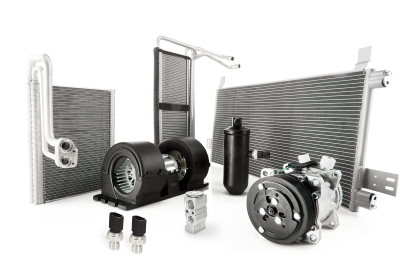 Aftermarket specialist Nissens Automotive has highlighted the importance of the climate comfort system in commercial vehicles, and has emphasised the necessity to use premium quality replacement parts for its repair and maintenance.
To function correctly and operate at its optimum efficiency, all of the elements within every vehicle system need to be in good condition and working in harmony with all the others, says Nissens.
“This is particularly true of the air conditioning (AC), which, although it utilises certain common properties, such as electrical power from the battery and drive from the engine, in many ways is a stand alone system that works independently of many of the vehicle’s other systems.
“Due to its central role within the AC system, the compressor is often referred to as its heart, but the entire system needs to be in good health for it to keep the climate in the cabin at the correct levels, when it comes to both its temperature and air quality.
“It’s always worth thinking about how the AC system works when considering its maintenance or repair, as it helps to come to logical conclusions and then to make the correct decisions.
“Starting with the compressor, as its name suggests, this component compresses and circulates the refrigerant and lubricant mixture around the system’s sealed loop, from its low pressure side, after flowing through the thermal expansion valve (TXV), once it’s been cooled down by the evaporator.
“When compressed, as well as entering the high pressure side of the system, the temperature of the mixture significantly increases and turns from liquid to gas.
“It then goes through the condenser, where its temperature falls and it condenses back to a liquid, to go through the receiver drier/accumulator and on to the evaporator, which is the heat exchanger that actually provides the cool air that enters the cabin through the vehicle’s heater/blower. It then returns through the TXV to the compressor, for the cycle to begin again.”
Annually checking the condition of the AC system is an important job for CV workshops, says Nissens; and to enable them to carry out the work proficiently and to use premium quality replacement components, the company can assist with both expert instruction and the required parts.
 “As a leader in thermal management solutions, Nissens has the specialist knowledge required to understand the requirements of the AC system and therefore the quality of the components needed to support its correct operation. As the following points make clear, it is also able to help technicians keep their eyes open to potential issues with the system’s key components.
“Compressor – obviously the correct specification and quantity of lubricant is crucial to ensure peak performance and lifespan, but following the right installation procedure, including flushing the system, is also vital when fitting a replacement.
“Condenser – this component is particularly exposed to impacts from stones and debris, as well as rain and road salt, so is particularly prone to corrosion, which can quickly weaken its mechanical construction and subsequently, its performance. Corroded or missing fins significantly reduce its effectiveness and that of the entire system, putting excessive load on the other components within the AC loop.
“Receiver drier/accumulator – it is recommended that this is replaced periodically, in line with the vehicle manufacturer’s stipulations, or whenever the AC loop has been opened. This is because the hydroscopic/desiccant drying layers within it can wear, and reduce its ability to properly extract the moisture and filter the refrigerant and oil mixture, threatening the condition of the compressor. Unfiltered particles, debris, or metal fragments etc., or a high level of moisture in the system, can significantly restrict the flow of lubricant or cause corrosion, both of which can lead to the failure of the compressor.
“Evaporator – a poor performing interior blower can reduce its functionality, which will also threaten the compressor. Even a dirty cabin air filter, or a contaminated evaporator surface, will significantly limit the evaporator’s operational ability. Furthermore, internal contamination, mechanical damage or corrosion cannot be repaired, so in these instances, the component must always be replaced, which will also require the installation of a new TXV.
“TXV – a malfunction leads to the reduced performance of the system and exposes the compressor to abnormal load, potentially causing problems such as overheating, which could lead to its seizure. Getting stuck open or closed is one of the most common issues, which naturally affects the flow of the oil and refrigerant mixture, and pushes the system’s parameters out of balance. Contamination within the system is another reason for its failure. In addition, should the compressor need to be replaced, it is highly recommended that the TXV be changed also.
“Blowers – for the AC system to work effectively requires unrestricted cabin air flow, whether that’s to clear the windscreen on frosty mornings or cool the driver during a hot summer. So, in addition to a clean cabin air filter, the blower needs to be working properly. In fact, a faulty blower can significantly increase the compressor’s workload, which could eventually lead to its complete seizure.”
Nissens says its offering is designed to provide a reliable, premium quality, yet cost effective, AC solution for popular European models. The range, which encompasses eight product lines, includes 230 part numbers that cater for 914 original equipment references. Focusing on compressors, the programme covers 89 per cent of the European CV parc.
“In addition to premium quality products with high levels of availability, Nissens also offers business solutions to support daily operations, such as cost-effective logistics and technical training,” the company concluded.