
Government unveils £1bn boost to fund EVs and infrastructure
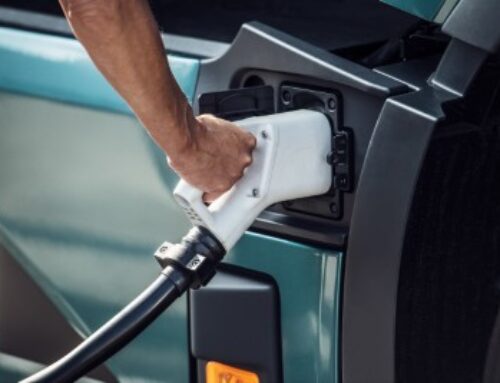
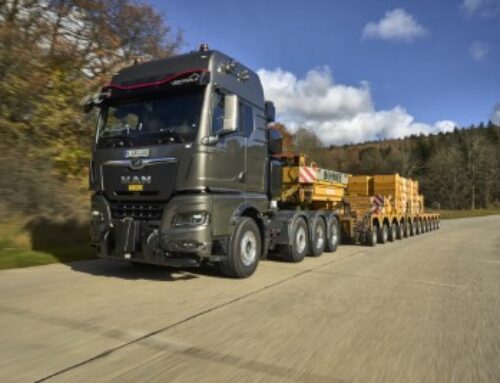
 The Department for Transport and Office for Zero Emission Vehicles have announced a new £1 billion funding package to help commercial fleet operators roll out electric trucks and vans, and to install new electric vehicle (EV) chargers at depots.
The money will be delivered through the Zero Emissions Truck and Van Grants and the Depot Charging Scheme.
The move forms part of the government’s strategy to help build resilience against fuel price uncertainty, and will allow operators to save up to £81,000 off the cost of the heaviest zero-emission trucks – representing up to 40 per cent – and up to £5,000 off new zero-emission vans.
In addition, businesses and public authorities could save up to £1 million – up to 70 per cent of the cost – when installing chargers for HGVs, coaches and vans.
“This £1 billion investment cuts cost for British businesses, supports jobs, cleans up our roads, and gives operators protection against shifting global fuel prices,” said the transport minister Keir Mather.
“The logistics sector is the backbone of the UK economy, worth £170 billion and supporting 2.7 million jobs. We’re helping them expand and decarbonise their fleets whilst saving them cash, driving growth up and down the country.”
The boost follows an earlier funding tranche of £18 million announced in January to help cut the cost of green lorries, which helped operators such as M&S and Wren Kitchens and Bedrooms to decarbonise their fleets.
Lee Holmes, transport and logistics director at Wren Kitchens and Bedrooms, said: “Government investment gives businesses like Wren the confidence to accelerate fleet decarbonisation while maintaining operational stability, even in periods of economic uncertainty.
“With this support, we’ve brought a number of 44-tonne e-trucks into our fleet alongside a rapid charging infrastructure, reducing our reliance on traditional fuels and strengthening resilience and reliability against ongoing market volatility.”
Julian Bailey, head of group transport at M&S, added: “In 2021, we set ourselves the ambitious target of becoming a net zero business across our value chain by 2040. Since then, we’ve made some great progress, which includes the onboarding of 24 battery electric vehicles across our transport fleet.
“We welcome this investment which serves as a reminder of the importance of the logistics sector in the UK and its role in decarbonisation.”
The funding announcement follows the publication of a report earlier in March by the Society of Motor Manufacturers & Traders, entitled Same Destination, Smarter Route: Delivering Decarbonisation in the Modern Market.
While SMMT recognised that the UK had led the way in some respects on EV rollout, including via its zero-emission HGV demonstrator programmes and Europe’s largest zero-emission bus market, the report made the case for an urgent holistic review of the UK’s EV transition.
For vans and cars, the report called on the government to review the current Vehicle Emissions Trading Scheme (VETS) regulation “as a matter of urgency”.
VETS is the mechanism behind the ZEV mandate, which requires that an annually rising proportion of vehicles sold by manufacturers are electric.
“Such a review must assess the gap between mandate targets and customer demand, the adequacy of current regulatory flexibilities in bridging this gap, and the degree to which market enablers and infrastructure have kept pace with ZEV growth,” said the SMMT report.
“For heavier vehicles, government’s current consultation on a new HGV CO2 emissions regulatory framework must pave the way for a thoughtful, joined-up approach to regulation, charging infrastructure and incentivisation that recognises the multitude of diverse HGV types, sizes and use-cases, and the fact that these commercial vehicles must continue to provide business efficiency, cost-effectiveness and competitiveness for fleet operators across their entire working lives.
“In addition, the lack of clarity over what happens when VETS ends in 2030 must be addressed as a matter of urgency by setting a clear and supported regulatory pathway through to the 2035 end-of-sale for non-zero emission light duty vehicles.”
While welcoming recent growth in the number of zero-emission HGVs, the report warned: “With an all-ZEV HGV market targeted for 2040 – and everything under 26t for 2035, the same date as cars – the challenge is stark.
“In comparison with the car market, ZEV HGV uptake has barely begun. The diversity of jobs performed by HGVs – refuse collection, temperature-controlled logistics, bulk good tipping, crane operations, vehicle recovery, firefighting and much more – makes decarbonising trucks significantly more challenging,
“Operators need certainty over lower total costs of ownership, but anxieties over payload, range and the high capital cost of installing depot charging infrastructure depress demand and motivation to switch.”
It added: “A lack of specific public infrastructure able to accommodate vans and HGVs also poses a clear barrier to greater uptake in the commercial vehicle sector.”
In a later statement following the government funding announcement, SMMT chief executive Mike Hawes said the boost was “hugely welcome”.
“Transitioning this sector depends on operator confidence to invest and government support is the clearest sign that ZEVs are the right choice,” he said.
“To accelerate the transition, however, such that ambitious mandated van sales targets are met and the ZEV truck market moves beyond its infancy, these measures must be complemented by enablers such as grid connection prioritisation, dedicated commercial vehicle charging infrastructure and regulation that reflects the diversity of operators’ uses and requirements.”

Ben Fletcher, CEO of Logistics UK
Logistics UK welcomed the announcement as a significant step forward.
“This is the practical support the industry needs that will move the needle on electric commercial vehicle adoption,” said Ben Fletcher, the group’s chief executive.
“Our research highlights a growing gap between decarbonisation targets and industry readiness – particularly among smaller operators – driven by factors such as limited charging infrastructure and high cost of electricity.
“By extending the Depot Charging Scheme and confirming significant funding levels through the Zero Emission Truck and Van Grants, the government is simplifying the investment decisions businesses need to take.
“These announcements reduce uncertainty in purchasing decisions and will help fleet operators demonstrate the operational viability of transitioning to electric vehicles.”
But he added: “Vehicle procurement cycles span several years, so the government must provide multi-year funding certainty to support the continued adoption of Zero Emission vehicles.
“Moving away from the current annual funding cycles will present a clear transition pathway enabling businesses to plan and upgrade their fleets in a more structured and sustainable way.”
Toby Poston, BVRLA chief executive, said: “The Depot Charging Scheme is playing a vital role in helping fleet operators and rental companies to install affordable, reliable charging infrastructure at their depots.
“The vehicle rental sector faces one of the most challenging paths to decarbonisation, and this additional support for depot charging will play a major role in building confidence. It will encourage more rental operators – particularly SMEs – to electrify at scale, reduce costs, and contribute to the UK’s net zero goals.”
James Charnock, interim managing director at Renault Trucks UK & Ireland, said: “As a pioneer in decarbonised transport across both trucks and vans, we welcome this announcement as exactly the boost the industry has been waiting for.
“By directly addressing the critical barriers of high upfront costs and infrastructure investment, the government is enabling operators to move forward with greater confidence.
“The Zero Emission Truck and Van grants and the Depot Charging Scheme will help unlock the business case for fleet electrification, accelerating the transition from ambition to action. For operators, switching to electric is no longer just an environmental imperative, it is a strategic opportunity for sustainable growth, improved total cost of ownership over time and long-term competitiveness.
“We look forward to working closely with partners across the value chain to ensure this momentum translates into real-world deployment at scale.”
Kasia Chodurek, director of business development at Aegis Energy, also praised the new financial commitment by the government.
“By offering significant savings on electric van and truck purchases, this funding helps more fleets to get a foot on the electrification ladder.
“The extension of the DCS also speaks to the government’s recognition that a lack of dedicated charging infrastructure is a key barrier to widespread commercial vehicle electrification. The popularity of the last round also reflected the keen appetite from fleets to close the infrastructure gap. “
She continued: “Whilst making depot charging more affordable is an important piece of the puzzle, installing your own charging infrastructure still remains unattainable for many operators. Lack of grid availability and specialist skills, on top of space and land constraints, make depot installations impossible for many operators, even with funding on the table.
“UK operators also need dedicated, public and semi-public recharging facilities to complement depot locations. These sites are being built right now. The rollout of a national network of multi-energy hubs is ongoing.
“We look forward to engaging with our partners in government, industry, and the commercial sector to further accelerate the transition, delivering infrastructure that makes electrification operationally and financially viable for fleets.”
Chris Morrison, CEO at vehicle electrification specialist Fleete Group, said: “Fleete is investing private capital to build out low-cost nationwide charging infrastructure for electric trucks. To build more infrastructure, we need to know there will be enough electric trucks on the road, and this happens when the electric trucks are competitive with diesel.
“With the new Zero Emissions Truck and Van grant announced today that is a reality. The grant helps bridge the gap until innovation and scale can drive costs down further to a point where the subsidy is not needed.
“Our latest Total Cost of Ownership calculator incorporates the new grant and latest diesel price showing that it is now as cost effective buying an electric truck as a diesel truck. “
Rhian Burrell, managing director at contract hire provider Vertellus, said: “This latest investment in depot charging and vehicle support is a significant step towards enabling fleet operators to shift to electric trucks when it makes operational and commercial sense, creating the right conditions for faster, more practical adoption at scale.
“Through our EV Discovery Programme, we’re already supporting customers on this journey, and these measures will help more fleets move from trial to full rollout.”
Simon Smith, CEO of charging technology provider Voltempo, commented: “Today’s announcement from the Department for Transport is welcome news and exactly what the UK’s road freight sector needs. This significant extension and strengthening of the Plug-in Truck Grant and Depot Charging Scheme sends a clear signal that the transition to zero-emission HGVs is now moving into a significant delivery phase.
“This is where government backing and private sector investment must work hand in hand. The direction of travel is clear, and the focus now is on making electrification work at scale, in real-world operations and that will not be solved by incentives alone.
“For operators, the test is straightforward. Can electric trucks run reliably, at the right cost, within existing logistics models? If they can, adoption will accelerate quickly.
“At Voltempo, we see infrastructure as the deciding factor, delivering depot-based charging as part of a fully integrated solution that enables fleets to operate with certainty. Scaling eHGVs at pace depends on more than hardware alone; grid access, energy pricing, site readiness and long-term scalability are fundamental constraints that must be solved in parallel and will ultimately determine how quickly the sector can move.
“This is a crucial moment. The priority must now be execution; aligning infrastructure, energy and operations so that fleets can transition with confidence and at scale.”