
RHA calls for changes to maximum weight for electric trucks
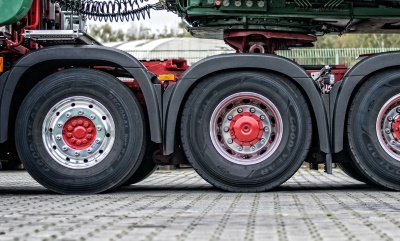 The Road Haulage Association (RHA) has called on government to increase the maximum authorised gross vehicle weight for electric HGVs from 44 tonnes to 46 tonnes, and axle weight limits on the drive axle from 10.5 tonnes to 12.5 tonnes, in order to enable electric trucks to carry equivalent loads to diesel vehicles.
The RHA has also advocated the establishment of a technical working group – convened by the Department for Transport and including operator representatives, vehicle manufacturers, enforcement agencies and others – which would assess the merits of changing authorised vehicle weights and related regulations.
The association’s requests come in the wake of its new report based on evidence gathered directly from operators and dealers, which examines how payload loss is affecting the viability of electric trucks.
The RHA’s research, cited in the Payload Loss Survey Report, suggests that the use of electric HGVs entails payload reductions of up to 11.8 per cent. The report is to be used to inform discussions with government and other stakeholders.
“Together with associated technical changes to vehicle length and turning circle requirements, [increased weight limits] would remedy a barrier caused by regulation that limits the full operating potential of affected electric HGVs compared to their diesel equivalents,” said the report.
“Left unchanged however, current vehicle weight regulations disincentivise an operator from investing in equivalent electric HGVs.
“Based on an indicative comparison of electric vs diesel fuel running costs, running an electric 6×2 costs £28,282 per year more than its diesel equivalent. With current regulations allowing a two-tonne derogation to apply on an electric 4×2 tractor unit, the payload loss penalty on the 4×2 falls from 11.8 per cent to 4 per cent with a consequential and more favourable fall in cost to £15,738 per year more than its diesel equivalent.
“However we also note that, where the payload penalty exists, up to 11.8 per cent or 4 per cent more journeys respectively are required to fulfil deliveries compared to their diesel equivalents.
“Overall, with payload loss left unremedied, the increase in cost to run an electric 6×2 and 4×2 for equivalent payloads is 18.7 per cent and 10.4 per cent respectively. With the payload penalty removed and a hypothetically lower depot based electricity unit price available to business of £0.25 per kWh, a saving is generated for an electric 6×2 compared to its diesel equivalent of £1,855 per year.”
While the research did not cover coaches, or hydrogen-powered vehicles, the RHA said it had judged that vehicle weight and length issues also applied to these vehicle types.
“Similar payload concerns arise for coaches from heavier batteries, with space needs to place hydrogen fuel tanks on an HGV chassis being the primary concern for hydrogen-powered HGVs,” the report summary noted.
“In addition, whilst our research in this report is limited to HGVs operating at 40-tonnes or more, we received further feedback that the operating potential of electric 32-tonne 8×2 rigid HGVs, principally tippers carrying aggregate, is also impeded by current vehicle weight regulations.
“We therefore recommend that the needs of all these vehicles are considered as part of any changes to vehicle weight and length regulations.”
The association said that it fully expected electric HGV cost-effectiveness to improve over time, for example, due to technological advancements impacting on vehicle range and battery capability – and said it would look to monitor progress against these figures in the future.
Commenting, RHA managing director Richard Smith said: “The industry is committed to decarbonisation, but it must be commercially viable. Our new report shows that current regulations are creating a structural barrier.
“Without change, operators face higher costs, more vehicles on the road and reduced efficiency. If we want to accelerate the transition to zero-emission HGVs, we need the right regulatory framework in place.”
In his foreword to the report, Mr Smith acknowledged: “In making these asks, we recognise the consequences. Important questions of public interest will rightly be raised on vehicle safety and the impact on the roads infrastructure. It is vital that these issues are fully considered with all our partners across government, regulators, industry and wider society.
“We therefore present this report to inform technical discussions on how solutions are found that allow the transition to zero emission commercial vehicles to continue unhindered.”