
Industry reacts to government fuel duty freeze
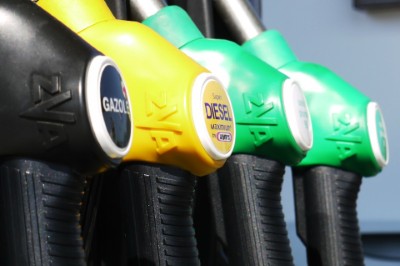 Transport industry trade groups have welcomed the chancellor Rachel Reeves’ announcement on Wednesday that the current freeze on fuel duty will be extended through the rest of the year, postponing earlier plans to begin a phased reversal of the previous government’s 5p duty cut from September.
The chancellor also announced a 12-month road tax holiday for hauliers, which means they will save £600 for a typical heavy lorry and £912 for the biggest vehicles.
Logistics UK said the move showed the government had listened to industry concerns at a time when logistics businesses were finding it increasingly hard to reconcile cost pressures.
“The cost of filling up a large HGV has risen by 31 per cent in the past three months, to around £1,000 a tank, and this cannot be absorbed by an industry operating on incredibly narrow margins,” said chief executive Ben Fletcher.
“Deferring the rise in fuel duty to the end of the year, and introducing a 12-month road tax holiday, will be vital for helping businesses that are under acute pressure to plan ahead with greater confidence, as well as to limit the inflationary impacts for consumers, who rely on our sector every day.”
Logistics UK said the sharp rise in pump prices since the Middle East conflict began had benefited the Treasury to “the tune of £42 million in increased tax take”.
Mr Fletcher said the action announced: “will be a lifeline to the businesses that keep all parts of the economy stocked with everything that the nation relies on every day. At such a tough time for trade, these decisions will be a welcome boost to our sector.”
He continued: “We will maintain our engagement across government to continue making the case for a wider package of support on low carbon fuels, electricity costs and business rates, as well as to keep the situation on fuel duty under review, to help the logistics sector to focus on investing for the future, and transition away from fossil fuels, while delivering for the wider economy for the long term.”
The Road Haulage Association (RHA) also welcomed the announcements, but said more needed to be done.
“We are encouraged that the government is listening to industry concerns, and addressing cost pressures through measures they’ve announced,” said Richard Smith, managing director of the RHA. “But they should go much further.”
“We acknowledge the extension of the fuel duty freeze from September to December, and a temporary cut in red diesel which will reduce some costs for operators in the agricultural sector. It’s good to see that the Chancellor is listening after we and other industry groups have long campaigned against fuel duty increases.
Mr Smith continued: “A one-off 12-month HGV VED ‘holiday’ will offer some relief, but overall the government’s action will have limited impact with many haulage, coach and van operators already on the brink.
“We are seeking clarity from the chancellor on further measures she could introduce to significantly ease the pressure on businesses. In the longer term we urge her to decouple fuel duty from RPI which is planned to start next April which will see prices rise again.”
“But the immediate picture is far more pressing. Cashflow is a huge challenge for transport operators against a backdrop of cost pressures, low margins, and the high rates of insolvency plaguing our sector.
“Businesses need help now. Our recent fuel survey revealed that only 10 per cent of operators can pass on all the fuel cost increases they’re taking on as the price of diesel has soared by 35 per cent.
“It’s never been more critical. This is why we urge the chancellor to introduce an immediate essential user rebate – similar to schemes elsewhere – that would help haulage, coach and van operators substantially reduce their bills, and relieve inflationary pressures across the economy.”
Announcing the measures on Wednesday, Rachel Reeves said: “I’m keeping taxes down for drivers and businesses – putting money in the pockets of millions of workers and cutting costs for farmers and hauliers.
“The war in Iran is pushing up fuel prices here at home but after strong growth at the beginning of the year, I am stepping in to protect people at the pump.
“By protecting households and businesses we are building a stronger and more secure economy for Britain. That is the right economic plan.”
The prime minister Keir Starmer said: “I know many are feeling the pressure of energy and fuel costs, and are worried about how the conflict in Iran will affect their finances. Because when global events drive up prices, it’s working people who feel it first.
“That’s why this government is stepping in to keep fuel costs down for millions of drivers and putting money back in the pockets of working people.”