
Waste oil tips from Totalkare
 When operating a workshop, waste management is not just about saving money and being efficient, says equipment specialist Totalkare – there is also a huge responsibility for the safety of workers and the effects the business has on the environment.
“When we’re talking about vehicles and workshops, it’s safe to assume that any used oil is a waste oil,” said Totalkare.
“When oils are used in vehicles – in places like engines, gearboxes, or compressors – that oil becomes contaminated with impurities.
“Those impurities could be physical (like metal shavings or debris from the machinery they’re used in). Or the impurities could be chemical (created as a result of the chemical reactions between the oil and the machinery).
“Once the impurities in the oil reach a certain level, that oil is no longer fit for purpose, and it gets drained from the machinery it was used in.
“And once it’s not fit for purpose, that means it’s waste oil – and it shouldn’t be used again.”
In most cases, adds the company, any oil you use in a workshop has a specific composition, and is intended for a specific purpose in a specific type of machine.
“If that oil becomes contaminated with another oil (or another substance), it usually won’t be fit for that purpose any more – and that means it becomes a waste oil.
“We shouldn’t need to tell you that mixing chemicals is never a good idea! And in fact, even waste oils themselves have government guidance about whether or not they should be mixed.”
Indeed, online government guidance from the Environment Agency and DEFRA on how to classify vehicle and oily wastes states: “You must not mix any of the following fluids: mineral oils; cooking oils; halogenated oils; brake fluids; anti-freeze; washer fluids; oily waters.”
Totalkare advises: “In almost every case you’ll encounter, oil is a hazardous waste – and that means your business needs to take it seriously.
“Managing waste oil is a serious endeavour – and you need to have the right procedures, safety measures, and tools in place.
“Any used oil that’s drained from your vehicles counts as a waste oil. And any waste oil that’s being stored in your workshop is a hazardous waste.
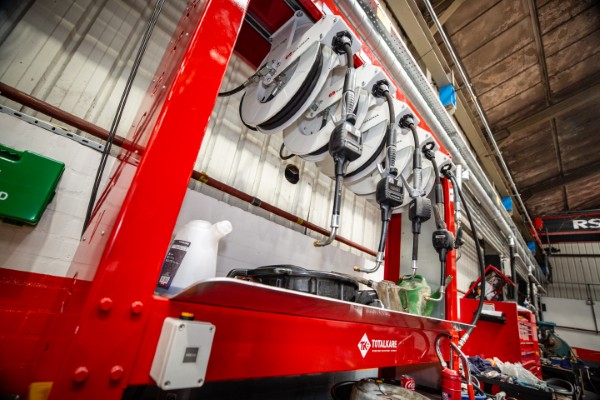
“So if you’re taking your environmental and legal duties seriously (and you should be!), you need to be taking your oil management equipment seriously too. And that means making sure that you’re removing or draining oil safely with the right waste oil and fluid drainers; keeping your oils and fluids separate with dedicated and organised pumps, hose reels and hose reel stands; and transporting and delivering your oils safely with a purpose-built mobile oil dispenser.”
For more information about oil safety, Totalkare advised: “The first step is to understand the government’s guidance – such as their regulations for oil storage, or their guide to pollution prevention for businesses.
“And the next step? Get the right tools in place – to help you stay safe, follow the law, and protect the environment.”