
Joloda Hydraroll highlights the true cost of handling damage
 Joloda Hydraroll has outlined its perspective on how profits can be protected from handling damage within the supply chain, which can also threaten reputation and customer retention.
The most common areas for handling damage to occur are typically during loading and unloading operations at production sites, warehouses and distribution centres, says Wouter Satijn, chief revenue officer at Joloda Hydraroll.
“For sectors such as FMCG, where thousands of finished products pass through the supply chain every day, even low rates of damage can quickly scale,” he added. “A mix of heavy and fragile items compounds the risk.”
Underlying reasons for continued damage can include impacts resulting from manual handling and forklift-based loading, inconsistent load formation, and packaging and labelling issues.
“When goods do not arrive on time and intact, businesses face a chain reaction of reshipments, delays and missed delivery commitments that can quickly turn a single damaged load into lost revenue and future sales,” said Wouter.
“In FMCG supply chains, where retailer service level agreements (SLAs) are strict and margins are tight, it can also result in penalties or delisting risks.
“In addition, minimising handling damage means organisations can reduce the operational disruption that pulls teams away from revenue-generating work. Sales teams could be seeking new customers instead of managing complaints. Logistics personnel could work on core business activities, rather than wasting productivity on processing returned goods.
“Maintaining consistent product quality also means preserving pricing integrity. When products reach customers in good condition, businesses are not forced to discount stock to recover value or compete with their own reduced-price goods.
“Handling damage can also indicate improper handling or incorrect use of equipment. In these cases, the issue extends beyond damaged goods to potential safety and compliance risks.”
To address handling damage effectively, businesses need clear visibility of how much product reaches its destination intact and where damage is occurring, he says.
“Ideally, businesses will aim to achieve a 100 per cent damage-free shipping rate. The more that performance falls short, the more necessary it is to introduce measures, such as implementing load optimisation software to prepare optimal truckloads.
“Updating standard operating procedures (SOPs) for handling and loading is also recommended to minimise product damage, including training staff on best practices for handling and loading delicate items and heavy ones. This is in addition to harnessing loading solutions to load trailers in a straightforward, standardised manner.”
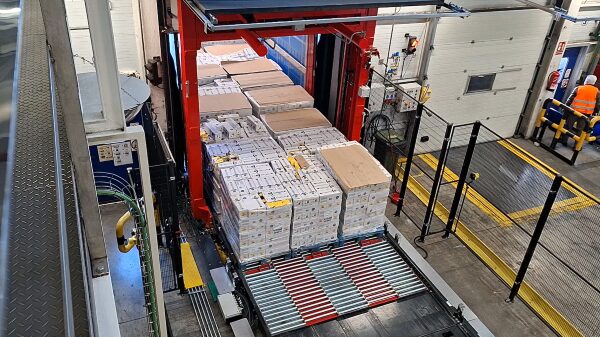
An unmodified automated trailer loading solution (ATLS) can provide significant support for businesses seeking to reduce product damage identified during loading, says Wouter.
“One of the key advantages of an unmodified ATLS is its flexibility. The same system can load any trailer, whether it belongs to the manufacturer, a third-party logistics provider (3PL), or the buyer, such as a supermarket sending its own trailers to collect goods.
“The loading process itself is smooth and consistent, suitable for loading all types of palletised products. Forklifts are needed only to place the goods on the system, which takes care of the rest. An unmodified ATLS loads 30 tonnes of cargo in as little as five minutes and boosts loading efficiency by 50 per cent. Importantly, these supply chain solutions also increase loading safety by removing manual handling from the process. Employees involved in loading can work as safely as they can quickly.”