
Samsara: making Europe’s new tachograph rules work for drivers
 Fleet management specialist Samsara has warned that changes to the way light commercial vehicles are regulated in Europe are bringing unfamiliar responsibilities for many drivers, despite promising stronger safety standards.
“The new EU Mobility Package… has brought drivers of light commercial vehicles (LCVs) weighing above 2.5 tonnes and used for international freight transport or cabotage under the scope of EU drivers’ hours regulations,” explained Ryan Yu, VP product at Samsara.
“This means millions of professional drivers are now becoming very well acquainted with the tachograph.
“Whilst clearly beneficial, tachograph compliance can arguably add another responsibility. Tachographs are simple in concept – they record speed, distance and driver activities. Once slotted in, the tachograph logs who is driving and when it’s taken out drivers then have to manually log what they did (rest or other activity). Often, it takes a bit of practice to get this into a smooth process.
“It’s almost like a retro clock-in, clock-out system. And in an age where everything is automated, it really does feel like an area where tech should do the heavy lifting so drivers can focus on their day job. “
Ryan cites International Road Transport Union estimates that the EU Mobility Package could affect up to three million vehicles across Europe.
“Unlike HGV drivers, many LCV drivers will have limited exposure to tachographs and formal driving-hours regulations,” he said.
“Errors will happen. A driver might select the wrong tachograph mode, make an incorrect manual entry or miscalculate when a break is due. These are not necessarily deliberate attempts to evade the rules. They may simply reflect a lack of familiarity with a new and complicated compliance regime.
“In the UK, breaching rules around drivers’ hours can be met with graduated fixed penalties of up to £300 per offence. Enforcement officers can issue penalties for up to five offences identified during a roadside check, potentially creating a total bill of £1,500.
“The consequences in Spain are even more severe. Since 2020, tachograph manipulation has been treated more seriously than an administrative violation and instead classified as document falsification, which can land a driver in prison for up to three years.”

Samsara’s Ryan Yu
During the first few months of the new mandate being introduced, it’s natural that errors will occur, Ryan says.
“Tachographs are a useful piece of kit for drivers, but they are limited in that they record the breaches rather than averting issues altogether.
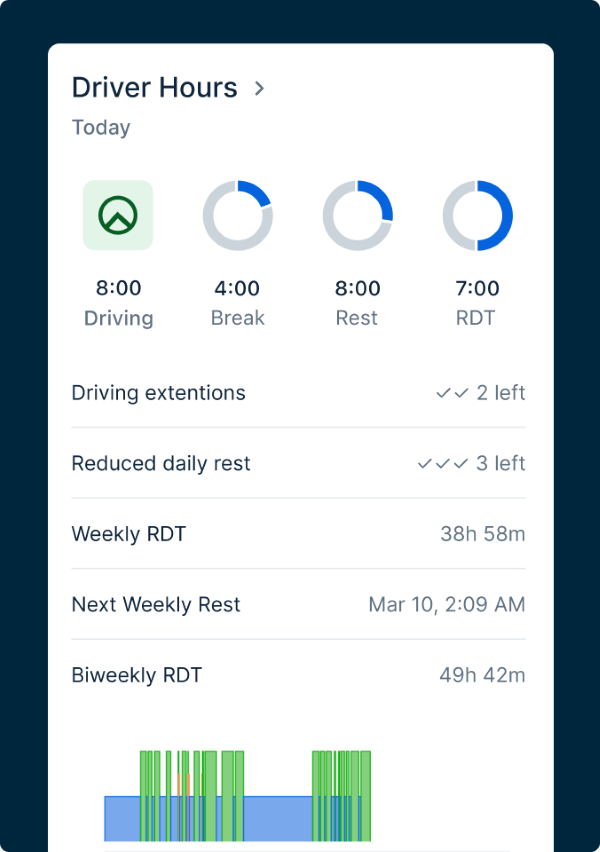
“This is where connected systems come in. They can interpret tachograph and operational data, identifying potential risks before they become violations. That might mean notifying a driver that a break is approaching or warning a transport manager that the hours remaining are incompatible with a planned delivery. The manager can then adjust the route or schedule without placing pressure on the driver to continue.
“The identification of infringements can be automated, so if a mistake occurs or there is an unavoidable issue like a breakdown, then it can be flagged to give drivers and managers a way to address the problem quickly.
“Poorly timed alerts risk becoming a source of distraction in the moment. Instead, two-way voice and AI agents can provide advance warning of potential infractions through hands-free support. This means drivers have all the insights they need with plenty of time to prepare allowing them to remain focused on the road.”
Administration and the threat of financial penalties could deter new drivers or encourage experienced drivers to leave the profession, he says – so operators must consider how they can create solutions that simplify the process.
“Complicated dashboards and excessive alerts will only transfer the burden from one system to another. The best solutions will work quietly in the background. Importantly, they should work with drivers, reducing stress and helping to avoid mistakes.
“Stronger tachograph requirements are intended to improve road safety, but regulation works best when people are given the tools to comply. Drivers’ attention should remain on the road. Technology should handle the maths and provide clear guidance precisely when it is needed.”