
Tachograph talking points
 Su Winch, managing director of transport training and tachograph specialist Novadata, looks at the latest developments
This year, 2026, has been a busy period for tachograph regulatory changes, with a number of hot topics arising. We’ve seen more tachograph-related changes than we have for a while and while in some cases, only a minority of transport operators are affected, change is always unsettling. There are also compliance rules that are less widely known for those operating outside the immediate industry, and there could be something done to raise greater awareness for those on a restricted operator licence, which would benefit us all. Finally, manual entries remain a perennial topic of concern and focus and it’s vital transport managers and drivers are fully conversant with their compliance obligations in this regard.
A recent change (July) that got lots of publicity has been the introduction of Smart Tachograph Version 2 for vans and LGVs between 2.5 and 3.5 tonnes who regularly travel to and from the UK to the EU for hire and reward. The numbers affected in reality are small and it does not (yet) affect this class of vehicle if it only operates within the UK. With the direction of travel being towards higher compliance and safety, this is one to watch.
With almost 5 million registered LGVs in the UK, businesses that have one or two vehicles over 3.5 tonnes to transport their own goods require a restricted operator licence. We provide Operator Licence Awareness Training for those on a restricted licence, and we hear, anecdotally, that many only discover they needed a restricted licence, tachograph and driver’s card when they get stopped by the DVSA. While we can rightly say that people must do their research, it may suggest that if people are caught unawares, an awareness campaign for small businesses by the DVSA or traffic commissioner would help, in part, to rectify this situation and do a great deal for vehicle safety and compliance, with the benefit of improving road safety for all.
 In June this year, and partly in response to the challenges I’ve already highlighted above, tachograph compliance changed for some zero-emission vehicles between 3.5 and 4.25 tonnes; these are now exempt from tachograph use. The exemption only applies to vehicles carrying goods within Great Britain. Northern Ireland is not covered by this exemption. This has been to encourage vehicle operators who only transport goods in Great Britain to choose a vehicle that is better for the environment, especially as they often operate within urban areas.
Depending on the age of your vehicle, the kind of tachograph you’re required to use changes. Most recently, the time for transitional Smart Tachograph Version 2 units that could be used for new vehicles registered in 2024 has now passed. All vehicles first registered after Christmas Eve 2025 must now be fitted with a full Smart Tachograph Version 2 (ST2).
The newest smart tachographs make analysis and the uploading of tachograph and other information very easy. All tachographs and driver cards must be downloaded regularly and the data from both analysed, although many operators fail to download the important speed data from the tachograph unit, so it is worth checking your download device is set correctly. Like other providers, we offer analysis of both digital and analogue tachographs for customers with older fleet, which is a surefire way to ensure you remain compliant and never forget anything important. It ensures that as an operator you do meet all necessary submission deadlines for all your vehicles, whichever tachograph you may have.
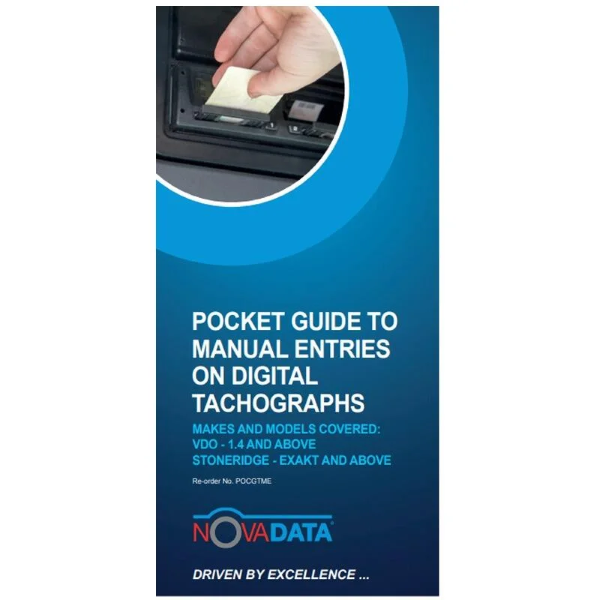
We continue to assist transport managers and their drivers to understand the significant legal changes that require them to provide complete and detailed records of their work, rest, and other activities, which includes completing accurate manual entries on their digital tachographs. This is relevant to all drivers, whether this is their full-time job or an occasional duty.
The drivers’ hours record-keeping rules have a number of serious implications. Recently introduced legislation requires drivers, using the manual input facility in the digital tachograph, to account for the whole working day, not just when they are driving. Once the driver’s card has been removed, manual entries fill in the gaps to show any holiday, sick leave, or rest breaks. They must also be used if the tachograph didn’t work for some reason, or if there was an emergency. Drivers need to understand exactly what kind of detailed records are required, and when they are needed, as well as the legally acceptable methods of record-keeping. In our courses, we include hands-on practice with tachographs the drivers are familiar with so that they can understand how to carry out manual entries correctly and understand any differences between the different manufacturers’ tachographs and models.
Other changes this year include ensuring that all mandatory software updates to the new Smart Tachograph Version 2 units are installed when required. Vehicles may be scanned and stopped if they are found not to be compliant in this respect. The DVSA is rolling out its Dedicated Short-Range Communication (DSRC) scanners to scan vehicles fitted with any smart tachographs to monitor vehicle activities and driver behaviour.
 At Novadata we see a lot of transport managers and drivers who come for training, and we hear firsthand how the administrative burden of new compliance regulations can impact business. We would always encourage any transport operator to ensure they work with good industry partners and suppliers like us, so that they have professional advice and support at the drop of a hat. We would also encourage our customers to join the industry bodies, and attend the regular briefings they organise, as well as subscribe to publications like Transport Operator. In addition, subscribe to email alerts from the DVSA and the traffic commissioners, to ensure you stay on top of current legislation, good practice, and the latest training opportunities.
The demands of tachograph compliance are a good example of why this is necessary, and change will continue apace as safety and compliance for commercial operators rightly remains at the centre of government transport strategies.