
Avoiding common tachograph errors with Microlise
 Fleet technology specialist Microlise has highlighted some of the key tachograph-related mistakes it says fleets are making, and how best to avoid them.
“As tachograph requirements continue to evolve, compliance needs to be treated as an everyday operational priority rather than a box-ticking exercise,” said Microlise compliance product manager George Townson.
“From 1 July 2026, goods vehicles with a gross weight of 2.5 tonnes or more undertaking international journeys for hire and reward became subject to tachograph requirements. In addition, newly registered in-scope vehicles have been required to be fitted with a full Smart Tachograph 2 since 24 December 2025.”
He warned of the danger that operators can wrongly assume vans under 3.5 tonnes are automatically exempt, without considering factors such as trailer weight, journey purpose or whether the vehicle is being used internationally. Occasional international journeys can also cause confusion, particularly where an operator assumes the rules only apply to fleets regularly working overseas.
“Own-goods transport, mixed-use journeys and alternative-fuel vehicles can create further uncertainty, with requirements depending on factors including vehicle weight, operating radius, journey purpose and location.
“Rather than applying one blanket policy across an entire fleet, operators should assess the requirements that apply to individual vehicle types and journeys. A single qualifying international journey can place a vehicle and driver under a different compliance regime, so operators need to be clear on scope before work is allocated.”
Equipment management is another common source of compliance issues, he adds.
“Recent DVSA guidance has highlighted cases where transitional Smart Tachograph 2 units continued to be fitted after the 24 December 2025 deadline. Operators remain responsible for compliance even when work is carried out by an approved tachograph centre. Calibration dates should be monitored, faults addressed promptly and vehicle details, seals and relevant documentation checked before a vehicle returns to service.
“Digital and smart tachographs must normally be recalibrated every two years, as well as following certain repairs or vehicle changes.”
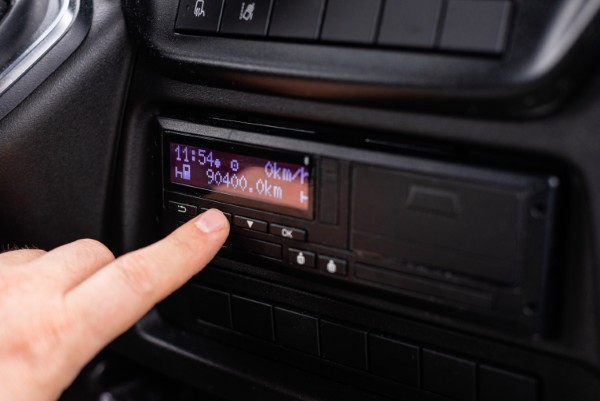 George adds that one of the most common day-to-day mistakes happens when a driver inserts their card and accepts the default entry without properly recording what they have been doing since it was last removed.
“This can leave unexplained gaps covering other work, rest, breaks, periods of availability, annual leave, sick leave or work undertaken away from the vehicle.
“The tachograph record needs to reflect a driver’s full activity, not simply the time spent driving with the card inserted. Where activity has not been recorded automatically, drivers may need to make manual entries. This makes ongoing training important, particularly where recurring mistakes suggest drivers are unclear about what needs to be recorded.”
Tachograph data is often viewed purely as a compliance requirement, says George, but it can provide much greater operational value – for example, when considered alongside wider fleet management and telematics information, rather than in isolation.
“Regular analysis can highlight recurring infringements, identify drivers who may need support and help operators act before problems become systemic.
“When combined with wider operational data, it can also help businesses understand driver utilisation, time spent waiting or loading, scheduling efficiency, overtime and resource planning. For example, recurring waiting times at customer locations or poorly planned schedules may point to wider operational inefficiencies that affect both productivity and compliance.”
He advised that businesses should have clear policies and responsibilities covering data downloads, infringement monitoring, driver training, equipment maintenance, escalation and record-keeping.
“Regular reviews can help identify recurring issues across drivers, vehicles or depots, while driver debriefs can establish why an infringement occurred, whether it could have been prevented and what action should follow.
“Transport planning also has an important role to play. Available driving hours and required rest should be considered before work is allocated, helping operators create realistic schedules and reduce the risk of compliance problems occurring in the first place.
“Internal audits can provide an additional check that procedures are being followed consistently and that records, downloads, training and infringement management are all being handled correctly.”