
Autolift puts safety first with pit jack range
 Keeping commercial vehicles safe and roadworthy relies on thorough inspection, regular maintenance and effective annual testing. For HGVs, buses and coaches, where vehicle weights and operating demands are considerably greater than those of passenger vehicles, having the right workshop and testing equipment is particularly important, says Autolift.
“One piece of equipment that continues to play a vital role is the pit jack,” said the firm.
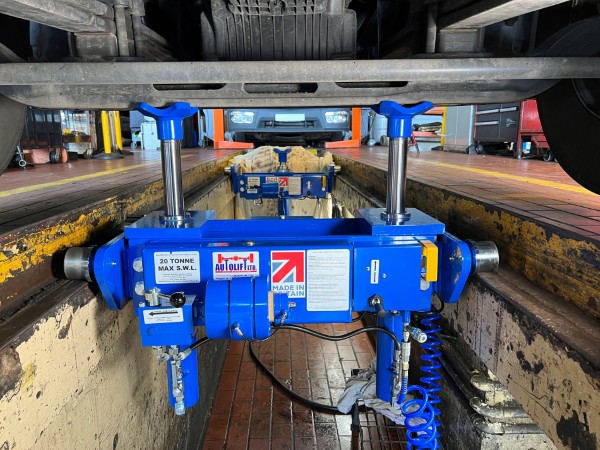
“Whether installed in a commercial vehicle workshop or within a DVSA/ATF test lane, pit jacks provide a practical and controlled method of lifting vehicle axles, giving technicians and inspectors the access they need to carry out essential checks safely and efficiently.
“Inspection pits remain commonplace throughout the commercial vehicle industry, allowing technicians to examine the underside of a vehicle without raising the entire vehicle from the ground.
“A pit jack complements this setup by travelling along the pit and being positioned directly beneath the required lifting point. Individual axles can then be raised for inspection of components including suspension, steering, wheel bearings and braking systems.”
This flexibility is particularly valuable in busy workshops dealing with different vehicle configurations throughout the working day, says Autolift. Rather than repositioning the vehicle for every operation, the jack can simply be moved along the pit to the required location.
“Within DVSA/ATF test lanes, reliability and ease of operation become even more important. Vehicles need to progress through the testing process efficiently while inspectors must be able to carry out the necessary checks consistently and, above all, safely.”
Lifting an axle weighing several tonnes above an inspection pit inevitably requires equipment specifically designed for the task. For this reason, Autolift places considerable emphasis on incorporating multiple layers of safety into its pit jack designs rather than relying on one individual safety device.
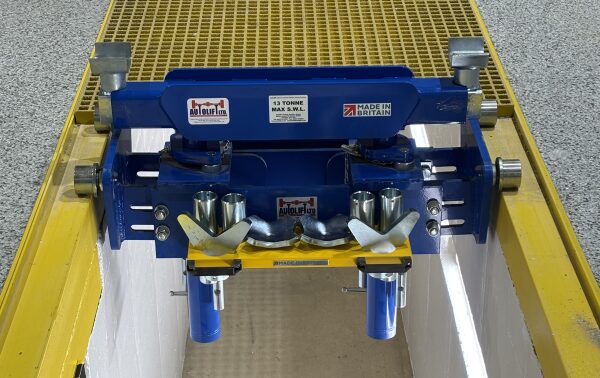 “These include overload protection to prevent the jack being operated beyond its rated lifting capacity and anti-burst valves within each ram,” the firm explained.
“In the event of a hydraulic hose failure, the anti-burst valve is designed to prevent an uncontrolled descent.
“A spring-loaded Safety Lowering Valve provides another safeguard against accidental lowering. Deliberate operation of the control is required before the rams can descend.
“Lock-off handles positioned at the bottom of each ram provide an additional level of control. As well as allowing the two rams to be operated independently, when engaged they prevent the rams from being lowered through the normal controls.
“For facilities requiring an additional mechanical safeguard, Autolift also offers its optional Security Strut system. Once the required lifting height has been achieved, pins are inserted into the struts to mechanically prevent the rams from lowering.”
The Security Strut system allows the hydraulic rams themselves to remain sealed, adds Autolift; keeping water, dirt and workshop debris away from the ram and its seals can help reduce corrosion, maintenance requirements and potential downtime.
The pit jack itself is only part of the lifting arrangement; the correct spreader beam is equally important, says the company, particularly within ATF test lanes. Both fixed and telescopic versions are available.
“Telescopic models provide additional flexibility by allowing the lifting points to be extended to suit different axle widths and, where necessary, reach lifting points beyond the edge of the inspection pit.
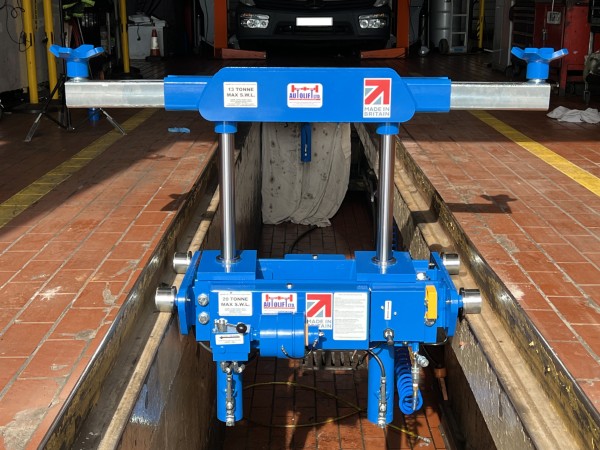 “Correctly positioning the lifting points helps distribute the load appropriately and provides a stable platform during lifting.”
Commercial vehicle workshops are under continual pressure to minimise downtime; and for testing facilities, says Autolift, there is the additional challenge of maintaining vehicle throughput without compromising the quality or safety of an inspection.
“A well-designed pit jack helps achieve both objectives. Straightforward positioning, controlled lifting and the ability to accommodate different vehicles allow technicians to move efficiently from one inspection to the next.
“However, equipment should never be considered fit-and-forget. Regular servicing, inspection and correct operator training remain essential throughout the life of any lifting equipment.
“As commercial vehicles continue to evolve, lifting and inspection equipment must evolve alongside them. Vehicle technology may change, but the fundamentals remain the same: technicians need safe access, dependable equipment and confidence in the machinery supporting the vehicle above them.
“In workshops and DVSA/ATF test lanes across the country, the pit jack therefore remains a relatively simple piece of equipment performing an exceptionally important job – helping keep technicians safe, inspections efficient and commercial vehicles roadworthy.”