
Electrifying the last mile with Dawsongroup vans
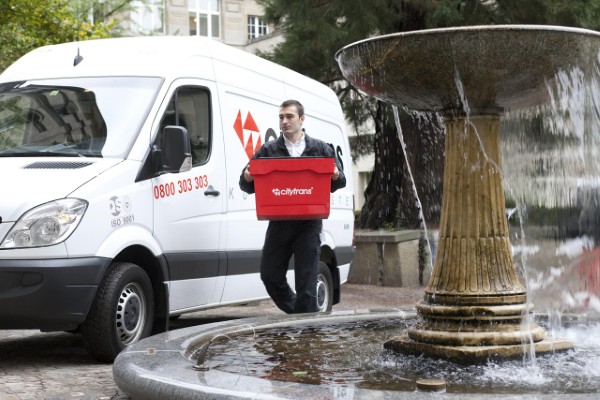 Last-mile delivery is the final and most expensive stretch of the supply chain, and the pressure on costs is not letting up, according to Dawsongroup vans.
The nationwide commercial van rental provider cites a recent DS Smith survey of 550 decision makers which found that 84 per cent of e-commerce businesses across the UK and Europe reported rising last-mile delivery costs in 2024, with 39 per cent seeing double-digit increases.
For fleet operators trying to protect margins while meeting net zero commitments, this final leg has become the part of the journey worth scrutinising most closely, says Dawsongroup vans.
Simon Ridley, managing director at the van rental specialist, believes the last mile is also where electrification makes the strongest commercial sense.
“The last mile ticks almost every box you’d want for an electric vehicle,” he said.
“Routes are repeated, mileage is predictable, and the majority of vans come home to the same depot every night. That’s a very different proposition to long-haul work, where range and charging logistics are far harder to plan around.”
Unlike long-distance haulage, last-mile delivery tends to follow the same streets, the same stops and broadly the same mileage day after day. That consistency makes it far easier for fleet managers to match an electric van’s range to real operational need, Dawsongroup vans contends, rather than planning around a worst-case scenario that rarely occurs.
Ridley says this predictability removes much of the anxiety that still surrounds electric vans.
“When a route is the same one a driver has done a hundred times before, there’s very little left to guess at. Fleet managers can look at exactly what a route demands, specifying a van that comfortably covers it, with margin to spare.”
The urban, multi-drop nature of last-mile work, all those junctions, roundabouts and repeated braking, might look inefficient on paper. For a diesel van, it is, says the company – however for an electric one, it is close to ideal.
Routes with consistent daily mileage and stop-start traffic conditions favour the regenerative braking that electric vans rely on, recovering energy each time the vehicle slows that would otherwise be lost as heat through the brakes.
“Stop-start city driving is exactly the environment where electric vans come into their own,” said Ridley.
“Every time the van slows for a junction or a delivery, some of that energy goes straight back into the battery. It’s the opposite of the fuel economy penalty you’d see with a diesel engine doing the same job.”
In addition to day-to-day running costs, city centre access restrictions are becoming a growing factor in fleet decisions, the firm points out.
London’s Ultra Low Emission Zone applies 24 hours a day, seven days a week, with non-compliant vans facing a daily charge. Several English cities including Birmingham, Bristol, Bath, Bradford, Sheffield and the Tyneside conurbation now operate their own Clean Air Zones too, charging non-compliant vans by the day.
Electric vans are exempt from all of these schemes, which turns clean air compliance into a straightforward operational saving for any fleet delivering into UK cities.
“For fleets running into city centres regularly, these charges add up fast,” advised Ridley. “An electric van avoids them completely, and for last-mile operators, that’s often where the numbers really start to work.”
The upfront cost gap between electric and diesel vans remains a genuine barrier, Dawsongroup vans acknowledges, but government support is easing it. The plug-in van grant currently offers discounts of up to £2,500 for small vans and £5,000 for larger vans, applied automatically at the point of sale.
Meanwhile, electric van registrations rose 74.1 per cent year on year in July, to take a record market share of 14.7 per cent. While signalling that more fleets are already making the switch, this is still less than half the level needed to achieve this year’s mandated target of 24 per cent.
“The grant takes a real bite out of the price difference,” said Ridley.
“And for businesses that would rather avoid the upfront cost altogether, long-term rental removes that barrier completely while still delivering the running cost and access benefits.”
Fleet managers do not need to electrify an entire operation overnight, the company points out. Identifying which routes already match an electric van’s strengths, whether that is depot-based charging, predictable mileage or heavy city centre use, allows the transition to begin where the business case is clearest.
“The fleets getting this right aren’t trying to convert everything at once,” Ridley concluded.
“They’re starting with the routes where electric vans make obvious sense, building confidence, and expanding from there.”