
Dr Air Brake deploys dual defence against reversing accidents
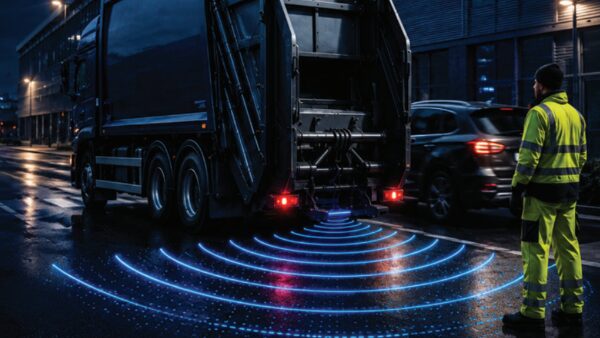 Doctor Air Brake is encouraging commercial vehicle operators to combine ReverseSmart autobraking with Perimeter Safety Zone Lighting in a bid to reduce the risk of reversing accidents, pairing a clear visual boundary for anyone near the vehicle with a system that stops it if the driver does not react.
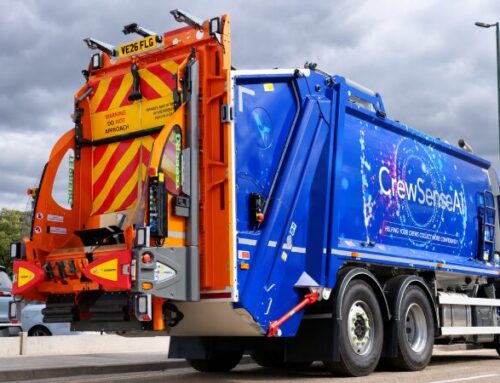
Tarmac and Gloucestershire Fire and Rescue Service are among the latest operators to fit ReverseSmart, which uses a weather-resistant 77GHz radar sensor to monitor a programmable danger zone behind the vehicle. When a person or object enters that zone, the driver receives audible and visual warnings in the cab. If the driver does not respond, the system applies the brakes automatically with a controlled, pulsed action and holds the vehicle for three seconds, giving the driver time to assess the situation without jolting the cab or straining the drivetrain.
On a Tarmac tanker trailer, the radar is linked to super-bright tail lamp stalks. They begin to flash as a hazard approaches, the flash rate quickens as the distance closes, and a solid red light gives a final warning before the brakes are applied.
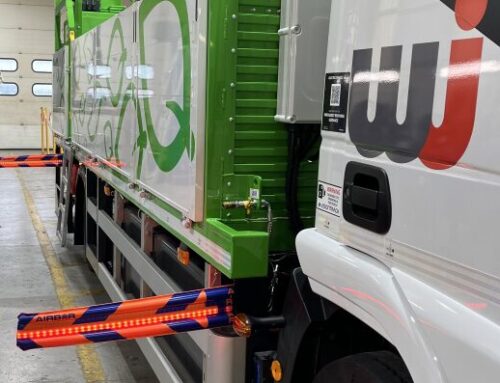
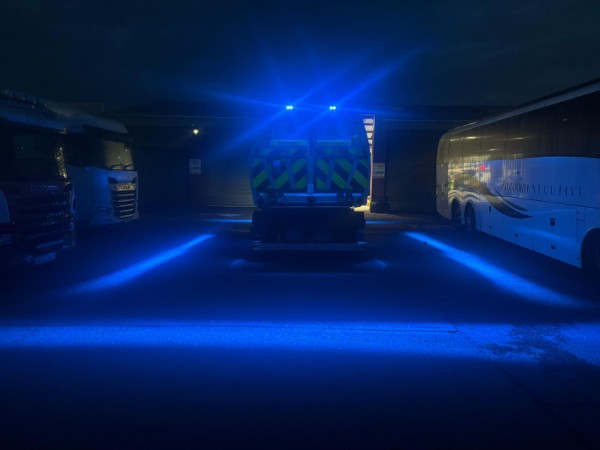
Perimeter Safety Zone Lighting extends the warning to the people outside the cab. High-visibility LED units project a bright red or blue line or zone onto the ground around the vehicle, marking a clear do-not-cross boundary for ground workers, banksmen and pedestrians. The beam can be set to cover the side, the rear or the full 360 degrees around the vehicle, at a distance of up to about three metres. The lights switch on automatically when the vehicle is operating, and can be linked to alarms or flashing beacons for a combined visual and audible warning.
Built for heavy-duty outdoor use and suitable for 12V and 24V systems, the units can be fitted to trucks, road sweepers, forklifts and excavators, and are said to be particularly effective at night and on busy sites as well as motorways where visibility is limited.
At Gloucestershire Fire and Rescue Service, ReverseSmart has been fitted to the first of 10 new fire appliances. Crews regularly manoeuvre in confined spaces, residential streets and at emergency scenes, with members of the public close to the vehicle.
 “For a driver, a reversing collision in which someone is hurt or killed can lead to a police investigation, arrest and prosecution for causing death or serious injury by careless or dangerous driving, along with the lasting personal mental health impact of having been involved,” warned Doctor Air Brake.
“Beyond fines, operators face legal costs, vehicles off the road, higher insurance premiums and reputational damage, as well as the everyday cost of repairing lamps, bumpers and doors after low-speed collision.”
Mirrors, cameras, reversing alarms and trained banksmen all improve what the driver can see or hear, says the firm, but each still depends on the driver spotting the danger and reacting in time. ReverseSmart and Perimeter Safety Zone Lighting are designed for the moments when that does not happen: when someone is in the blind zone, is not looking, or there is simply not enough time to react.
Jeff Lowe, managing director of Doctor Air Brake, said: “Mirrors, cameras, alarms and banksmen all do an important job, and none of that changes. What ReverseSmart adds is a response when the driver doesn’t. If someone steps behind a vehicle and the driver hasn’t seen them, the vehicle will stop automatically, giving you an extra layer of protection.”
He added: “Perimeter lighting means the people around the vehicle get a warning too, not just the driver. They can see exactly where the danger zone is. And when you set the cost of fitting the technology against the human and financial cost of a single accident, the case makes itself.”
ReverseSmart and Perimeter Safety Zone Lighting are available for a wide range of commercial vehicle and plant applications, and Doctor Air Brake offers demonstrations in real operating environments. To arrange one, readers can contact the company via its website.