
Motormax turns safety spotlight on bridge strikes
 Vehicle technology provider Motormax has outlined the significant safety and operational risks posed for commercial fleets by bridge strikes.
The company cites Network Rail figures showing that more than 1,600 bridge strikes were reported in Britain between April 2024 and March 2025 – equivalent to one every five hours. They resulted in over 186,000 minutes of delays, costing the rail industry around £12 million.
“For operators of HGVs, buses, coaches and other high-sided vehicles, effective bridge strike prevention requires a combination of accurate vehicle information, route planning, driver awareness and increasingly, technology that can provide an additional warning when a vehicle approaches a height restriction,” said Motormax.
“Network Rail research found that 32 per cent of drivers admitted setting off without being aware of the height of their vehicle, while 56 per cent had not considered low bridges when planning their journey…
“Vehicle configurations can also vary. Different trailers, loads and equipment can change the overall travelling height, while diversions or unfamiliar routes can introduce risks that may not form part of a driver’s usual journey.”
Official guidance places clear responsibilities on operators too, Motormax adds.
“Senior traffic commissioner guidance advises operators to assess bridge strike risks, plan routes in advance where reasonably practicable, provide appropriate training and ensure vehicle running heights are available to drivers and anyone responsible for planning routes. Vehicles over three metres high must also display an in-cab overall height indicator.
“A bridge strike can have consequences far beyond damage to the vehicle itself. Where railway infrastructure is involved, the bridge must be inspected following an incident to establish whether it is safe before normal rail operations can resume. This can lead to substantial disruption for road and rail users, alongside vehicle recovery, infrastructure repairs and operational downtime.”
In addition, consequences for fleet operators may include insurance claims, disruption to customers or passengers, reputational damage, and potential regulatory action.
“Drivers need accurate information about the height of the vehicle they are operating, particularly where different trailers, loads or configurations are involved,” said Motormax.
“Routes should be planned with vehicle dimensions in mind, and drivers and transport teams need appropriate training and procedures.
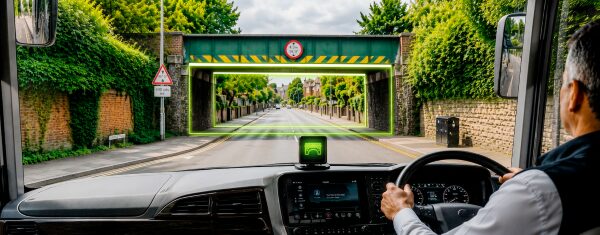
“A low bridge detection system can support existing bridge strike prevention measures by identifying potential height-clearance conflicts ahead of the vehicle and warning the driver before they reach the obstruction. This is particularly valuable when operating high-sided vehicles, variable-height configurations or unfamiliar routes.”
The Motormax Low Bridge Detection System has been developed specifically for commercial fleet environments and uses AI, GPS or a combination of both to identify potential height-clearance risks.
For fixed-height vehicles, the vehicle height profile is configured during installation, allowing the system to operate automatically without requiring the driver to enter the vehicle height before each journey.
When a potential low bridge is identified, an LED display and audible in-cab alert provide the driver with an early warning. The visual display uses incremental warnings to help the driver quickly understand the risk, identifying when the vehicle is safe to proceed, when a low bridge has been detected and when the bridge is too low.
Bridge strike prevention technology can also provide fleet operators with information that extends beyond the immediate driver alert, the firm adds.
“The Motormax Low Bridge Detection System can operate independently or as part of a connected fleet safety solution.
“Optional integration with the MaxConnex platform enables events to be recorded for reporting and analysis, helping operators identify routes, locations and behaviours associated with height-related risks. Height-related incidents or near misses can also trigger events, providing additional information for investigation and driver training. The system can also integrate with the Geotab telematics platform, bringing bridge strike information into a wider fleet management environment.
“For operators, this turns individual warnings into useful fleet safety data, helping identify recurring risks and opportunities for operational improvement.”