
MAHA UK: how to tackle headlight checks
 Workshop equipment specialist MAHA UK has emphasised the importance of ensuring vehicles are subject to accurate headlight checks.
“Checking a headlight involves more than just checking whether a bulb works – modern lighting systems are complex, so accurate testing and adjustment are important from a visibility, safety and compliance perspective,” the company advised.
“Operators need the right equipment to perform these checks efficiently too. A basic visual check can spot obvious issues, such as a broken bulb or damaged lens, but it cannot establish whether a headlight is correctly aligned or whether its beam is aimed as intended. The tiniest alignment error can affect the distribution of light on the road, potentially causing glare for other road users or reducing the area illuminated ahead of the vehicle.”
Traditional halogen lamps are increasingly being replaced by LED and other advanced lighting technologies, says MAHA UK, offering improved efficiency and new possibilities for lighting performance.
“However, these changes mean inspections cannot simply check whether a headlight works. Modern ones have different beam characteristics, requiring suitable test equipment.
“Accuracy is key; a headlight tester measures the beam, providing an objective assessment of alignment and performance. This benefits busy operators by enabling consistent testing, helping identify issues and providing a basis for adjustments. Using suitable test equipment, together with the correct vehicle positioning and testing procedures, helps ensure consistent and reliable results.
“The workshop environment matters too; accurate testing depends on correct vehicle and equipment positioning, and operators must follow the appropriate procedures. Factors such as vehicle loading, tyre pressures and suspension condition can affect headlamp alignment. Equipment must also be maintained and calibrated as required.”
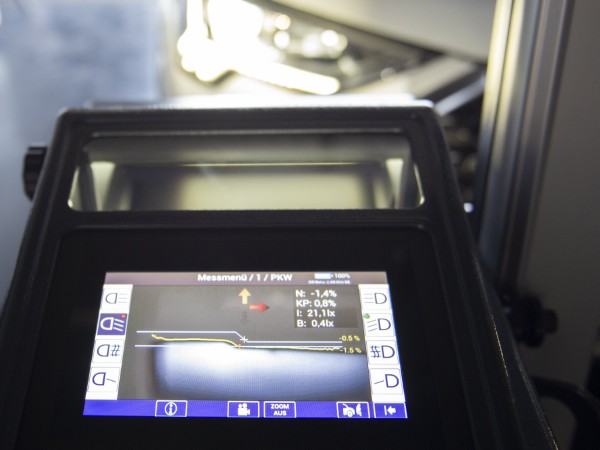
MAHA’s MLT 3000 is a digital headlight alignment tester, designed for the quick and reliable testing and adjustment of vehicle headlights. It considers applicable legal limits and OEM specifications.
“The headlight tester features a high-dynamic-range camera, capable of capturing and digitising the headlight projection,” the firm explained.
“This provides the user with a detailed analysis and summary. An easy-to-use touchscreen also allows users to clearly see the test results and measurement values.
“Correct installation is critical to ensure repeatability, the installation of sturdy stainless-steel rails allows for such repeatability, MAHA engineers follow the DVSA guidelines ensuring they are secured flat and level within +/- 2mm over the required length for the class of vehicle being tested.
“Ultimately, MAHA’s vehicle lighting tester offers a professional and compliant solution for testing headlights. It goes beyond simple visual checks and provides objective measurement data. For operators with a range of commercial vehicles, having suitable equipment can also help integrate accurate lighting checks into routine maintenance.”
As lighting technology advances, says MAHA UK, operators are likely to encounter a wider range of LED, adaptive and electronically controlled headlamp systems.
“These systems can use different beam patterns, automatic levelling and other electronic functions, making correct testing and adjustment more dependent on suitable equipment and procedures.
“Understanding the lighting technology fitted to each vehicle and using the appropriate test equipment will become increasingly important for achieving accurate results and maintaining compliance.”