
Merlin Power: auxiliary power for commercial EV fleets
 As operators bring electric LCVs and HGVs into their fleets, Merlin Power reports that it is commonly hearing the same question from fleet managers: ‘Now that we’re going electric, do we need a completely different onboard power solution?’
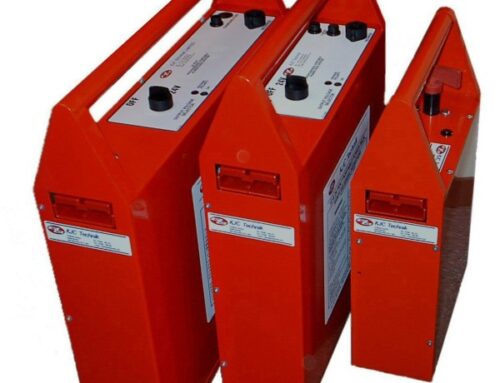
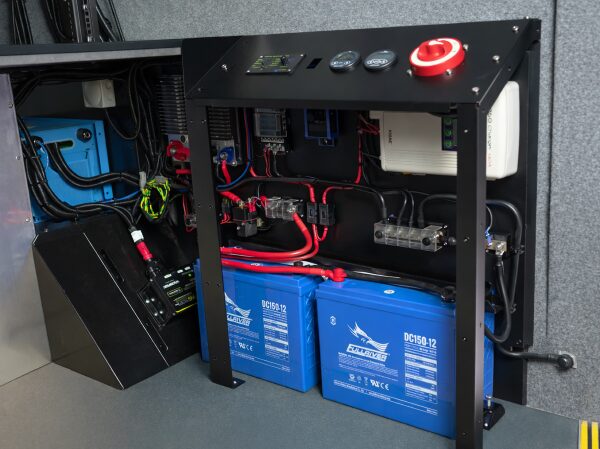
“In practice, the principle stays the same,” explained Merlin Power. “You still fit an auxiliary battery bank to run the equipment on board. What changes is how you charge it.
“On a diesel vehicle, the auxiliary bank is typically charged from the alternator while the engine runs. An EV has no alternator. Its 12V or 24V system is kept topped up from the traction battery.
“That means the auxiliary bank needs to take its charge from the vehicle’s own auxiliary battery. The aim is to do this in a way that keeps the bank properly charged without drawing unnecessarily on the traction battery and affecting range.
“This matters most for vehicles with heavy auxiliary loads, such as fridges on refrigerated vehicles, compressors, pumps and air conditioning.”
The company offers three ways to approach this. Firstly, split charging (SmartBank Pro) links the vehicle’s auxiliary battery with the auxiliary power system when conditions allow, maximising the charge current into the bank.
“It’s a simple install and is also built into our PowerBank Lite system,” said Merlin.
The second method, DC-DC charging, connects the vehicle’s auxiliary battery to the auxiliary power system and gives the bank a proper multi-stage charging profile, suited to its battery chemistry.
A third combined (OneBox 75) option brings SmartBank and DC-DC charging together in one unit for applications that benefit from both.
For fleets making the switch, Merlin advised: “Know what the auxiliary system needs to run and for how long. That determines the size of the bank and the right charging approach.
“Match the charging to the battery. Different battery chemistries need different charging profiles. Getting this right protects battery life.
“Think about the whole fleet. Most operators will run mixed diesel and electric fleets for years. Choosing products that work on both means one specification, one install process and one set of parts for the workshop.
“You don’t need to reinvent the wheel. Proven, off-the-shelf auxiliary power products are already running in electric fleets, from refrigerated vehicles to high-mileage delivery vans.”
Lee Harris, sales director at Merlin Power, added: “If your fleet is half diesel and half electric, you can spec the same system across all of it. It’s one set of parts, one install process and one thing for your workshop to learn.”