
Dawsongroup: unlocking the benefits of ‘usership’
 Rental, leasing and contract hire provider Dawsongroup truck and trailer has outlined its perspective on the advantages for fleets of adopting models beyond traditional vehicle ownership, and the thinking behind its ‘Smarter Asset Strategy’ approach.
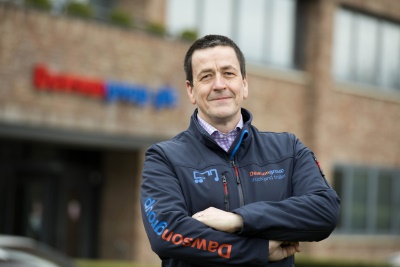
“Our parents and grandparents used to buy everything – part habit and part a reflection of how inaccessible bank and finance company loans were,” said John Fletcher, managing director of Dawsongroup truck and trailer (pictured, right).
“Then, as the social stigma of ‘buying on tick’ lessened, HP funding seemed a sensible route to acquire expensive assets and accelerate business growth.
“Today, few challenge this historical fixation with vehicle ownership. Yet the risks of ownership have never been greater: steep increases in capital and operating costs, coupled to cleaner and evermore expensive technology, mean the value of a fleet is slipping at a faster rate than ever.
“So many businesses suffered badly from the traumatic state of affairs of the last 36 months, and now the burden of debt and rising costs is likely to claim more casualties in our sector. Pride before the fall maybe? Whereas for others, maintaining liquidity enables a degree of agility to capitalise on opportunities which will inevitably arise.”
He continued: “Though it strikes at the very heart of historical practice, in the 2020s there is absolutely no need for operators to own trucks and trailers. They don’t need the hardware: they just need the miles and capacity it brings. And if you can have that, without all the hassle of managing service, maintenance, inspections, tyres, tax, MOTs and so on, why on earth wouldn’t you do so?”
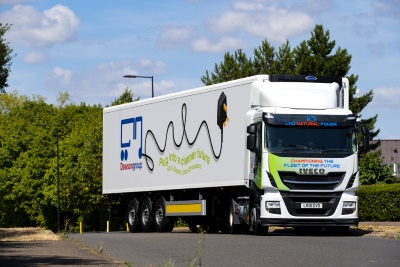 John contends that operators could very profitably focus on purely ‘usership’.
“From basic rental or leasing, through to all-inclusive contract hire supply of liveried trucks and trailers, ‘usership’ of modern trucks and trailers is the common-sense approach for operators,” he said.
“The way to run cost-efficient fleets, always with the right numbers of trucks to meet seasonal and new contract demands and keep operator investment capital intact in the business: usable, not where it simply feeds a depreciating asset base, but far more profitably in infrastructure additions, staff benefits, expansion and so on. It’s a way of operating that’s central to our ‘Smarter Asset Strategy’.
“The business case stacks up for finance directors and company accountants as well. While asset loan debt from banks and other lenders can look efficient, it can also be restrictive. It can ‘use up’ valuable credit facilities and restrict investment; rob operators of the flexibility to terminate early; and demand huge capital outlay or the VAT upfront.
“Fixed rate loans from banks and other lenders don’t provide the flexibility to terminate early, while asset finance and loan debt simply increases gearing and borrowing ratios that can then have a detrimental impact on a business’s credit rating.
“On the other hand, lease rentals are 100 per cent tax deductible, whereas capital allowance at 18 per cent reducing balance take 23 years to recover 99 per cent of the capital outlay. That said, it’s worth noting that while all companies can obtain 100 per cent capital allowances on the first £1m invested, a lot of SMEs won’t have this advantage.”
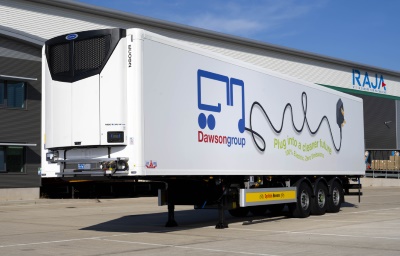 There are other major advantages of rental, leasing and contract hire, Dawsongroup says: for example, the cashflow benefits; VAT is payable on monthly rentals and therefore more manageable, and, if necessary due to contract changes, operators can stop hiring and save cash on leased rentals almost immediately.
In addition, fleets are not reliant on having to sell the asset to get funds back into the business, says the firm; and the beneficial impact on balance sheets of rental, leasing and contract hire offers flexibility, lower gearing and avoids running the residual risk of owning outdated assets in an industry where technology is changing evermore rapidly.
As part of the overall Dawsongroup, John Fletcher’s customers can also access vans, forklifts, sweepers, buses, coaches, cold room solutions and finance, all through the company’s ‘Smarter Asset Strategy’ approach. His own business now offers over 11,000 tractors, trailers and rigid trucks.
While recent UK-wide strictures have impacted that number very slightly, “Why would we keep more vehicles on the fleet than our customers need?” asks John. The business has used the recent lull to ensure a maximum truck age of three years, and seven for trailers.
“It’s part of ensuring customers have modern, compliant, economical vehicles, while our 1,200 approved UK service points ensure we maximise their time out on the road,” he continued.
“After all, that’s where they earn our customers their money.”
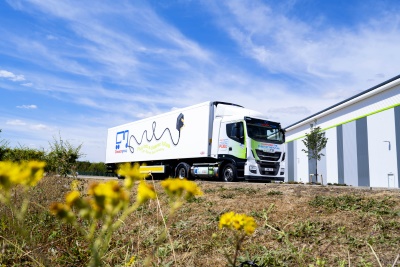 That fleet covers a wide range of operating options: rigids from 8×4 bulker blowers to 7.2t box wagons; step frame, box, curtainside, multi temp, car transporter and flatbed trailers; and 4×2, 6×2, 6×4 tractors, including gas engine options.
Sectors served and numbers of vehicles fluctuate to match market needs, says John.
“One specific we are tracking is a drift toward urban distribution vehicles, rather than historic long-distance tractor markets,” he continued.
“Whichever way it goes, we’ll ensure our fleet is up to speed, and now of course, we are looking closely at the emergence of electric and hydrogen technologies.
“We made a point years ago of being first to order Euro 6 while others were still hesitating. We have always offered a ‘Try before you buy’ option for operators faced with something new. Fortunately, when they do that, they are also trying our leasing or contract hire, and find these more to their taste than massive capital investments of their own.
“They find ‘usership’, through our ‘Smarter Asset Strategy’, the most flexible and cost-efficient route to develop their fleets.”