
Microlise: cameras are a help to drivers and hauliers, not a hindrance
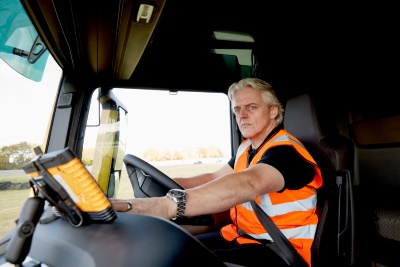 Vehicle technology provider Microlise has challenged suggestions that the rise in internal and external recording devices fitted to HGVs indicates a ‘Big Brother’ approach to driver monitoring.
Rather, such tools are becoming far more important to hauliers, says the company, as they can help them to identify means of assisting and protecting their drivers, as well as other road users.
“Drivers understand that they are not perfect, with a recent RAC survey revealing that 63 per cent said they had made a mistake while doing their job after being distracted by something either inside or outside their vehicle,” said Microlise.
“It’s not difficult to picture the immediate after-effect of such distraction, whether it’s the screech of brakes or the zig-zag of the vehicle on the road as the driver recomposes themselves after a momentary lapse in concentration.
“The survey’s respondents also revealed the kind of mistakes they had made. They included exceeding the speed limit, ending up in the wrong lane and almost colliding with other road users or pedestrians.”
Operators can increase driver safety by using the footage from in-cab cameras to identify and address hazardous behaviours which could cause accidents, the company says.
“If an incident unfortunately does occur and it is not the fault of the HGV driver, the camera can prove their innocence or diminished responsibility.
“The camera’s footage can also help drivers become better at their job, by showing elements on which they can improve. Not only does this reduce risk going forward, it also reduces insurance premiums for companies too.”
Multi-camera solutions with integrated telematics allow users to download this specific footage quickly and easily, the firm adds – while sensors can also be added to give an audible danger alert in alignment with Direct Vision Standard (DVS) or Fleet Operator Recognition Scheme (FORS) regulations.
“Compliance in these fields is constantly evolving, but one essential element is the blind-spot camera,” said Microlise.
“Coupled with an in-cab screen and side sensors, these keep those sharing the same space as an HGV safe from harm.
“Elsewhere in the vast world of regulation, the condition of the vehicle being driven – and indeed the driver driving it – must also remain within tight, legally defined parameters.
“Tools to complete daily walkaround checks of the HGV monitor its health to detect faults before they become safety risks. Worn tyres or brake light failures can contribute to incidents which place parties at risk, while tachograph data can ensure that drivers are not behind the wheel when they are unfit to be.
“A comprehensive suite of products such as Microlise’s is essential on today’s roads which are becoming busier all the time. It’s never too late to install a raft of safety products until an incident makes it too late, the consequences of which should be enough to strike fear into the heart of the transport manager. Be ahead of the trailing pack and don’t let it happen to you.”