

Tructyre: a proactive approach to wheel and tyre management
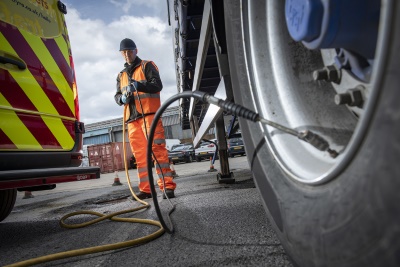 Tyre management specialist Tructyre has explained how a proactive approach to the management of HGV tyres and wheels can help boost fleet efficiency, as well as reducing risk.
“For HGV fleet operators, managing tyre health is a complex balancing act with three critical outcomes: road safety, legal compliance, and operational efficiency/cost control,” said Iain Hayes, operations director at Tructyre.
“Achieving all three requires moving beyond reactive maintenance and adopting a stringent, safety-first proactive strategy.”
While routine driver walk-around checks are valuable for catching immediate issues, says Iain – like minor damage, wear or visibly loose wheel nuts – the sheer size and operational demands of many modern fleets make consistent, in-depth self-inspection challenging.
“Consequently, underlying or developing tyre and wheel issues can go unnoticed until they escalate into a significant problem, underscoring the necessity of a dedicated, proactive tyre management solution,” he continued.
The consequences of neglect
“HGV tyres and wheels are subject to immense mechanical and operational stress. Factors like uneven weight distribution, poor road surfaces, and sustained heat build-up all take their toll. Compounding this, human error and poor maintenance practices, such as improper inflation or incorrect wheel-nut torquing, can introduce severe safety risks.
“The safety of an HGV relies heavily on the condition of its tyres, where insufficient tread depth and structural wear represent significant operational hazards. Beyond the legal minimum, worn treads drastically compromise grip and increase braking distances, especially in adverse weather.
“Neglecting issues such as sidewall bulging and deep cuts, often exacerbated by heavy axle loads, invites the risk of sudden casing failure or blowouts. Such defects don’t just lead to costly roadside prohibitions and fines; they jeopardise vehicle stability, turning a preventable maintenance oversight into a life-threatening road safety incident.
“Incorrect tyre inflation accelerates tyre wear, reduces fuel efficiency, and significantly increases the likelihood of a tyre blowout or breakdown.
“Since safety is the foremost concern for heavy-duty vehicles, mitigating these risks through vigilance is non-negotiable. With both internal pressures (maintenance issues) and external forces (road conditions) impacting tyre health, proactive management becomes essential.”
The benefits of proactive maintenance
According to Iain, the core principle is simple: stay ahead of tyre health issues to safeguard driver welfare, maintain operational capacity, and control costs.
“Undiagnosed tyre issues lead to extended vehicle off-road (VOR) times, directly harming service capability and driving up the cost of unplanned, emergency repairs,” he said.
“A comprehensive, proactive tyre management solution directly addresses these challenges. For example, the Tructyre Mastercare+ tyre inspection and rectification programme focuses on maximising a fleet’s uptime.
“Mastercare+ provides regular, scheduled, on-site tyre inspections where tyre health issues are identified and recorded. This proactive approach to tyre maintenance allows technicians to address necessary repairs or replacements during the appointment, significantly minimising service disruption while ensuring vehicles meet both safety and compliance standards.
“For those tyre issues that cannot be addressed immediately, the visibility of the issue being recorded and fed back allows the busy fleet manager to plan resource ahead of a VOR incident. This provides the opportunity to maintain operational efficiency whilst repairs or tyre or wheel replacements are performed safely.”
Beyond basic maintenance, says Iain, these types of proactive solutions often include services to maximise the life and performance of existing tyre assets. This can include tyre husbandry: services like re-grooving and re-treading, performed where safe and appropriate, extend tyre life and defer the cost of full replacement.
In terms of asset management, he adds, operations such as tyre relocation, ‘turn on rim,’ and twinning are crucial for promoting even load distribution, maximising tyre life, and maintaining vehicle safety.
“Working with highly trained technicians allows fleet managers to ensure repairs are authorised and carried out quickly, with minimal VOR times tailored to the fleet’s specific operational requirements.”
The true value of investment
Fleet managers must recognise that substantial benefits offset the investment in proactive tyre management, says Iain – namely cost savings, operational efficiency, and risk reduction.
“It drastically minimises the number of costly, emergency repairs and callouts [while] reduced downtime means greater fleet service capability and adherence to schedules…
“By ensuring compliance and optimal vehicle condition, it significantly reduces risks to drivers and other road users, decreasing the likelihood of a tyre-related accident.”
He concluded: “A comprehensive proactive tyre inspection service, such as Tructyre’s Mastercare+, covers everything from routine husbandry to managing roadside breakdowns whilst operating from a safety-first, centric approach. This extensive knowledge and skill set define expertise in the critical field of HGV tyre management.”