

Brake valves: small components, big influence
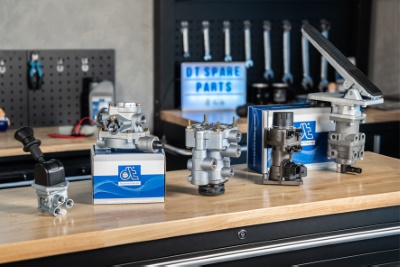 Diesel Technic discusses the role of brake valves in ensuring safety and performance
There can be no compromises when it comes to the braking systems of commercial vehicles. While discs and pads are often front of mind, much of the control and consistency of a pneumatic braking system depends on less visible components, particularly brake valves.
As Diesel Technic Parts Specialist (PS) Niklas explains in a recent PS Tips video, brake valves are “central components” of the pneumatic braking system and perform “crucial control functions for safe and precise braking”.
For transport operators, understanding their role can help improve vehicle safety, stability and reliability across the fleet.
Why brake valves matter in pneumatic systems
Pneumatic braking systems remain standard across HGVs, PSVs and many LCVs for good reason. Compressed air is stored in pressure reservoirs, providing an immediate energy reserve when braking is required. This allows for strong, consistent braking performance, even under heavy loads.
Brake valves manage how that stored air is released. They translate driver input into controlled air pressure, ensuring braking is progressive and balanced. As Niklas notes, pneumatic systems also bring operational advantages: “Small leaks are automatically compensated for, leaks are less harmful to the environment than with hydraulic systems, and there’s no need for a deflation process when connecting a trailer.”
The foot brake valve: controlling force and stability
At the centre of the system is the foot brake valve. With multiple pressure inputs and outputs, it precisely regulates braking force across the vehicle. Modern valves also interact with vehicle electronics, monitoring pedal travel, disengaging cruise control during braking and activating brake lights.
One key function highlighted by Niklas is preliminary braking. “This ensures that the trailer is pre-braked slightly to guarantee stable overall braking,” he explains.
For articulated vehicles, this function is vital in reducing trailer push and improving stability during deceleration.
Handbrake and trailer control valves
Other brake valves play equally important roles. Trailer control valves help balance braking between the tractor unit and trailer, supporting predictable handling. Handbrake valves, meanwhile, control the spring accumulators that secure the vehicle when parked.
 “When the handbrake is applied, pressure drops to zero and the spring accumulators slow down the vehicle,” says Niklas. Many handbrake valves also feature a test position, allowing operators to confirm that the towing vehicle can hold the entire combination safely – a crucial consideration during coupling, uncoupling and parking on gradients.
What brake valves mean for fleet performance
Brake valves play a direct role in vehicle safety, uptime and compliance across every commercial fleet. Keeping the following points in mind can help operators better understand how these components influence day-to-day braking performance:
- Brake valves directly affect braking feel and stability: inconsistent braking, delayed response or unstable trailer behaviour can often be traced back to valve performance.
- Electronic functions matter as much as air pressure: modern brake valves interact with vehicle electronics, influencing cruise control, brake lights and pedal feedback.
- Trailer stability relies on correct valve operation: preliminary braking functions help prevent trailer push and improve control under braking.
- Parking safety depends on handbrake valves: proper operation ensures vehicles – and full combinations – remain secure when stationary.
- Quality and compatibility are critical: brake valves are safety-critical components. Using parts designed for specific vehicle applications helps ensure predictable performance and long-term reliability.
Diesel Technic supplies a wide range of brake valves and repair solutions covering major commercial vehicle manufacturers, including DAF, Iveco, MAN, Mercedes-Benz, Renault, Scania and Volvo. These are supported by a comprehensive quality system designed to meet the demands of heavy-duty operation and deliver consistent, reliable braking performance in service.
Brake valves may not be the most visible part of a braking system, but their influence is significant. As Niklas makes clear, they are “essential to safe, precise and stable braking”. For transport operators, recognising the role these components play helps reinforce braking performance where it matters most – on the road, in daily operation.