

DPF Recovery: maintaining exhaust performance in ageing fleets
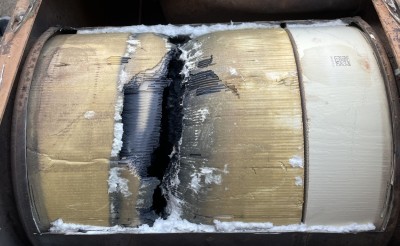
A 1,000,000km Scania SCR catalyst which has deteriorated due to worn engine components (engine consuming oil). The catalyst has melted causing excessive backpressure and poor NOx conversion (resulting in engine derate)
Exhaust specialist DPF Recovery has emphasised the importance for fleet operators of continuing to maintain exhaust performance in ageing Euro VI vehicles.
“For many operators, Euro VI technology now represents the backbone of the fleet, with many operators running vehicles which are six, eight or even ten years into service,” said DPF Recovery.
“At the same time, replacement cycles have extended, due to new truck prices rising sharply, rising interest rates and finance costs, base vehicle durability and supply chain constraints. As such, fleets are being worked harder for longer.
“As fleets mature, the role of exhaust aftertreatment in overall vehicle performance, emissions compliance and operating cost must not be overlooked.
“In early life, Euro VI systems often required little more than routine monitoring. But in mid- and late-life vehicles, assuming the exhaust system will simply look after itself can quietly start to affect fuel efficiency, reliability and component longevity which roots deeper than just the longevity of exhaust components.”
DPFs, DOCs and SCR systems are primarily designed to control emissions, says DPF Recovery, but their condition directly influences how efficiently the engine and the rest of the vehicle operates.
“As a DPF accumulates non-combustible ash over time, exhaust back pressure increases. That rise is usually gradual. The vehicle may not immediately trigger a fault code, but the engine is working against greater resistance. Across a fleet, this can present as gradual MPG decline, increased active regeneration frequency, and even hesitation/poor throttle response.
“For fleets running tight margins, even small reductions in fuel efficiency multiplied across multiple vehicles and high annual mileages become commercially significant.
“Excessive back pressure doesn’t just influence fuel consumption. It can also affect major engine components. Turbochargers depend on efficient exhaust flow, and sustained restriction downstream of the turbo alters exhaust gas dynamics and can contribute to increased operating temperatures and mechanical stress. Over time, that environment may accelerate wear. In some cases, turbo issues are addressed in isolation when underlying exhaust restriction has been part of the wider operating picture.”
From a cost perspective, says the company, preventing secondary damage is always more economical than replacing high-value components after failure, which is why it is so important for operators of all Euro VI vehicles to be proactive with maintenance, but especially those with ageing Euro VI fleets.
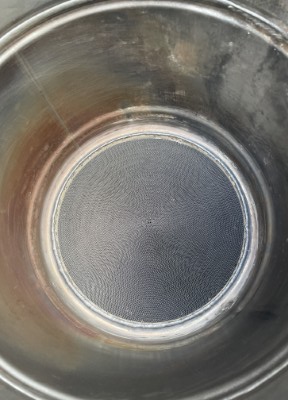
A replacement DOC fitted to a MAN TGS exhaust by DPF Recovery
“Mid-life exhaust systems, such as that on a five to eight year old vehicle, will not behave exactly as it did in year two. DOC catalyst efficiency naturally reduces over years of thermal cycling. Similarly, SCR systems can experience natural reduction of efficiency, or damage through contamination or crystallisation issues. Signals from sensors may also drift and respond less accurately.
“None of this suggests inherent weakness in Euro VI technology. It reflects the reality that these systems operate in extreme conditions and are now reaching a different phase of their working life. For operators extending vehicle service beyond original replacement assumptions, structured monitoring becomes increasingly important. Tracking trends in back pressure and regeneration frequency often provides earlier insight than waiting for a dashboard warning.
“It is very important to consider duty cycle and the commercial impact of this when implementing structured monitoring of exhaust systems. Urban and regional fleets continue to face regeneration challenges due to lower exhaust temperatures and stop-start operation.
“Lower mileage vehicles are not automatically lower risk if their duty cycle limits passive regeneration. When vehicles are planned for longer retention, factoring exhaust system maintenance into lifecycle costing becomes commercially prudent rather than reactive.”
It is important for fleet operators to move beyond reactive maintenance, says DPF Recovery.
“For fleet directors, owner operators and workshop managers, the shift is less about adding cost and more about controlling it. A more structured approach might include: cleaning DPFs based on a specific mileage interval, rather than waiting for warnings on the dashboard; assessing DOC condition alongside DPF servicing, by monitoring regeneration temperatures; and incorporating SCR, NOx conversion and AdBlue checks into routine workshop inspections.
“The objective of these checks is straightforward: maintain fuel efficiency, reduce the likelihood of derate events, and protect high-value engine components.
“With assets being retained longer and operating costs under scrutiny, exhaust aftertreatment can no longer be viewed as a sealed, lifetime unit. Its condition influences MPG, uptime, and the reliability of core engine components. ‘Fit and forget’ was never a formal maintenance strategy – but in today’s extended-life fleets, it is increasingly a costly assumption.
Proactive exhaust management is less about emissions compliance alone and more about protecting whole-life cost and operational performance – priorities that remain central to every successful fleet operation.”