

Tackling DPF problems with BG Products
Cutting open the Mitsubishi L200 DPF
BG Products has explained how keeping engine components clean can help reduce emissions and fuel bills, as well as cutting operational costs.
“When fuel is burned it releases carbon deposits. These either attach to and interfere with the efficiency and longevity of key components, or find their way into the oil where they can shorten oil life and accelerate engine wear, or deposit onto diesel particulate filters (DPFs) and accumulate prior to regeneration of the DPF,” said BG Products.
DPFs are designed to capture and then incinerate soot. The problem, says the company, is that fleets very often run vehicles that do not achieve the desired conditions to achieve this, and therefore the regeneration process becomes more challenging as soot builds up, leading to the need for ‘forced regens’ or removal and sending off the DPF to be cleaned by a specialist centre.
“What is not always obvious is that the very vehicles that have the driving profiles that challenge DPFs (stop-start, short runs) are also the vehicles that are likely to exacerbate the DPF issue by virtue of their own engines’ soot production – i.e. as fuel is burnt it produces soot, if fuel is burned inefficiently then more soot is produced.
“What is also happening with fleets is that the conditions that have led to the DPF needing a forced regeneration has already led to hundreds to thousands of extra costs in fuel and quite possibly other component failures.”
Minimising soot production can deliver a number of benefits, says the firm, including reduced downtime, fuel usage and emissions, as well as helping to avoid the failure of other components such as injectors, turbos and EGRs, and prolonging engine life.
“However cleaning the DPF in isolation is a bit like changing a nappy; it will only refill again unless we can stop the source of the deposit. The source of the deposit in a DPF is inefficient combustion, leading to higher production of soot. This in turn leads to a higher workload for the DPF. Solutions that only address the DPF are, in effect, only short-term solutions. They only address the symptom, not the cause.”
Having researched the factors that limit the life of a DPF, BG Products says a proactive approach to protecting it can pay clear dividends in the general cost of operation over and above reducing downtime…
“BG Products research has shown that the regime of keeping the injectors clean to maintain fuel atomisation is very important in maintaining quality combustion, which in turn limits soot production. High pressure injectors are particularly susceptible to deposits, and also require special chemistry to clean the particular deposits that HPCR (High Pressure Common Rail) injectors create.”
The firm continued: “BG research has shown that it is essential to clean, and keep clean, the piston rings, or more accurately the piston ring seats. Deposits from combustion and oil get behind the piston rings and inhibit flexing and centring of the rings. This loss of sealing leads to a vicious circle of issues that affect the engine and the DPF.
“A reduction in compression (which we have seen in as little as 12,000 miles) means less complete combustion; this leads to more soot; more soot leads to more soot in the oil [which] leads to more wear… The reduction in seal also means more fuel seeps into the oil, shortening the oil life and compromising lubrication quality.
“Furthermore, and perhaps most significantly for DPFs, more blow-by means that oil vapour passes into the combustion chamber so oil combusts and then deposits oil derived ash onto the DPF. Oil, of course, contains metallic elements that when reaching the DPF, adhere to the DPF and shorten its life. Reducing oil consumption extends DPF life.”
A quality internal engine cleaner will tackle hard-to-clean deposits behind the piston rings, says BG, and as such, restore ring function and therefore restore compression and reduce blow-by.
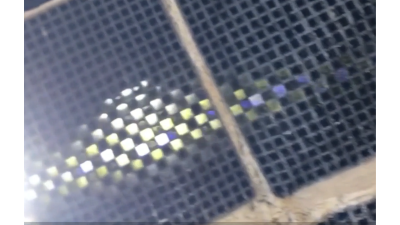
The 200,000-mile DPF is still clean following the treatments
“BG Products have also shown that by restoring ring function (seal and compression) that DPF regen frequency is significantly reduced and DPF regen duration is shortened. This, as well as prolonging DPF life, has a very positive effect on fuel economy too.”
The company also emphasises the benefits of enhancing soot control of the oil – keeping soot within the oil in suspension to avoid agglomeration and additional wear. A good oil enhancer will keep oil viscosity in the desired range for longer than standard, it adds, meaning oil integrity stays optimum and flows better for longer, thus extending engine life.
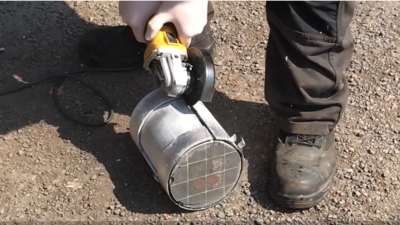
BG Products cites the example of a DPF that was fitted to a new Mitsubishi L200 used in a fleet of security patrol vehicles.
“The nature of the driving profile is slow driving, low rev, perimeter patrol. This vehicle left the fleet after 200,000 miles and had been on a service interval regime enhanced by the treatments mentioned above. The fleet technician, having been aware that the enhanced servicing that was given to the fleet had delivered major reductions in issues, decided to inspect the DPF. The result was that the DPF was astonishingly clean and light could clearly be seen through the substrate.”