
Codi: why workshops are opting for advanced lifts
 Equipment supplier Codi International has offered its perspective on the importance of ensuring vehicle lifts are adequately specified for the tasks at hand.
“As vehicle technology evolves, so too must the equipment that supports it,” said Codi.
“Today’s fleets are heavier, longer, and more complex than ever – particularly with the industry’s accelerating shift toward zero‑emission vehicles. This makes correct lift specification absolutely critical.
“Factors such as vehicle type, axle load distribution, wheelbase, and intended maintenance tasks must all be considered. Under‑specifying a lift is a false economy; a higher‑capacity model not only ensures safety and compliance but also future‑proofs the workshop against the next generation of vehicles.
“Cost considerations often lead buyers to compare electro‑mechanical and hydraulic lifts. While electro‑mechanical models may offer a lower upfront price, hydraulic lifts typically deliver far lower power consumption, reduced maintenance requirements, and a longer service life – making them the more cost‑effective choice over time.
“A well‑maintained, high‑quality lift is not an expense; it is a long‑term investment in workshop productivity and technician safety.”
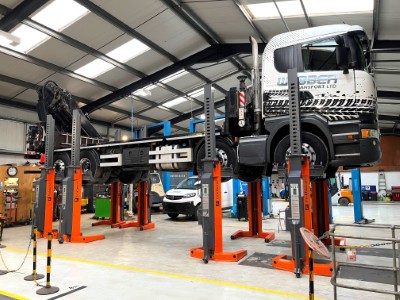
For those seeking maximum flexibility, mobile column lifts remain the standout option, says Codi.
“Lifting by the wheels eliminates the challenge of identifying lifting points, and configurations from two to eight columns allow workshops to handle everything from light commercials to specialist heavy vehicles.
“Codi International’s range of Finkbeiner wireless hydraulic columns exemplifies this versatility, offering capacities from 3,000 kg to 8,500 kg per column – and up to 17.5 tonnes for specialist applications.
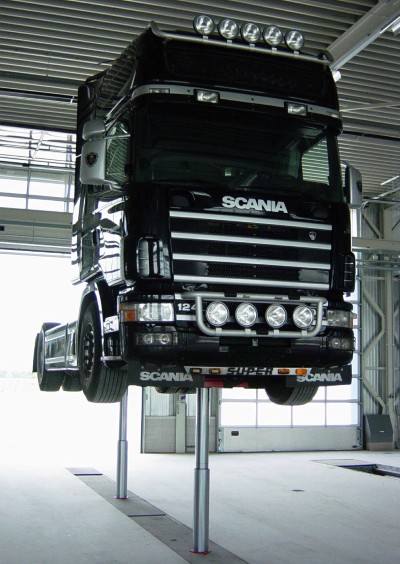 “Adjustable carriages, unique tyre‑grip systems, onboard weighing, and retractable positioning wheels make them a favourite among operators who value mobility without compromise.”
Platform lifts also continue to gain traction, says the company, particularly where rapid throughput is essential.
“Finkbeiner’s HDS semi‑scissor range offers capacities up to 35 tonnes with platforms up to 14.5 metres, and dual‑lift configurations can accommodate even longer vehicles. Installed either on‑floor or flush‑mounted, these lifts provide a clean, flat workshop surface when lowered – ideal for multipurpose bays.”
For workshops seeking a sophisticated alternative to pits, hydraulic inground lifts from Fuchs Hydraulik GmbH offer a compelling solution, says Codi.
“With rams mounted on rails within a sealed trough, these systems lift vehicles by the axles, allowing wheels to be removed without additional equipment. The automatic moving cover ensures the trough is never exposed, maintaining a safe and tidy workspace. Capacities range from 16 to 60 tonnes, and versions are available for washbays, spray booths, and even retrofits into existing pits.
“Codi International has successfully replaced numerous obsolete Laycock and Kismet units with modern Fuchs systems – often with minimal disruption to the site.”