
RAM Tracking supports rapid fleet growth for ASB
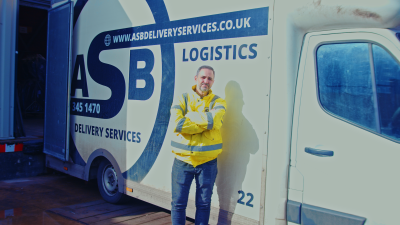 Fleet operator ASB Delivery Services has explained the central role telematics technology from RAM Tracking has played in enabling its expansion.
Founded by Alex Bailo after arriving in the UK from Brazil in 2008, ASB Delivery Services began with a single van. Today, the business operates a 28-vehicle fleet serving major retailers including DFS, B&Q and House of Fraser, alongside providing specialist hanging garment distribution.
The company experienced particularly rapid growth during 2020, expanding from six to 20 vans within a year as demand for home deliveries increased. Despite that acceleration, Bailo says the business has maintained consistent service standards.
“In the past 12 years we’ve never missed a day of delivery,” he said.
“All our work comes through referrals, so reliability is everything.”
As soon as the fleet expanded beyond one vehicle, visibility became a challenge. With each van completing 10–12 drops per day, responding to customer ETA enquiries and monitoring driver performance grew increasingly complex.
“When customers started calling asking how long deliveries would take, I didn’t have a system in place,” Bailo recalled.
“Once you have multiple vehicles on the road, you need to know exactly where they are.”
ASB has worked with RAM Tracking for nine years, initially installing vehicle tracking to provide real-time location data and geofencing for more accurate arrival times. Over time, the business expanded its use of telematics to include driver behaviour monitoring and forward-facing dash cams.
Driver monitoring alerts for speeding, harsh braking and rapid acceleration have delivered measurable improvements. Bailo reports that annual accident numbers have fallen significantly.
“In previous years we had eight to ten accidents annually. Last year we had only one,” he says.
Dash cam footage has also proved valuable when resolving insurance claims, particularly in disputed incidents. In one case involving a serious collision with a motorcyclist, recorded footage helped demonstrate that the ASB driver was not at fault.
Customer complaints relating to driver conduct have also reduced.
“If we receive a notification, we can review footage immediately and speak to the driver straight away,” Bailo explained.
“That accountability has made a big difference.”
Improved driving standards have contributed to a reported 20 per cent reduction in diesel consumption across the fleet. With annual fuel expenditure previously around £62,000, the savings have been significant.
“When drivers avoid harsh braking and unnecessary acceleration, you see the impact in fuel use,” Bailo said.
Administrative efficiency has also improved. Real-time tracking and reporting tools are estimated to save around two hours per day in manual coordination and vehicle checks, freeing management time for other operational priorities.
Telematics has also strengthened vehicle security, the firm reports. In one incident, three vans were stolen in a single day. Using RAM tracking data, ASB was able to provide precise vehicle locations to police, leading to recovery of all three vehicles.
“Without tracking, that would have been a major financial loss,” Bailo noted.
ASB Delivery Services is now preparing to relocate from a 35,000 sq ft facility to a 55,000 sq ft warehouse and plans to expand its fleet to between 40 and 50 vehicles over the next five years, potentially incorporating larger vehicles into operations.
As the business grows, Bailo believes operational visibility will remain fundamental.
“As soon as we buy a vehicle, tracking is installed. You can’t manage growth properly without knowing what’s happening on the road.”