
Truck makers win emissions credit concessions
 Europe’s truck manufacturers have welcomed the European Commission’s agreement to allow emissions credits to be carried forward when they register trucks and coaches that fall below targets set for the period 2025 – 2029, saying this will allow them great flexibility in meeting post-2030 targets, which demand a reduction in emissions of 43 per cent compared to a 2019 base level.
The target from 2025 – 2029 is a 15 per cent reduction, and anything achieved over that can now be carried forward to help meet the post-2030 limit.
Truck manufacturing industry body ACEA said: “The transition to zero-emission (ZE) HDVs is progressing too slowly. In 2025, zero-emission vehicles accounted for just 2.0 per cent of heavy-duty truck (>16t) registrations and 14.8 per cent of medium-duty trucks (3.5 – 16t) in the EU.
“This stark reality reflects a growing gap between the increasingly ambitious CO2 targets imposed on manufacturers and the sluggish pace of progress on necessary enabling conditions. Dedicated charging and hydrogen infrastructure for HDVs remains grossly insufficient, energy costs remain too high, and the business case for transport operators is fragile at best.”
ACEA pointed out that the concession does not adjust the targets themselves and still does nothing to correct the deficit in infrastructure provision which many feel is a factor in supressing demand for electric and hydrogen trucks.
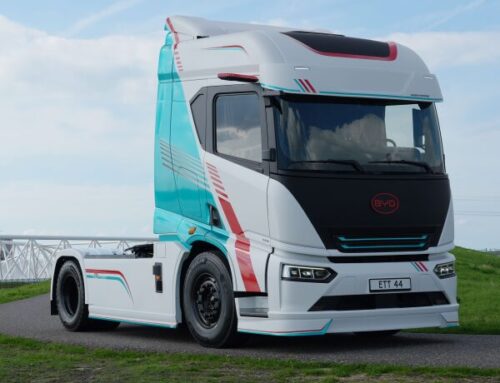
Campaign group Transport & Environment claims the concession is not helpful, saying it weakens pressure to adopt electric trucks at a point where Chinese manufacturers are about to launch more affordable e-trucks into the European market, reducing the pressure on European manufacturers to sell electric trucks will make them more expensive to buy.
Instead, T&E criticises the big manufacturers for investing less in R&D than they hand over in profits for shareholders.
It claims that analysis shows that in 2025 the European/global manufacturers were on average spending 4.9 per cent of revenue on shareholder rewards, and 4.4 per cent on R&D. In contrast, Chinese truck and plant manufacturer Sany invests 5.8 per cent of its revenue on R&D.