
Sailun: how changing expectations are reshaping the tyre sector
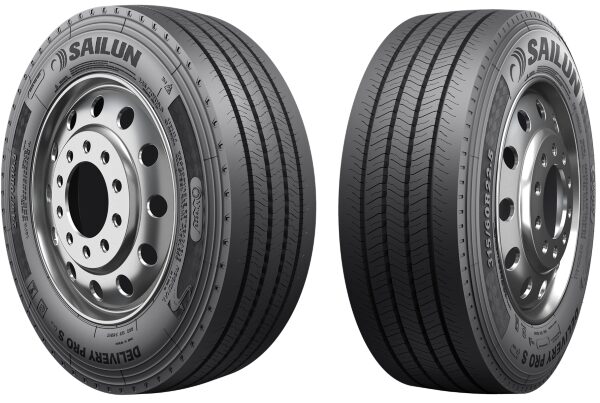 Expectations in the UK tyre market are changing, says tyre manufacturer Sailun, as drivers, retailers and fleet operators increasingly look for products that deliver a stronger balance of performance, quality and value.
For Sailun, this shift reflects the thinking behind its Smart Performance philosophy: the belief that tyre buyers should not have to choose between dependable quality, proven capability and affordability. Instead, modern tyre development should bring these priorities together in a more intelligent and accessible way.
The company says the traditional hierarchy of ‘premium, mid-range and budget’ tyres is becoming increasingly outdated, as advances in R&D, material science, manufacturing and independent testing continue to reshape what customers can expect from brands outside the traditional premium group.
Harry Wang, general manager at Sailun Tyre Europe, explained: “The idea that motorists have to compromise on quality to achieve value is becoming outdated. That is exactly what we mean by Smart Performance: combining dependable quality, real-world performance and accessible value in a way that meets the needs of today’s drivers and fleets.”
This shift is also reflected in how the Sailun brand is increasingly perceived internationally, the company says: as tyre buyers look beyond traditional brand hierarchies, value is being judged less by price alone and more by the confidence a tyre can deliver across performance, reliability, efficiency and everyday use. For Sailun, Smart Performance connects this customer expectation with the engineering capability behind the product.
While brand loyalty remains strong in parts of the market, drivers and fleet operators are becoming more performance-focused and increasingly willing to look beyond traditional choices, it contends, particularly as independent testing and real-world results demonstrate how far modern tyre technology has progressed.
Sailun’s development story is closely connected to Qingdao University of Science and Technology, one of Asia’s leading institutions in rubber material science and tyre engineering.

Qingdao University of Science and Technology (QUST) main campus
This foundation later developed into what Sailun refers to as the QUST Industrial Chain Platform, an integrated ecosystem connecting university, research, compound development, tyre machinery, automation, smart manufacturing, testing and large-scale production. Rather than treating these areas as separate stages, the platform helps Sailun bring them together, allowing research and technical development to move more quickly into practical tyre products.
This integrated model, Sailun explains, has become central to its growth. It supports the company’s ability to develop new materials, apply advanced production processes, improve manufacturing consistency and validate performance through testing. In practical terms, it helps Sailun turn scientific research into scalable tyre technology.
The company highlights its progress within two decades, having grown into a top 10 global tyre manufacturer, with 12 global production facilities, multiple R&D centres and a presence in more than 180 markets.
Sailun’s growing global position is also reflected in independent brand valuation, it says: in Brand Finance’s 2026 Tyres ranking, Sailun recorded 37 per cent brand value growth to USD1.2 billion, further strengthening its position among the world’s leading tyre brands and underlining the company’s growing international credibility.
“Our foundation in rubber and tyre science continues to shape how we approach product development,” Harry Wang added.
“Sailun was built around the idea that research, engineering and manufacturing should work together, not in isolation. That gives us the ability to approach tyre development differently, not as a trade-off between cost and quality, but as an opportunity to optimise both.”
EcoPoint³ is one of the clearest examples of Sailun’s science-led approach being translated into practical tyre performance, the manufacturer says. The compound technology is a next-generation material platform created using an advanced liquid-phase mixing process developed over nearly a decade.
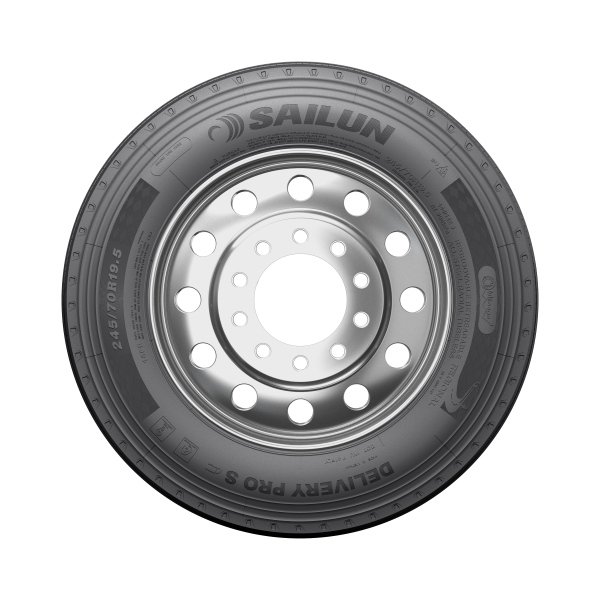 The technology is designed to address one of the tyre industry’s most persistent challenges: balancing performance, longevity and efficiency.
EcoPoint³ is designed to reduce rolling resistance; support improved fuel and energy efficiency; help balance wet/dry grip, handling, and wear; and contribute to driving comfort and lower noise, depending on product application.
“Traditionally, improving one aspect of tyre performance has meant compromising another,” said Harry Wang.
“EcoPoint³ is designed to change that by delivering gains across multiple areas without the usual trade-offs.”
The technology also supports sustainability goals. By supporting lower rolling resistance, EcoPoint³ can contribute to improved fuel or energy efficiency in use, while its production process is designed to reduce energy consumption compared with conventional approaches.
Sailun views this connection between efficiency, durability and lower environmental impact as part of product value. For drivers, fleets and distribution partners, sustainability is not separate from performance; it can support practical benefits such as reduced energy use, longer-term operating value and greater confidence across the tyre lifecycle.
This approach is also reflected in Sailun’s latest sustainability reporting. Under its Eco+ strategy, the company continues to focus on sustainable materials, energy management, carbon reduction and lower-impact manufacturing. Sailun has reported progress toward increasing sustainable material content in tyre products to 40 per cent by 2030 and 100 per cent by 2050, with current sustainable material content reaching 31.04 per cent. It has also reported continued reductions in energy consumption and carbon emissions per unit of tyre product compared with 2022.
“For us, performance and sustainability are not competing priorities,” Harry Wang added. “They are increasingly aligned and technologies like EcoPoint³ demonstrate that.”
Looking forward, Sailun’s strategy centres on strengthening its integrated capabilities that have shaped its growth: research-led development, advanced material science, smart manufacturing, international production and real-world performance validation.
The company says this approach will continue to guide its product development across consumer and commercial tyre segments, including areas such as EV-ready tyres, advanced durability technologies and continued improvements in efficiency, comfort and safety.
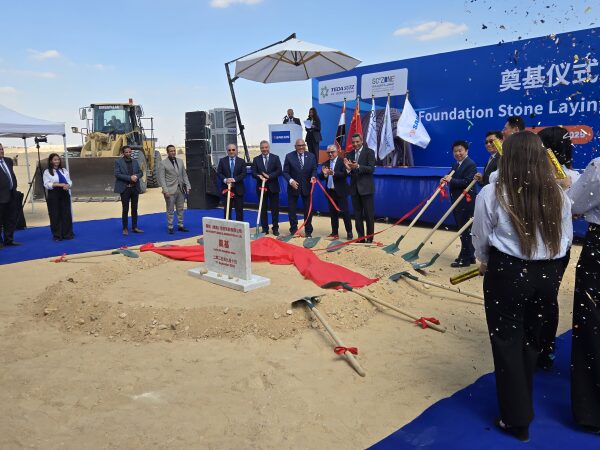
The laying of a foundation stone to mark the construction of the Sailun Egypt factory, 2025
This strategy is also reflected in Sailun’s continued investment in its international production footprint, including the development of its Egypt factory. The project forms part of Sailun’s wider approach of combining global reach with regional commitment, helping bring advanced manufacturing capability closer to key markets. For customers across Europe, this supports supply confidence, responsiveness and closer alignment with regional market needs – extending the Smart Performance philosophy beyond the product itself.
“We are not focused solely on scale or output,” added Harry Wang. “Our ambition is to continue strengthening the full system behind our tyres, from research and materials to manufacturing, testing and customer application.
“For Sailun, Smart Performance is about challenging outdated assumptions around tyre value. It means applying innovation where it matters most: in quality, safety, efficiency and affordability for real-world drivers and fleets. As we continue to grow globally, that philosophy will remain central to how we develop products and support our customers.”