
Trade groups renew fuel duty pleas as Autumn Budget looms
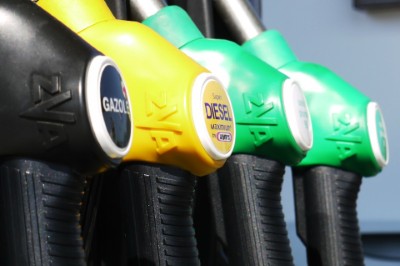 Transport trade associations are urging government not to increase fuel duty next year as the new chancellor John Healey’s Autumn Budget approaches, amidst further pump price spikes.
Both diesel and petrol prices have risen by 5p per litre in the last week, according to figures from the RAC, as conflict in the Middle East rages on.
Logistics UK has made a formal submission to Mr Healey ahead of the Budget, which will be delivered on 28 October, calling for a range of policy measures to help the logistics industry manage sustained cost pressures.
“As a sector, we employ 2.6 million people across the economy and enable more than £1 trillion of trade every year,” said the business group’s chief executive Ben Fletcher, “and that means our members are uniquely positioned to unlock regional growth, address the NEETs (young people not in education, employment or training) crisis and drive the government’s reindustrialisation agenda.
“The government can work with our sector to deliver that growth by helping to shift the focus to investment, in what has been a very tough year dominated by the Middle East conflict and the cost pressures it is driving, which risk pushing up the cost of living.”
Logistics UK says its submission acknowledges the importance of the previous government’s £250 million package of measures to help mitigate the impact of events in the Middle East, including an ongoing fuel duty freeze and vehicle excise duty concessions.
But it also recommends continued government support to help create an environment that encourages long-term investment in the sector and enables growth.
It urges Mr Healey to maintain the current fuel duty rate, including the 5p cut, and also calls for reform to business rates to encourage investment in warehousing, freight infrastructure and supply chain productivity. In addition, says Logistics UK, the sector should be included within the British Industrial Competitiveness Scheme (BICS) to reduce the cost of electricity as battery vehicles become even more prevalent.
“Our sector is starting to drive the green shoots of economic recovery,” continued Fletcher, “but there is still much to be done. We are urging the chancellor to create a cost-competitive business environment that will nurture the improvements in business confidence that we are beginning to see.
“Key to this is maintaining the current rate of fuel duty, including the 5p cut. Fuel accounts for roughly one-third of a HGV fleet’s running costs, so any increases in fuel duty can significantly affect business viability, investment decisions and the cost of living.
“Warehouses, distribution hubs and freight terminals are critical national assets, but the current property tax regime can act as a disincentive to investment.
“Logistics businesses are facing significant pressures from rising costs, yet even before April’s increases in the business rates on warehouses, the industrial sector, of which logistics is a significant proportion, paid more than £7.5 billion in business rates across England and Wales in 2023. Reforms are needed so the tax system supports, rather than discourages, business investment and economic growth.”
He added: “As operators continue the switch to cleaner battery vehicles, the logistics sector will become an electricity-intensive sector in the coming years, and the sector needs to be included within the British Industrial Competitiveness Scheme. The UK currently has some of the most expensive industrial electricity in the world and removing policy costs from business electricity bills will help the sector decarbonise and keep the UK internationally competitive.
“The Middle East conflict has demonstrated that events outside the UK can quickly translate into increased costs for businesses and consumers, due to rising fuel prices and shipping disruption.
“The conflict is not over, and the sector will have to continue managing fuel price volatility for the foreseeable future. This is why it is not the time to increase fuel duty, and any increase is likely to have a double inflationary knock-on effect for consumers, as prices rise in the shops as well as at the pumps.
“And finally, it is not just about the health of our sector: if the government wants to build houses and infrastructure, increase overseas exports, grow domestic manufacturing and defence capability, boost the hospitality and retail sectors and bring down the cost of living pressures on consumers it needs a strong, cost effective and resilient logistics industry. We are the driving force of economic growth and prosperity.”
Meanwhile, the Road Haulage Association (RHA) has warned that families will face higher prices in the shops if planned fuel duty rises early next year go ahead.
In its own Budget submission to the Treasury, the association urges John Healey not to proceed with phased increases of 3p per litre from January, 2p from March and a further rise linked to inflation in April. It cites research it has commissioned suggesting that a 5p rise would add £1.9 billion a year to household living costs, and £2,325 a year to the cost of running a single lorry.
RHA managing director Richard Smith said: “A fuel duty hike is a food price hike. Almost everything on a supermarket shelf got there on a lorry. There is nowhere for additional costs to go but onto customers and onto the shelf. Where it can’t be passed on, firms go under.
“You cannot deliver growth without road transport. But HGV, coach and van operators are facing sustained pressure from fuel, vehicle, maintenance, insurance and compliance costs. Increasing those pressures further raises costs throughout the economy, impacts livelihoods, and restricts the investment.
“The chancellor has an opportunity to back the businesses that keep Britain moving. He can also stop fuel duty hikes that push up costs for every household.
“Our message is clear: trucks, coaches and vans are essential to making the whole economy work. On 28 October we’re asking the chancellor to change course: scrap the planned fuel duty rises, and bring in an essential user rebate for the lorries, coaches and vans this country depends upon.”
Elsewhere, campaign group FairFuelUK has warned that the ‘diesel crunch’ may yet worsen.
“Despite crude oil stabilising, diesel remains around 190p/litre, driven by record high refining margins and a tightening global supply chain,” it said.
“With UK reserve cover at just 23–26 days, any further disruption — from Russian refinery outages to Persian Gulf shipping instability — will push pump prices even higher.”
FairFuelUK founder Howard Cox added: “Diesel is the commercial heartbeat of any economy. Brent hitting $100 is bad enough, but the real danger now is the diesel refining crunch. Diesel prices aren’t rising because oil is expensive — they’re rising because the world can’t refine enough of it. That’s a structural crisis, and it means UK pump prices are about to surge sharply. We’re already near 190p a litre, and without urgent action, diesel could smash through £2 a litre, hammering motorists, hauliers, small businesses and the entire economy. More than 40 countries have stepped in to protect drivers and keep inflation down. The UK must do the same — or we’ll sleepwalk into another cost of living shock.”
The group is calling for a fuel duty freeze for the lifetime of the current parliament, targeted duty reduction, and a freight resilience plan to safeguard supply chains.