
ODSS homes in on health and wellbeing

Joanne and Jim Elms of ODSS, at the launch of the RHA Wellbeing Charter
Training provider Operator and Driver Support Services (ODSS) has offered its perspective on how the industry can retain its workforce and attract a new generation of drivers through a renewed focus on health and wellbeing.
“Joanne Elms and I, from ODSS, were recently invited to take part in the launch of the RHA Wellbeing Charter,” explained transport compliance consultant and trainer Jim Elms.
“The Charter is designed to raise awareness of health and wellbeing across our industry and, more importantly, encourage individuals and businesses to make a positive difference.”
“It focuses on six key pillars: learning and development; mental wellbeing; leadership and resilience; connecting with others; exercise; and food and nutrition.
“But why has wellbeing become such a hot topic within our industry?”
The first part of the answer, says Jim, is the ageing workforce: and with age can come increased health concerns.
“Secondly, we need to attract the next generation of drivers into all sectors of road transport – and retain the good people we already have,” he continued.
“Then there are the realities of life on the road: poor facilities, an increasing reliance on fast food, the pressures of modern life, disrupted sleep patterns and sometimes simply a lack of understanding about health and wellbeing.
“And, dare we say it, perhaps a little bit of the traditional ‘I’ll just get on with it’ attitude?
“We still work in a predominantly male environment where drivers can be reluctant to talk about their health. Perhaps they fear losing their licence or their job. Perhaps they don’t have time to seek help. Sometimes they may simply put it off until tomorrow.
“Female drivers face challenges too, sometimes different ones. Suitable facilities are still lacking in many places, personal safety can be a concern, and access to decent food, rest and general wellbeing facilities remains inconsistent.”
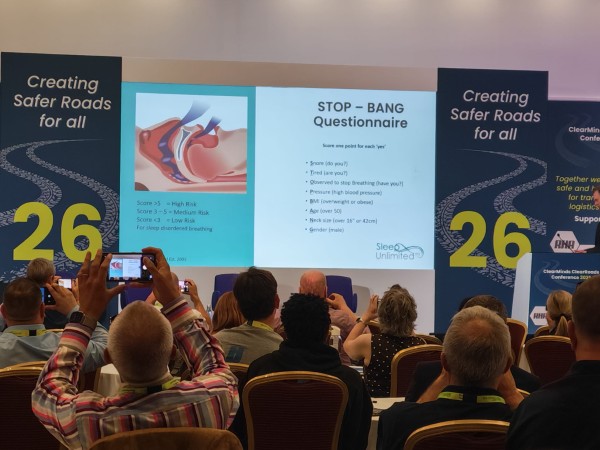
Understanding conditions such as high blood pressure, sleep apnoea and diabetes, amongst many others, is important for professional drivers, says Jim.
“But simply telling someone that something is a risk isn’t enough. Education about these conditions, knowing where to find help and understanding how small changes can make a difference are equally important.
“Driver CPC courses, awareness campaigns, toolbox talks or even just a genuine personal check-in can make a difference to someone.
 “Mental wellbeing is another important part of the conversation.
“Professional drivers can spend many hours working alone, often with a lot of thinking time. Add traffic, delivery pressures, problems at home, fatigue or an unhelpful comment from someone at a delivery point or back at the transport office, and those pressures can build.”
There are support forums, apps and employee assistance programmes available, he adds, but drivers may be unaware of them – or may simply not feel comfortable using them.
“So perhaps we need to ask ourselves some simple questions. How do we make drivers feel more valued? Less pressured? More understood?
“A good starting point is awareness. That needs to be followed by education. And, most importantly, it needs to be followed by action.
“Driver wellbeing shouldn’t just be something we discuss because there is a campaign, a charter or a wellbeing week. It needs to become part of the everyday conversation within transport businesses.
“Sometimes making a difference doesn’t require a new policy or another form to complete. It might simply start by asking a driver: ‘How are you doing?’ And taking the time to listen to the answer.”
Jim concluded: “Our industry needs to keep talking about these issues and, more importantly, work together to find practical solutions – before someone’s health, wellbeing or safety reaches crisis point.”