
The wellbeing gap: why buying the product is not the same as fixing the problem

Peter McKenna of DriverWell
While products designed to aid driver wellbeing may be of genuine quality, their ability to resolve problems is limited if poor working conditions remain unaddressed, according to Peter McKenna, founder of the wellbeing platform DriverWell.
Peter also runs the Professional Drivers Support Network, and spent almost thirty years in the HGV industry.
“My father started driving professionally in 1972. I drove from 1989 until 2018. Between us that is the best part of fifty years in cabs, and the honest summary is this: the vehicles have transformed beyond recognition, and the conditions the driver works in have barely moved,” said Peter.
“That gap matters more than ever, because the market has finally caught up with driver health. Operators now have access to occupational health providers, mental health training, musculoskeletal support, fatigue monitoring, sleep apnoea screening, nutrition programmes and drug and alcohol testing regimes that simply did not exist when I started.
“Much of it is genuinely good. I would encourage any operator to look at it seriously. But I want to offer a note of caution, because I see the same pattern repeatedly. A wellbeing product bolted on top of unfixed working conditions does not solve the problem. It measures it, and then it gets blamed for not solving it.”
He continued: “Start with the numbers, because everything else follows from them. If a warehouse operative is killed at work, it is reported under RIDDOR and it enters the national picture. If a professional driver dies at the wheel on a motorway, in most circumstances it does not. It becomes a road casualty statistic instead of a workplace fatality, and the occupational cause behind it, the shift pattern, the pressure, the undiagnosed condition, disappears from view.
“That single reporting gap distorts everything downstream. It shapes where enforcement resource goes, what regulators prioritise, what insurers price and what operators feel obliged to act on. We are running the country’s most safety-critical mobile workforce on incomplete data and then wondering why the sector struggles to make a business case for driver health. What we do not count, we do not manage. Every wellbeing programme in this industry is built on that foundation, and the foundation is cracked.
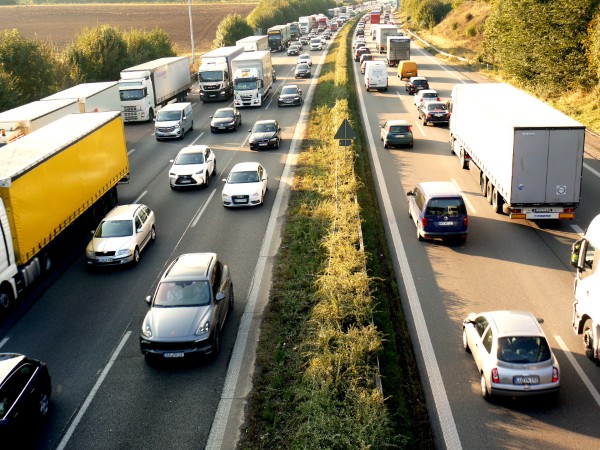
 “Ask a driver what would improve their health this year and you will rarely hear ‘an app’. You will hear: somewhere safe to park, a working toilet, a shower that is fit to use, and a manager who does not ring at hour nine of a shift to ask why they have stopped. The 2022 DfT National Survey of Lorry Parking identified a shortfall of around 4,500 spaces. Industry estimates put the real figure closer to 11,000, and the 2026 WSP survey should give us a clearer picture.
“Those are two different numbers and they should be kept separate, but either way the conclusion is the same. You cannot run a credible fatigue management policy when there is nowhere to stop. You cannot run a credible nutrition programme when the only option at 2am is a vending machine. You cannot run a credible musculoskeletal programme when a driver spends their break sat in the same seat they have been in for four and a half hours.
“The same applies to health screening. Screening only works if it is real. Drivers routinely report Group 2 medicals that last ten minutes, alongside a DVLA licensing backlog that leaves people off the road and out of pocket through no fault of their own. If the assessment is rushed and the administration behind it is slow, screening becomes a box tick that catches nothing and costs everyone.”
None of this is a counsel of despair, Peter insists.
“There are practical things an operator can do that cost very little and change outcomes more than any single purchase. Fix the physical conditions first. Facilities, parking policy, realistic scheduling, and a genuine right to stop. This is the highest-return investment in driver health available and most of it is already your legal responsibility.
“Make support independent and free at the point of use. Drivers will not disclose a mental health difficulty to a system they believe reports back to the transport office. Independence is not a nice-to-have, it is the mechanism that makes disclosure possible.
 “Train the people who hold the phone. Transport managers and planners have more influence on driver wellbeing than any external provider. A five-minute conversation handled well prevents a great deal.
“Report properly. Use RIDDOR where it applies, record near misses honestly, and push for the occupational data to be captured. Just culture is not softness. It is the only way you find out what is actually happening in your operation.
“Then buy the product. Screening, occupational health and testing all have a place. They work far better on ground that has already been prepared.”
DriverWell was built from the driver’s side of the windscreen, says Peter; it is free for professional drivers and transport workers, and individual support stays free for life. It is an official component of the RHA Wellbeing Charter, which is built around six pillars, and it is live across the Certas Energy TheStop truckstop network.
“We are not a substitute for occupational health, and we do not pretend to be. We exist because there was no independent place for a driver to turn at 3am, and because the industry needs someone counting the things it has not been counting.
“Operators reading this feature will be weighing up what to spend. My argument is simpler than a spending decision. Look first at the conditions you already control, and be honest about what your current data is not telling you. Everything else works better after that.”