
Cutting reefer fuel consumption with Thermo King
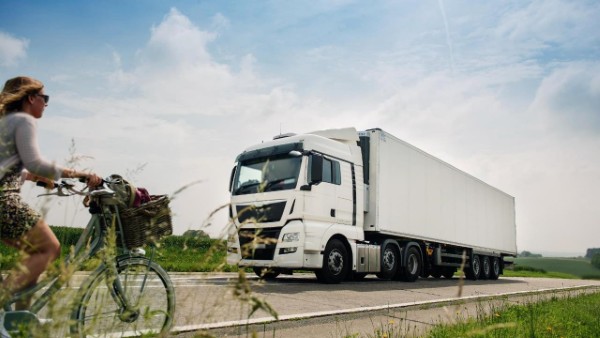 Temperature control technology provider Thermo King has issued advice for refrigerated fleets on how to help reduce their fuel bills.
“Operators cannot control fuel markets, but they can control how efficiently their assets are specified, operated and maintained,” said Juan Urmeneta, product management leader, Thermo King Europe, Middle East and Africa.
“For refrigerated fleets, however, lower fuel consumption only creates value if it is achieved without compromising temperature performance or load protection.
“When assessing fuel spend, fleet managers often look first at the tractor or truck, and with good reason: it usually represents the largest share of fuel consumption. But in temperature-controlled transport, that is only part of the picture. Where a transport refrigeration unit is in use, fuel efficiency should be considered across the full asset lifecycle, not simply on a week-to-week basis. While the refrigeration unit may consume much less fuel in the short term, its cumulative fuel use can still be substantial over time.”
There is no single fix for improving fuel efficiency in refrigerated transport, says Juan, but five areas consistently stand out – route optimisation, taking not only distance into account but also congestion, elevation, stop-start traffic and other factors; training drivers in fuel-efficient operation, such as smooth acceleration and reduced idling; optimising loading practices; reducing unnecessary refrigeration unit run-time; and treating equipment selection as a long-term efficiency decision.
“One of the most avoidable sources of fuel waste is unnecessary refrigeration unit operation,” he continued.
Common causes include frequent door openings, operating modes not matched to the load, and excessive pull-down demand.
“Selecting the right operating mode for the thermal sensitivity of the goods is one of the simplest ways to improve efficiency without compromising load protection,” said Juan.
“On Thermo King Advancer trailer units, the Ecomode limits temperature deviations from the set point and ensures sequential airflow for optimal cargo-protection. This reduces fuel consumption by up to 50 per cent compared to continuous operation but offers significantly tighter temperature control than cycle-sentry.”
While many fuel-saving measures are operational or behavioural, says Juan, there are situations where the equipment itself may no longer be the best fit for the application, or where older technology is adding unnecessary cost over time.
“Diesel remains important in many applications, but hybrid systems, battery-supported architectures, AxlePower energy recovery technologies and fully electric solutions are now practical options in all use cases – reducing or even removing the need for diesel to power refrigeration units.
“Full electrification is the clearest route to removing diesel consumption from the refrigeration system itself, and it is particularly relevant where urban operation, noise constraints and sustainability objectives are influencing decisions. But for most operators, the transition will not be a single leap from conventional diesel to fully electric. It is more likely to be phased, with different technologies applied across different duty cycles and operating environments.”
He concluded: “Whatever approach fleets take to reefer fuel efficiency, the priority should remain the same: ensuring every load arrives in the right condition, with the right level of temperature control, every time.”