
Senior traffic commissioner turns focus on drivers at Transport Manager conference
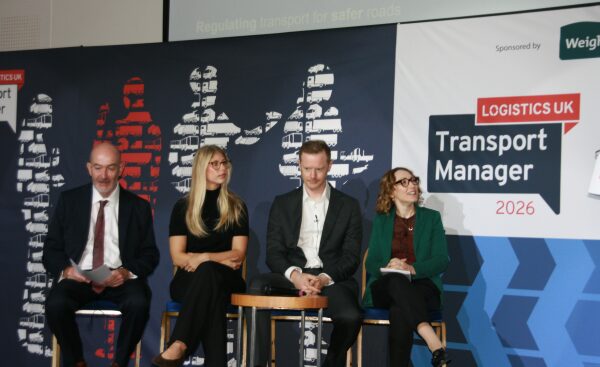
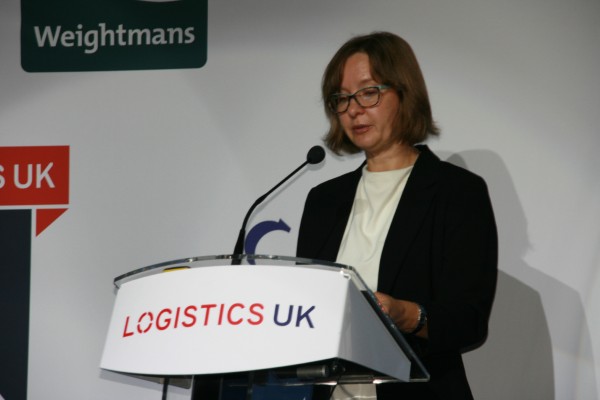
Left to right: an expert panel joined senior traffic commissioner Kevin Rooney at the conference – DVSA’s Tasha Aloni, Weightmans’ Chris Powell, and Logistics UK’s Michelle Gardner
Human issues formed the core of the keynote address given by senior traffic commissioner (STC) Kevin Rooney to the first of Logistics UK’s autumn round of Transport Manager 2026 conferences.
Speaking to a capacity audience at the Haynes Motor Museum in Sparkford, Somerset, STC Rooney emphasised that many of the people who came before him at public inquiry (PI) were there because they had made mistakes rather than set out to break the law.
“I’ve had around 200 drivers appear before me in the last couple of years because of bridge strikes. None of them had got out of bed that morning and decided to drive an overheight vehicle into a bridge: bridge strikes are caused by drivers suffering distractions or poor working conditions.
“The traffic commissioners’ (TCs’) objective for the coming year is to focus on drivers. Drivers are difficult to reach and many don’t know about the role of the traffic commissioners, or at least not until they come before us.”
STC Rooney was joined by an expert panel consisting of Tasha Aloni, the head of commercial vehicle enforcement policy at the DVSA; Chris Powell, partner at Weightmans solicitors; Michelle Gardner, chief of staff at Logistics UK; and chaired by Logistics UK’s Katia Yakovleva, who pointed out that driver welfare fed directly into operator compliance.
Chris Powell said driver errors tended to be driven by changes to established practices and occur when there was reorganisation, while Michelle Gardner reiterated Logistics UK’s history of promoting driver welfare both to its members and to government. She urged transport managers to learn their drivers’ names and talk to them about how they could access welfare resources.
Technician welfare also needed to be monitored, STC Rooney reported, recounting how during a PI following a wheel loss at a major operator, he had watched CCTV of a fitter at the end of shift carefully retorquing the wheels on the bus next to the vehicle that had just had its wheels replaced! He also recalled an incident when a truck had failed its annual test after a visit to a franchised workshop where a set of brake pads had been installed with the backing plates facing the disc.
He added that the bus industry generally did a better job of engagement with drivers than the freight sector did. Managers were more likely to know drivers by name, while in the truck industry it appeared that many drivers did not know their transport manager’s name!
Chris Powell warned that there was a fine line between being engaged with drivers and intruding into their personal lives, but an ‘us v them’ culture was to be avoided.
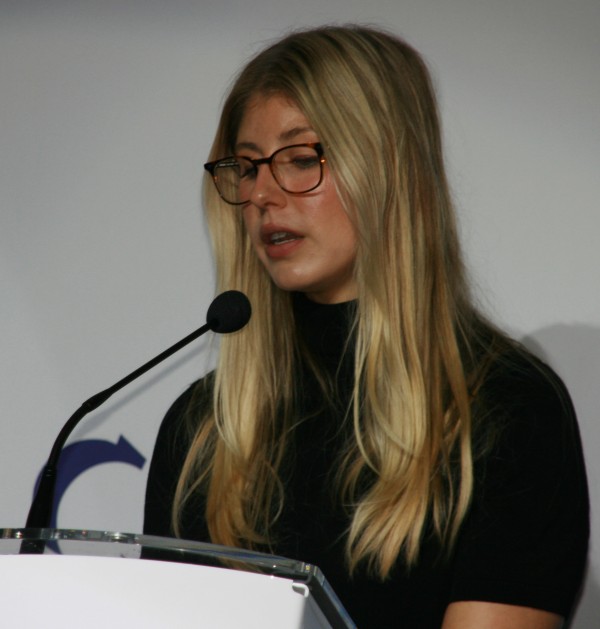
DVSA’s Tasha Aloni
Tasha Aloni said that driver health and welfare was as important as ensuring tachograph compliance and that vehicles were free of mechanical defects.
“Have a culture where people feel free to say when they are fatigued and so on,” she said.
STC Rooney recounted how he had a female driver appear in front of him at a conduct hearing. Her offence had been to ‘pull her card’ and drive 20 minutes home when she unexpectedly ran out of hours at the end of a shift. She was accompanied by her employer, a middle-aged man, who explained: “It was her ‘time of the month’ and I couldn’t ask her to spend the night in a layby.”
The STC stated that pulling the card was an offence, and she would have been better to leave the card in but could have stated ‘medical need’ as a reason for going slightly over her hours. He was nevertheless impressed by the support shown to her by her employer.
On the subject of drivers’ hours, he said that while the regulations allowed 15-hour shifts in a day on occasion providing it was followed by nine hours’ rest, no one said this was actually safe practice. It was an absolute limit that was imposed to prevent unfair competition.
“No one says you have to do it, and it should only be done after a risk assessment,” he cautioned.
In his role as a gatekeeper to the industry, the STC was asked if it was true that new entrants were less compliant than established operators.
He highlighted owner-drivers who had no exposure to fleet management, and people who had no industry knowledge but had decided to run a truck as part of wider business, as being at risk.
“We see too many people at PIs in year one of their operation,” he admitted.
Relevant business experience was important. “Can you run a business at a profit? You can’t be compliant if you don’t make a profit,” he warned.
Speaking for the DVSA, Tasha Aloni said that new entrants weren’t always less compliant, but transport managers appointed by new operators needed to mentor their employers if they were new to the industry.
Chris Powell added that “continuous and effective control” was the key. Transport managers were obliged to exercise this control from day one.
“Holding a CPC only indicates knowledge, compliant operation requires their continuous and effective control, don’t just appoint someone ‘with the ticket’,” he warned.
He added that directors could not just delegate transport compliance to an appointed TM and think they bore no responsibility for what went on subsequently. “The financial director for example, should be the one ensuring that the company meets finance standing requirements for its fleet size.”
“Even in a large company, the director of logistics doesn’t hold the operator licence for the company: all directors are responsible for the company.”
STC Rooney emphasised that it was for transport managers to challenge directors if a compliance issue arose because of the way they ran the company.
“It needs a one-to-one meeting in a small operation, and a board meeting in a large one,” he contended.
He added that inexperienced transport managers should be mentored by a more experienced person during their initial period in post.
“This is increasingly asked for by TCs, which will please the consultants in the room,” he smiled.
Chris Powell emphasised that transport managers must be able to communicate directly with the board. “It’s a big step to ‘whistleblow by resignation,’” he warned, “Much better to try to communicate your concerns first.”
STC Rooney said that new entrants should create a project plan for what they wanted to do before applying for a licence. “This should include vehicle acquisition, driver recruitment, vehicle maintenance and work. It’s not in the CPC syllabus, although knowing how often you have to stop to water donkeys if transporting them by road is,” he quipped.
Chris Powell said he was surprised how many large operators employing multiple transport managers didn’t have a formal division of responsibilities between TMs.
Logistics UK’s Katia Yakovleva chaired the panel event
Katia Yakovleva said it was essential that transport managers had management skills as well as knowledge: “You need to be able to manage and lead people. Be visible, your drivers should know who you are.”
Tasha Aloni said TMs needed data literacy. “Do training in this,” she urged.
Chris Powell added that TMs needed to be able to manage change: “Be a politician and learn how to bring people along with you. Above all learn how to ‘manage up,’” he concluded.
STC Rooney outlined challenges faced by the TCs and their staff themselves. The process of recruiting new TCs to fill vacancies in Wales and the North East was proving to be very slow.
“I have no idea when the new traffic commissioners will be appointed,” he admitted.
This was having an impact as targets for hearings within 12 weeks of the decision to call a PI were not being met.
Meanwhile: “Demand for new operators’ licences has gone up by 10 per cent, but the number of civil servants engaged to process the applications has been frozen.”
The Logistics UK Transport Manager 2026 conferences continue at regional locations around the UK until December. Last week Logistics UK reported that three of the venues – Yeovil, Doncaster and Peterborough – had already sold out, with several others almost full. It advised those wishing to attend a conference to book as soon as possible to avoid disappointment.