
Driving up performance
 Steve Thomas, managing director of Ctrack by Inseego, explains how telematics innovations can help enhance driver engagement
The business and operational benefits of telematics are widely recognised and well known within the commercial fleet sector. Vehicle operators increasingly understand which areas to focus on to deliver the value, but the challenge is maintaining the momentum after the initial gains are achieved.
When this has occurred, and a telematics solution is embedded within an operation, driver engagement needs to play a crucial role in targeting continuous improvement to maximise return on investment.
In-vehicle engagement devices can alert drivers to any infringements when on the road by displaying a series of traffic-light coloured warning lights. This type of solution warns of any driving exceptions to encourage improved behaviour behind the wheel.
Green, amber and red lights display a cumulative number of warnings while a sustained period of responsible driving will enable a driver to clear the lights.
One commercial fleet, using our Driver Behaviour Indicator (DBI), achieved a dramatic reduction in fleet risk, with at-fault collisions dropping by 50 per cent and infringements per kilometre being cut by almost 25 per cent.
They use the in-vehicle feedback device alongside a performance report, which places employees in a green, yellow or red band based on driving style, with an overall score calculated to achieve a simple ranking system.
In the six months since adopting DBI, the number of drivers in the best performing green band increased by 31.6 per cent, while those in the highest risk red band reduced by 72.7 per cent. In the same period, the average driver score improved by 4.7 per cent.
A driver app can further complement a vehicle tracking solution, enabling vehicle operators to better communicate with drivers and ensure they are following vehicle safety procedures. This type of mobile solution has been developed to help instil a safety-first fleet culture by targeting risk reduction and encouraging responsible driving.
Providing drivers with an individual score, viewed alongside company and peer group averages, is a proven way of achieving improved performance on the road. Peer groups can include, for example, a team, division or simply all drivers using a certain vehicle type, creating a competitive element that can quickly translate to safety and efficiency benefits.
The gamification of what is often viewed by drivers as an onerous on needless task can motivate change, and for even greater returns it can also be linked to an incentive scheme that rewards the best or preferably most improved performers.
 Meanwhile, drivers can use the app to complete daily safety inspections. By performing this task electronically, in the simplest manner possible, it not only saves time, but also provides fleet managers and administrators with online visibility of all completed and missed checks to ensure any non-compliance is quickly addressed.
For any critical problem, the driver can leave additional comment that immediately triggers an alert to speed up issue resolution and avoid operation downtime.
The integration of vehicle tracking with video telematics is making it possible to gain an extra layer of understanding by having access to high-definition footage driving incidents.
Using either specific or anonymised video clips of poor habits, it is possible to provide tailored guidance to drivers as part of a training or engagement programme. Video examples offer an effective training aid, highlighting real-world driving events to discourage higher risk behaviour and showcase best practise techniques.
More recently, video telematics has been combined with emerging technology, such as automatic detection systems and advanced driver-assistance systems (ADAS), to warn drivers of potential risks.
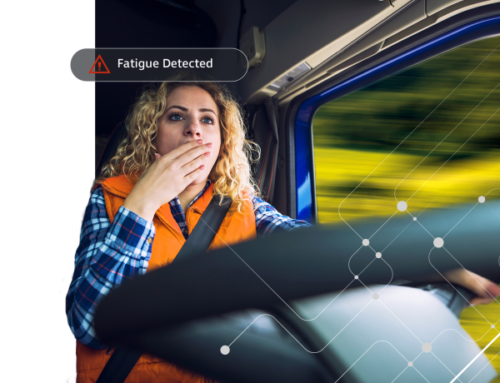
ADAS-enabled cameras can now identify lane departure, forward collisions, tailgating and vulnerable road users, while in-vehicle monitors can even recognise if a driver is tired or distracted by actions such as mobile phone use, smoking and eating.
By engaging effectively with drivers, it is possible to make them an important part of a telematics strategy, while making sure they are aware of their ongoing safety responsibilities.
Using a range of reporting and communication tools alongside a vehicle tracking system, there is an opportunity to provide useful feedback to drivers both in real-time and historically. This can be used to sustain their buy-in and encourage positive change that will ultimately result in ongoing and incremental gains.