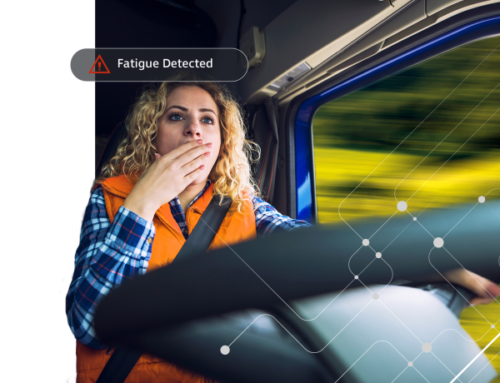

Driving down distraction
 Steve Thomas, managing director of Ctrack by Inseego, discusses how artificial intelligence (AI) can help prevent collisions by detecting distracted driver behaviours
Traditional vehicle cameras capture an incident, but with the latest AI dashcams it is now possible to mitigate the risk of collisions in the first place because they can detect and help drivers self-correct dangerous or distracted behaviour.
Using machine vision and artificial intelligence (MV and AI), a forward-facing camera can capture high quality footage of the road ahead, while a driver-facing lens provides a greater understanding of risky behaviour and distraction.
The MV-and AI-capabilities work together to identify and assess risk in and out of the vehicle, so the driver can be notified of any issues and footage uploaded to the cloud for review by the fleet manager, if required.
With almost 80 per cent of collisions the result of the driver being distracted, having a driver facing camera that can identify mobile device usage, eating and drinking, and eyes off the road offers a huge opportunity to improve road safety.
We are seeing a huge response, in particular, from the insurance sector for this kind of technology, because there is growing recognition that the best way to keep at-fault claims to a minimum is to prevent collisions altogether.
In recent years, connected vehicle cameras have become a vital tool for insurers to help achieve first notification of loss (FNOL), but with advances in AI the focus is switching towards first notification of risk (FNOR).
Havi ng the ability to identify and measure the severity of risk, it is possible to take proactive steps to alert the driver and empower them to adjust their behaviour. Transport operators can also use the data over time to track trends and pinpoint areas of improvement.
There are, however, some considerations when selecting an AI dashcam to ensure it is fit for purpose. Having a device that is highly configurable will enable a transport operator to adapt the settings to alleviate any privacy concerns of drivers.
For example, it could be set up to only warn the driver and never upload performance data to the cloud, or alternatively, an alert could be triggered after a cumulative number of distraction events. This can reassure drivers that they are not being constantly viewed, making it easier to gain their buy-in.
What we have seen from our own successful vehicle trials of AI dashcams is a positive response from not only the fleet manager. When asked for feedback, the overwhelming response from drivers is that any initial reluctance has been replaced by an understanding that the cameras are having a positive effect on risky driving habits and improving their safety.