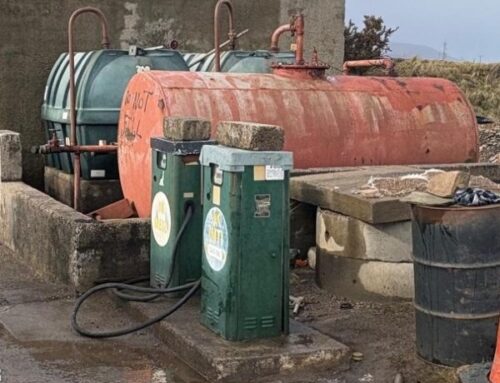

OTS offers AdBlue storage advice
 Fuel storage specialist OTS Group has issued guidance for fleet operators on the storage of AdBlue, via its BSSM (bunded, specific, stable, managed) plan.
“AdBlue isn’t difficult to store, but it’s important to ensure that it is stored correctly: it is corrosive to some materials such as copper and its alloys, and is very polluting to surface and groundwater,” said the company.
“In addition, contaminated AdBlue can cause costly damage to vehicles and equipment.”
The company highlights AdBlue storage guidelines from the UK’s Environment Agency, which is able to issue a notice enforcing appropriate improvements under the Anti-Pollution Works Regulations if it believes that a company’s storage set-up poses a significant environmental risk.
The Agency guidelines state that container, pipework and dispenser equipment should be suitable for use with urea, and that secondary containment is available for the container and ancillary equipment.
The dispensing area drainage should also be isolated from surface water drains, says the Agency; and there should be a trigger nozzle with an auto shutoff to dispense AdBlue, while operators should ensure the nozzle cannot be left in the open position.
 The Environment Agency additionally highlights the importance of ensuring AdBlue users have appropriate emergency equipment to deal with large and small spills – for example, proprietary spill kits, drain mats, pipe blockers, or permanent valves on drainage systems to provide containment.
In addition, companies should put in place an emergency plan and suitable training for dealing with spillages or other accident, the Agency says.
OTS Group recommends that, for peace of mind, operators should follow its BSSM (bunded, specific, stable, managed) plan for storing AdBlue.
It advocates the use of double-skinned (bunded) tanks and, specifically, those which are compliant with manufacturing standards.
“AdBlue should always be stored in a tank which has been specially designed for the task (compliant with ISO 22241, DIBT, BS EN ISO 9001:2008),” said OTS.
“This will give you both peace of mind, keep fleets on the road, and future-proof your business as legislation around environmental pollution and emissions continues to tighten.”
The firm also highlights the importance of stable temperature.
“AdBlue should be stored between 0-30°C. With a freeze point of -11°C, it’s important to use a tank that is built to withstand extremes of temperature in cold climates and to shield your tanks from direct sunlight to avoid overheating.”
 In terms of management, it’s important to keep the storage system well maintained, adds OTS.
“Selective catalytic reduction systems can be extremely vulnerable to contaminants, which can lead to expensive vehicle repair costs. We suggest getting professional advice when setting up your storage system as well as using an in-tank monitoring system to stay on top of stocks and quality control.”
The company suggests a maintenance plan which includes: putting equipment back in its original position after each use; inspecting gauges every week; inspecting the exterior of tanks, outlets and pipework every month; checking the bund alarm, electrical cables and warning labels every three months; checking the filter every three months and replacing it if necessary; and checking fixings, inner tanks and bund cavities every six months.
In addition to AdBlue storage, OTS Group provides a range of fuel storage systems and turnkey solutions.
“From design and installation of truck stops and fuel distribution depots, to the provision and servicing of dispensing equipment, to fuel quality and certification with its proprietary TankCare FQC Scheme, OTS Group designs and delivers practical answers to complex fuel storage, refuelling, distribution, service and maintenance issues,” said the firm.