
Pico diagnoses aftertreatment issues
 Diagnostics specialist Pico Technology has explained how its PicoScope Off-Highway oscilloscope kit can be deployed to help resolve issues with vehicle aftertreatment systems.
Ben Martins, automotive applications specialist at Pico Technology, was recently asked to support a customer looking at a DAF CF with a Cummins aftertreatment system, which was displaying a number of warnings on the instrument cluster, including AdBlue lights.
“For a number of years we have all become familiar with the terms aftertreatment, diesel particulate filter, AdBlue or diesel exhaust fluid and many other words which are usually met with a groan and the question, ‘how much is this going to cost?’” said Ben.
“These mobile chemical plants have continued to evolve over the years due to tighter emissions regulations. They should be fairly trouble-free but we all know that isn’t the case. Getting direction when diagnosing these aftertreatment faults is paramount to ensuring costs stay low and getting the truck back on the road as soon as possible.”
In this case, while the scan tool was doing its job, Ben took the opportunity to speak to the driver of the vehicle.
“With no apparent drivability issues prior to the warning lights, the one thing mentioned was the lack of diesel exhaust fluid (DEF, or AdBlue) the vehicle had been using. Traditionally, a long-haul vehicle like this, in constant use, would use a lot of DEF.
“The fault codes, as expected, were pointing towards the DEF system. There were also some CAN-related issues, but the one labelled as high priority was being flagged as a DEF pump failure: Code P3912.
“Despite all the DEF trouble codes being inactive, anything related to the DEF system can have a major impact on engine operation and can eventually lead to the engine not starting.”
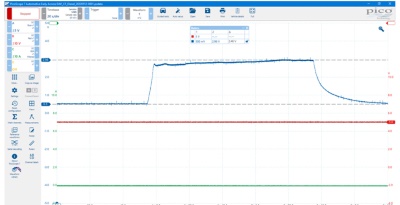 Connecting the PicoScope to the pressure sensor output, the scan tool was used to run a DEF pump test and a current clamp included on the injector wiring, in order to monitor the relationship between the two (image, right).
Initially, the classic profile was exhibited as pressure built in the system. Normally this would be regulated by the orifice, because pressure is caused by resistance to flow; however, the pressure continued to rise. If the pressure is too high, the system will not permit the injector to dose, which is indicated by a lack of activity from the injector current.
“If we know that pressure is a restriction to flow, what would cause this? Based on its position, the filter inside the injector module would be first on the action list,” said Ben.
“It sits after the pressure sensor, and if we remember the golden rule that pressure is the resistance to flow, then a blocked filter here would result in the pressure sensor reading a high pressure.
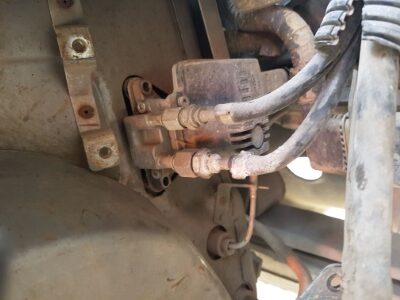
“Amazingly, the filter was so blocked that it had burst! What’s more, it appeared to be contaminated with a dark brown/reddish substance like rust when compared to a new one. After replacing the filter, the active test was run again.” (Image, right.)
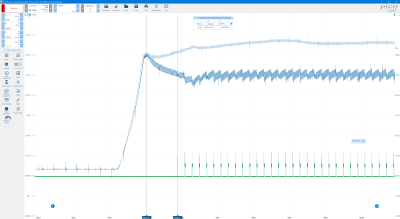 Using a reference waveform, the pressure trace captured when the original filter was still fitted was brought in for comparison.
“On the new test, we could see that the pressure reached its peak and dropped away before the injector was then signalled to fire,” said Ben.
“As each injection event took place, we also saw a drop in the pressure signal to indicate DEF had been injected. This gave us the confidence and the evidence to prove the system was working.”
More information on the PicoScope equipment can be found on the Pico Technology website.