
HVS and Asda in self-driving hydrogen hook-up
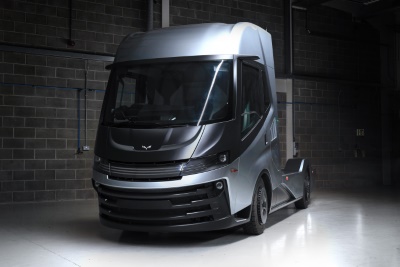 Hydrogen Vehicle Systems (HVS), a new Glasgow-based OEM specialising in hydrogen-powered commercial vehicles, is heading up a consortium that has been awarded a £6.6 million tranche of government funding to develop a self-driving hydrogen-electric HGV.
In a project said to be a world first, the Hub2Hub consortium, led by HVS, will create two prototype autonomous HGV tractor units, set to begin trials in 2024 with supermarket giant Asda.
HVS hopes that the cost savings provided by autonomous trucks will speed up the adoption of zero-emissions vehicles by the transport sector, thereby reducing its contribution to climate change.
The funding, which has been awarded by the Centre for Connected Autonomous Vehicles (CCAV), follows the reveal by HVS of its hydrogen-electric powertrain technology demonstrator in November.
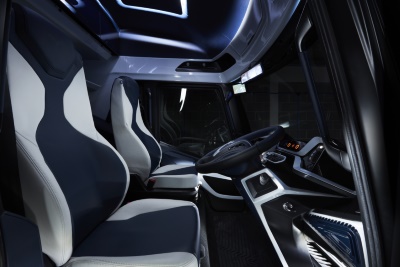
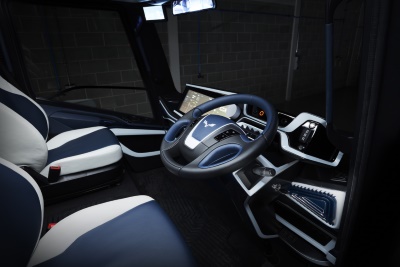
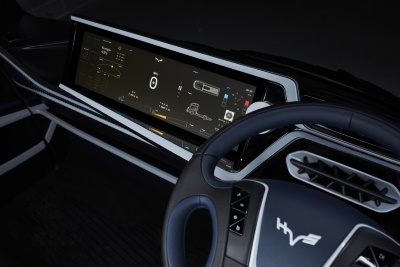
The two trucks built by the consortium – which also includes Asda and autonomous technology provider Fusion Processing Ltd – will enable Level 4 autonomous driving. The first will be fitted with a driver’s cab and tested on the road, using Fusion Processing’s CAVStar automated drive system, accompanied by a human safety driver.
The second prototype will replace the driver’s cab with an aerodynamic fairing, then be evaluated on test tracks, with the CAVStar system enabling a human driver to operate the vehicle remotely from a control hub.
“Together these two prototypes point to an optimised future logistics system where vehicles could be operated in autonomous mode on a hub-to-hub route, with a remote driver then taking control to drive the vehicle from the hub to its end destination,” said HVS.
 “Not only will HVS’ innovative HGV decarbonise one of the biggest polluting vehicle sectors on the road, it will expedite the development of hub-to-hub automated driving technology.
“As a UK leader in autonomous vehicles, Fusion’s collaboration in the project will see the development and integration of its advanced CAVstar system where a fusion of vision systems, AI and route planning can deliver a fully autonomous vehicle that takes over from a human driver and hands back control at pre-determined hubs on a route.
“The result will help British companies seize early opportunities to develop experimental projects into scalable commercial offerings, ready for the market.”
HVS CEO, Jawad Khursheed, added: “A transport revolution is taking place in the UK and HVS, together with the consortium, is at the forefront of the innovation. We are engineering the world’s first autonomous hydrogen-electric powered HGV to demonstrate hub-to-hub logistics to a leading retailer, Asda, to elevate public perception, showcasing the potential autonomy can deliver thanks to increased safety and fuel savings, and develop new business models.”
Fusion Processing CEO Jim Hutchinson added: “Our market analysis indicates that the commercial vehicle segments such as haulage are where we will see autonomous vehicle technology first used in large scale deployments. Hub2Hub is a perfect showcase of what the advanced version of our CAVstar Automated Drive System can achieve. Combining SAE Level 4 autonomous driving with tele-operation to deliver safer and more efficient vehicle operations.”
 Asda senior fleet manager Sean Clifton said: “Reducing our fleet emissions is a major part of our plan of moving towards net zero, so we are keen to look at innovative new technology, such as autonomous HGV tractor units, which can make a real difference to our carbon footprint. We will continue to work with like-minded partners on projects such as this to reduce our impact on the environment.”
HVS argues that self-driving trucks have the potential to revolutionise the haulage and logistics sectors, particularly in the long-haul, heavy-duty segment.
“Through the integration of ground-breaking sensor technology within the vehicle consisting of an array of radars, LIDARs, cameras, and artificial intelligence, it provides unprecedented operational safety without human intervention,” said the company.
“The application of this advanced system offers a next-generation solution to today’s shortcomings in the haulage industry, namely solving issues of driver shortages and improvement in driver quality of life, thanks to remote tele-operated vehicles. Drivers can stay local as well as take advantage of less intensive driving shifts, for a greater work-life balance.
 “Fleet operators can also benefit by optimising vehicle utilisation during less busy hours, thereby making logistics more efficient and more environmentally friendly by avoiding congestion.
“In addition, on-board advanced automated drive systems can reduce energy and tyre emissions by optimising acceleration and braking at a far greater level than human ability.”
Meanwhile, says HVS, improved operational efficiencies will help create and support new business models and reduce vehicle total cost of ownership, while automated depots and hubs will provided improved usage of space, safety and efficiency.
The funding was announced by the business secretary Grant Shapps, as part of a wider £42m pot dedicated to the development of self-driving technology, split between seven projects. The consortia benefiting from the scheme will match the public grant, taking the projects’ funds to around £84 million.
Mr Shapps said: “In just a few years’ time, the business of self-driving vehicles could add tens of billions to our economy and create tens of thousands of jobs across the UK. This is a massive opportunity to drive forward our priority to grow the economy, which we are determined to seize.
“The support we are providing today will help our transport and technology pioneers steal a march on the global competition, by turning their bright ideas into market-ready products sooner than anyone else.”