

Axle shock absorbers in the spotlight
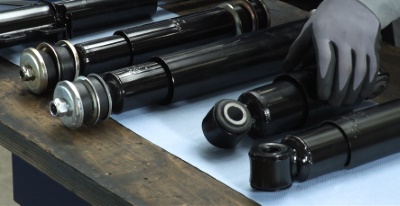 The Diesel Technic Parts Specialists explain how to identify defective shock absorbers and share their expertise and best practice for replacing them
Axle shock absorbers keep tyres in good contact with the road and are crucial for safe handling, steering, stability, and ride comfort. Vibrations and impacts caused by uneven road surfaces have the potential to compromise control, diminish braking effectiveness, and escalate vehicle wear and tear.
Ensuring that axle shock absorbers are well-maintained and in good condition is essential for safe and reliable operation.
Worn suspension is a frequent cause of shock absorbers failing prematurely, and if axle shock absorbers are defective, vehicles can become difficult to control.
So what are the key signs that shock absorbers need replacing?
- Oil leaks from the shock absorber tube
- Uneven tyre wear
If the shock absorbers are found to be faulty, it’s essential that they are replaced as soon as possible to ensure the vehicle is safe to drive.
Diesel Technic’s Parts Specialists’ pro tips for replacing shock absorbers
- Only use shock absorbers suitable for your vehicle, and in accordance with the manufacturer’s specifications and always replace the shock absorbers one axle at a time.
- It is important to replace shock absorbers in pairs, meaning both ends of the corresponding axle. Ensure that axles, mounts for shock absorbers, anti-roll bars, and related chassis components are in good condition. If needed, carry out any necessary repairs and align the axle (e.g., after accidents) before replacing the shock absorbers.
- Ensure that the shock absorbers are not damaged. Do not make any alterations to the shock absorbers and never open or heat them.
- When assembling, it is crucial to prevent any damage to the shock absorber’s piston rod and only use the specified tool to support the piston rod.
- When dealing with a pin joint, shield the rubber components from grease during assembly. Apply a small amount of lubrication to the clamping bolts for a supporting joint during assembly.
- Ensure that the shock absorbers are not assembled while under tension. It is crucial to verify the alignment of the fastening points. It’s important to note that a faulty or absent end stop for the vehicle’s spring travel may cause an overload, resulting in damage to the shock absorbers.
- Only tighten the screws of the shock absorbers when the vehicle is standing on its wheels. Adhere to the indicated tightening torques for shock absorbers with either pin joint or supporting joint. Avoid using an impact screwdriver for the assembly process.
- If your truck is fitted with a self-levelling suspension system, it is crucial to verify and adjust its proper functioning following the installation of the new shock absorbers.
 Prevent excessive or unbalanced loading of the vehicle and maintain the appropriate tyre pressure. Avoid subjecting the vehicle to excessive strain caused by extreme road conditions.
- Don’t let the shock absorbers come into contact with the undercoating, paint, substances such as oil and fuel or protective wax.
- During regular maintenance routines, ensure to inspect shock absorber mounts, steering, and chassis components. Leaking shock absorbers must be replaced as they are a critical safety component. It is recommended to replace the shock absorbers after an accident as a standard procedure.
- Avoid evaluating shock absorbers immediately after driving in wet conditions. If uncertain, wipe down the shock absorber and reinspect it after a few days. Road debris sticking to the shock absorber can be mistaken for a leak and oil mist deposits may be visible on dry shock absorbers. As the operating time increases, it may become noticeable on approximately 1/3 of the reservoir tube: this should not be considered as a leak.
- Discard old or faulty shock absorbers at a specialist workshop.
- Avoid potholes and evenly distribute loads to avoid damage.
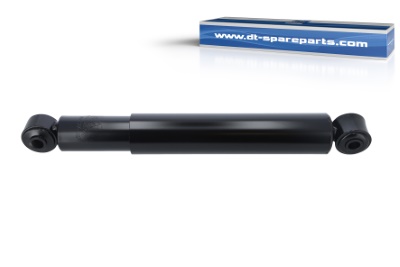
The Diesel Technic’s Parts Specialists workshop video on replacing shock absorbers, provides more information: youtu.be/0JubeamqMYc
Alongside shock absorbers for axles, the extensive DT Spare Parts product range offers shock absorbers for cab, as well as gas springs.