
Merridale’s pump servicing advice
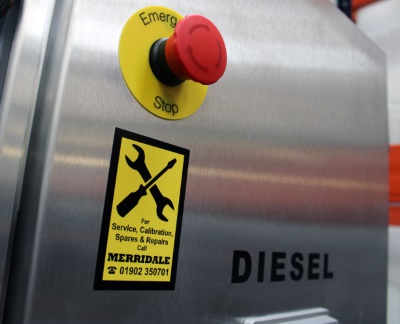 Fuel management specialist Merridale has issued guidance for fleets on the servicing of fuel dispensing equipment.
“Having your refuelling and fuel management equipment serviced regularly by its original equipment manufacturer (OEM) may not always seem necessary or a top priority,” said Merridale.
“However, fuel pumps are critical components of a company’s operational and logistical processes, and a well-maintained fuel pump is less likely to fail unexpectedly or perform inaccurately.
“Regular servicing helps maintain the optimal performance and efficiency of fuel pumps. Over time, fuel pumps can develop wear and tear, leading to reduced efficiency and compromised performance. An annual service allows technicians to inspect, clean, and replace any worn-out components with genuine replacements, ensuring that the fuel pump continues to operate at its best.
“By performing an annual service, potential issues can be detected and addressed early, increasing the overall reliability and durability of the fuel pump. If a fuel pump fails and the business has a break down situation, this can impact on their immediate ability to continue with their planned activities.”
A well-maintained fuel pump also contributes to the safety of the fuel installation and onsite requirements, adds the company.
“If a fuel pump malfunctions or fails, the site can have not only a safety hazard to deal with but also an environmental one. An annual OEM service helps identify and address any potential safety concerns in advance, ensuring the equipment continues to operate reliably and safely.
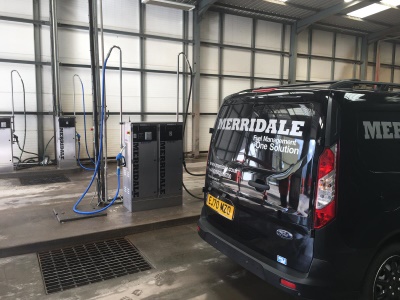 “Some fuel pumps already come with manufacturer warranties and OEMs can also usually offer extended warranties, as well as an inspection and calibration visit.
“By following the recommended annual service schedule provided by the OEM, fuel pump owners can ensure that their fuel pump warranty remains intact and they have the maximum protection available when it comes to equipment maintenance.
“As the OEM for Merridale equipment, we have a history of how the equipment was manufactured, such as which version of software has been installed, which components have been used, and the precise specification of the equipment.
“Third parties would not always have this vital info. As well as this, Merridale have unique engineer’s access to all Merridale management systems, and we keep full work and equipment records that show if any subsequent upgrades have been performed.
“Third parties would not necessarily have the information or access rights to hand when trying to service equipment. This means that Merridale can arrive to any issue correctly armed with the right knowledge and the correct parts.”
Avoiding fuelling nightmares
Fleets may wish to consider investing in a backup pump, advises Merridale, to avoid ‘nightmare’ situations whereby vehicle are unable to fuel.
“It’s Monday morning, the fleet is loaded and ready to go, drivers are assigned, routes are planned, then someone rushes in to tell you that the diesel pump is not working. It’s any transport operator’s worst nightmare,” said the firm.
“The nightmare deepens when you consider your alternatives. Typical service stations are no longer designed for, or desire visits from, your type of fleet, which then leaves you to consider having to use designated truck stops. That can mean lengthy detours, or motorway service areas where fuel is significantly more expensive. You’ll also need to plan payments and receipts for these off-site purchases and make notifications to your customers regarding the inevitable 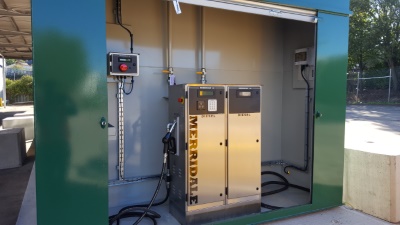 delays.
“Adding to your feeling of desperation, you know it may take days for your designated third-party fuel pump maintenance provider to attend, never mind ordering any necessary parts and carrying out the repairs. Realisation hits and you’re awake, hot and sweaty with the thought ‘I need a backup plan!’
“The simplest backup plan, if your existing pump is still in working order, would be to have a secondary fuel pump. The odds that both pumps fail at the same time are minimal and you may even benefit by being able to fuel two vehicles simultaneously, meaning you can get your fleet on the road sooner.
“Backup pumps are not as expensive as you may think and compared to the additional costs generated by a single pump failure, may provide a cost-effective alternative. It may even be possible to ‘T’ into existing pipework and affix a pump adjacent to your primary pump.
“If your nightmare has unfortunately come true and your only fuel pump is no longer working, or if you simply feel it is time to upgrade, you may be able to replace the existing pump with a ‘true twin’ unit that features two complete and independent pumps in a single cabinet”.
Relative to the heavy costs involved with system downtime, the initial outlay of a few thousand pounds or so to establish a twin or secondary pump dwindle into insignificance, Merridale contends.
“Planning now to avoid potential future breakdowns can help alleviate any worry of that nightmare situation becoming a reality.”