
Continental outlines smart tacho advantages
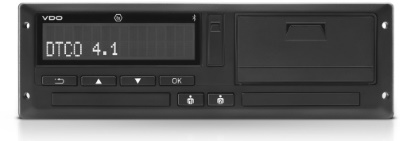 Tachograph technology provider Continental has highlighted some of the key benefits of the latest generation of smart tachographs, and the implications for both fleet operators and workshops.
“This year has seen many developments in the tachograph market – from the VDO Tachograph’s 100-year milestone to the introduction of the new Smart Tachograph Version 2 in August,” said Stuart West, product manager, tachographs and training at Continental.
“Three of the most significant points of the EU Mobility Package Part 1 are: changes to drivers’ hours of work; posting of workers (where are they based and where do they work); and cabotage (restriction on collections/deliveries in other countries).
“The Smart Tachograph Version 2 will provide data to assist in checking compliance with these regulations…
“However, it is important to note that some rules are slightly different for UK hauliers in comparison to those from EU member states, such as the ‘cabotage rules’ in the UK, under the Transition Agreement, following the UK´s withdrawal from the EU…
“Further legislation was already in place for the introduction of Smart Tachograph Version 2, which includes retrofit requirements that will be introduced in several stages over the next few years [for vehicles undertaking international journeys].”
Tachograph workshops play a pivotal role in the adoption and maintenance of the Smart Tachograph Version 2, adds Stuart.
“They must invest in training their technicians to handle the new calibration requirements and understand the new features, as well as some additional products to handle all the new tasks,” he explained.
“Workshops will see increased demand for Smart Tachograph Version 2 installations and regular inspections, as fleets rush to comply with the new regulations., especially those fleets that operate internationally.
“At Continental, we are already seeing a greater demand for retro fit M1N1 Tachograph kits for lower weight class vehicles, a trend expected to continue with the EU Mobility Package 1 when it becomes mandatory to retrofit to all registered goods vehicles over 2.5T, undertaking international journeys for hire and reward on and after 1 July 2026.”
Fleets and drivers stand to benefit significantly from the latest smart tachographs, says Stuart.
“The Smart Tachograph Version 2 ensures better compliance with complex regulations, reducing the risk of penalties and infringements,” he said.
Efficiency gains were another key benefit.
“Integrated Bluetooth, meaning downloading data and use of driver apps, can help save time and resource with real-time data transmission and integration capabilities to streamline administrative processes, for both fleets and drivers,” he added.
Auto border crossing functionality via GNSS/map data was another enhancement.
“Since 2 February 2022, drivers using digital tachographs are required to manually enter border crossings on their records, a requirement which has been in place for users of analogue tachographs since 20 August 2020,” Stuart continued.
“Now this requirement is handled quickly and simply with no need for the driver to carry out any actions.”
He also highlights how position data is automatically registered for each loading/unloading entry, saving time and effort for the driver; and how more DSRC data is now transmitted, which includes some driving activity data, to support enforcement in being better able to target only those drivers that may need further checks.
This ensures compliant fleets are less likely to be subject to unnecessary stops, says Stuart, while potentially uncompliant drivers are taken off the roads, making them safer.
“In conclusion, the introduction of Smart Tachograph Version 2 heralds a new era of efficiency, accuracy, and data security in the world of transportation,” he said.
“While the transition may pose some initial challenges for tachograph workshops, the benefits for fleets and drivers in terms of compliance, efficiency, and safety are undeniable. As the industry continues to evolve, embracing such technological advancements is not just a choice but a necessity for staying competitive and ensuring safer, more sustainable transportation networks.”