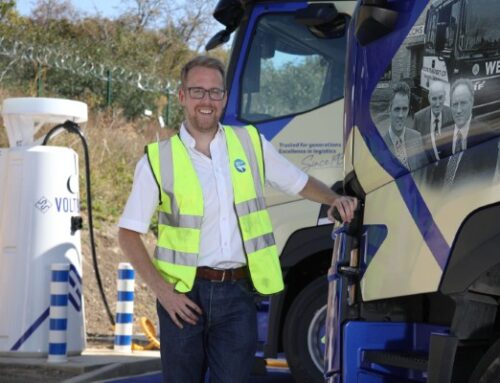

Transport trade groups welcome King’s Speech announcements
 Logistics UK has welcomed the European Partnership Bill announced in the King’s Speech last month, which it says will put the logistics sector on the road towards easier trading relationships with the continent.
According to the government, the bill will facilitate the implementation of deals with the EU on electricity, emissions trading and food and drink. The food and drink agreement is set to simplify the process of sanitary and phytosanitary (SPS) checks on imports and exports of food and agricultural products; earlier this year the government said it was expected to take effect in mid-2027.
The change has been widely anticipated by some international hauliers, as it aims to simplify the checks and ease associated problems for road transport operators, including excessive paperwork, increased costs and unnecessary delays brought about by Brexit.
According to government briefing notes: “The food and drink deal alone could add up to £5.1 billion a year to the economy (and up to £9 billion when combined with the emissions trading agreement), increase agricultural exports to the EU by 16 per cent and cut queue times for lorries at the border.”
Ben Fletcher, Logistics UK’s chief executive, said: “Our members are critical to every trading move between the UK and the EU, our closest trading partner, but have been hampered since the UK’s departure from the trading bloc by greater administrative red tape that has slowed processes and increased costs.
“Any delay at the border adds time and cost to every transaction – costs which impact the supply chain and, ultimately, the bottom line.
“We have been pressing government for some time to consider ways to make UK/EU trade simpler, so today’s announcement of a framework of powers to ease business between the UK and our largest trading market is very welcome.”
He continued: “We need goods to move smoothly and swiftly across borders without administrative delays, rather than becoming bogged down in processes which act as a roadblock to potential growth.
“This bill is a strong start to resetting trading relations with the EU, by addressing SPS and emissions trading and allowing for powers to be extended to new treaties with the EU in the future. With this in mind, to fully unlock growth and economic opportunities, we also calling for closer alignment on customs to be prioritised by government.”
Road Haulage Association managing director Richard Smith identified a range of welcome areas in the government’s planned legislative programme.
“We welcome the focus in the King’s Speech on strengthening economic security, particularly small business protections, highways financing, EU part-nership work, and police reform,” he said.
“Tackling late payments is also hugely welcome, and we’ll continue working with government to keep cash flowing through the road freight sector – specifically in these difficult economic times.
“Growth is a central theme, and we’re clear that road freight and logistics is key to delivering it. The regulatory system needs to support, not hinder, growth. We hope the Police Reform Bill will create a more streamlined national system for the transportation of abnormal loads.”
But he added: “On coaches, we have some real concerns that the overnight visitor levy may negatively impact tourism and the coach industry that supports it. The Taxi and Private Hire Bill must be proportionate, and we welcome its publication in draft for consultation; not least on how we best support disabled passengers. We will continue to work cross-party and collaboratively to bring about positive change for truck, coach and van operators. We look forward to constructively working with decision-makers to support businesses, boost growth and deliver for the road transport sector.”
The British International Freight Association (BIFA) said it welcomed EU alignment having featured prominently in the King’s Speech, as well as the news that legislation would be introduced to unlock the benefits of airport expansion.
Steve Parker, director general of BIFA, said: “Since it was elected, the government has been vocal about its efforts to reset post-Brexit relations and forge closer economic ties with the EU without committing to rejoin the single market or customs union.”
BIFA said much remained to be done to improve the efficiency of the UK/EU trade border, while protecting the market.
“On behalf of our members and the international traders they serve, BIFA has continued to push for smoother UK-EU trading arrangements, especially around customs paperwork, SPS checks and border friction.
“Broader government discussion of an EU ‘reset’ is being closely watched by the sector. Ahead of a summer summit between EU and UK, and the five-year review of the Trade and Cooperation Agreement, we now need to see greater details about the government’s likely approach to that review.“